Showing posts with label military action. Show all posts

Saturday, July 25, 2026

What did Donald Trump do today?

He talked tough about Iran while simultaneously backing down to conserve dwindling resources.

In an interview with a French journalist today, Trump said that he would order a full-scale ground invasion of Iran "if we don't get 100% of what we want" out of the peace negotiations both countries have presently abandoned. 

But what he's actually done this weekend is the opposite. Rather than escalating attacks, he called a halt to them on Friday. The most likely reason is that the United States is now running critically low on the missile interceptor used—without perfect success—to defend American bases and ships from Iranian counterattacks. 

Lockheed Martin announces cheaper Patriot interceptor missile
A Patriot missile, one of several kinds of interceptors the United States military is running short of


In other words, not only has Trump's war against Iran not achieved any of its stated purposes, and not only has it cost hundreds of billions of dollars and at least 18 American lives, but it's also single-handedly drained American arsenals of their main defensive weapons. Those interceptors can't be replaced instantaneously, and they're expensive—much more expensive than the cheap and effective medium-range missiles Iran has been using.

The problem for Trump now is that Iran clearly understands he's run out of credible military threats. A ground assault on Iran, a country the size and population of the entire eastern seaboard of the United States, is almost unthinkable. Continued bombing of legitimate military targets in Iran yields very little for the United States: the Iranian military is now more like a guerrilla force with an unlimited supply of long-range missiles and drones. And while Trump has enthusiastically promised to commit atrocities against civilians, that still wouldn't make this a winnable war for him.

Meanwhile, the rate at which Trump has burned through money and ordinance is putting a very real limit on how long the United States can keep up a belligerent posture in the region. The shortage is so acute that American military commanders are now letting some Iranian drones and missiles through in an attempt to ration the remaining interceptors for more serious threats. 

Why does this matter?

  • It's almost impossible to describe how badly Trump has bungled every aspect of this war. 
  • The problem with being both incompetent and a blowhard is that your adversaries very quickly learn they don't have to take any of your threats seriously.
Thursday, July 23, 2026

What did Donald Trump do today?

He lied about how many American servicemembers he's gotten killed.

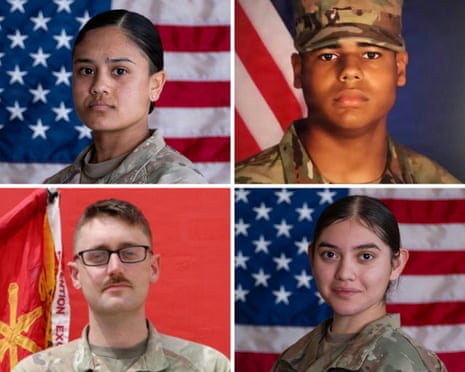
A day after putting words of support for the war against Iran in the mouths of fallen American soldiers, Trump is pivoting to a new PR tactic: undercounting the number of dead servicemembers. The Pentagon, which is legally required to promptly and accurately report servicemembers killed in conflict, maintains a website listing the casualties sustained in the Iran campaign. Yesterday, it showed 18 deaths, including the four soldiers lost in Iraq and Jordan over the weekend.  

The latest US troops killed in Trump's Iran war are remembered for lives of  service | US-Israel war on Iran | The Guardian
Clockwise from upper left: Sgt. Angel Rampersad, Sgt. Michael Emmanuel Swinton, Lt. Tyler James Feehan, and Pvt. Isabella Gonzales.


Today, that website showed only 14
, with the four most recent deaths erased from the "Army" column and the total.


The justification given internally was that because Trump had declared a "ceasefire" back in April, these latest troops killed by Iranian drone and missile fire somehow didn't count. 

There are at least three ways that doesn't add up. First of all, the "ceasefire" never actually resulted in either side ceasing its attacks. Second, Trump unilaterally declared the "ceasefire" over before those four most recent servicemembers were killed. And most obviously of all, troops killed in action by enemy attacks are still casualties, regardless of whether the Trump considered the undeclared war they were fighting in to be paused or not.

It's not just troop deaths that Trump has been caught underselling. In a revival of Vietnam-era disinformation tactics, the Department of Defense kept injuries to dozens of servicemembers sustained in last week's attacks hidden as well. And Trump personally has been a geyser of fake news on the economic impacts of the war, falsely claiming that it doesn't matter if it spurs inflation (it does) or that gas prices have stayed low (they haven't). 
 

Why does this matter?

  • A president who hadn't completely botched a war he never should have started wouldn't need to lie about how badly it was going. 
  • 18 American servicemembers have lost their lives for this fiasco whether Trump is willing to admit it or not.

Wednesday, July 22, 2026

What did Donald Trump do today?

He put words in the mouths of American soldiers he got killed.

Today, the Defense Department announced the names of another killed in the ongoing war in Iran. The body of Sgt. Angel Rampersad of Queens, New York, was brought back to American soil at Dover AFB, along with the remains of two other soldiers killed in an Iranian attack on an Army post in Jordan.

A woman in an Army uniform stares into the camera with an American flag in the background. 


Asked about the deaths today en route to the transfer ceremony, Trump put words in the mouths of the dead soldiers, claiming that "they said, and—all of them said, very strongly, 'we can't let—cannot let Iran have a nuclear weapon.'"

Trump, of course, never spoke to any of them while they were alive, and if he'd spoken with their families—a responsibility he's tried to avoid in the past—the White House hasn't mentioned it. He himself didn't settle on the nuclear justification for quite some time after the war began. Instead, Trump seems to have been pressured or manipulated by the Israeli Prime Minister, Benjamin Netanyahu, who wanted open war with Iran for his own domestic political reasons. 

Trump has outright lied about what dead servicemembers and their families have said in the past. He's also publicly picked fights with grieving family members who don't let him control the narrative. In 2017, after he'd ordered an ill-advised raid in Niger that saw four American soldiers killed, he lectured a widow on how her husband would have felt about his sacrifice, and then attacked her in the press when she told reporters what he'd said.

Trump, who dodged the draft in Vietnam by getting a tenant of his father's to write him a fake medical excuse, has often expressed contempt for people who died in military service. He once asked his former chief of staff, retired Gen. John Kelly, "What was in it for them?" and referred dead servicemembers as "suckers" and "losers." (Kelly's own son was killed in Afghanistan.) At an earlier transfer ceremony, he took the opportunity to wear a campaign baseball cap, which he did not take off in the presence of the bodies.

The American death toll in the war now stands at 18.

Why does this matter?

  • Even by Trump's standards, this is a disgusting kind of lie to tell.

Saturday, July 18, 2026

What did Donald Trump do today?

He took time away from the golf course to say that it was "very sad" he'd gotten two more American servicemembers killed.

Trump spent the 142nd day of his second term at a golf resort today, and had no work on his schedule other than "executive time," his staff's euphemism for naps, TV time, and social media binges.

But he was forced by the death of at least two American servicemembers from an Iranian missile attack to cut short his leisure time and briefly address the issue. He told a NewsNation reporter, "It’s a very sad thing. We hate to see it happen," but added that the deaths were in service to keeping Iran from obtaining a nuclear weapon.

Iran has built up a huge stockpile of highly enriched uranium since Trump pulled the United States out of an Obama-era agreement with Iran and other world powers that allowed for unlimited inspections and verification that Iran was keeping to its no-nukes pledge. Trump's war hasn't changed the material reality: Iran still has that weapons fuel in secure bunkers and, in all likelihood, could finish production of working weapons within months.


What Trump's war has changed, however, is the risk-reward calculation for the military regime that governs the country. A nuclear Iran would probably be a pariah state—but, like North Korea, it would have an enormously potent deterrent to further attacks like the one Trump attempted with the current war.

The fallen servicemembers aren't likely to get much more in the way of sympathy than Trump calling their deaths "very sad." He opened the war with an address in which he actually smirked as he shrugged about the prospect of American casualties, and then attended the homecoming of remains of early casualties wearing a campaign baseball hat.

Trump also insisted today that he "couldn't care less" that Iran has pulled out of the memorandum of understanding that he'd hoped would lead to a peace arrangement. Given the abjectly humiliating terms he was willing to agree to in order to get the memorandum signed in the first place, that's unlikely to be true.
 
The US death toll is now 16, with an additional servicemember still missing after yesterday's attack. Trump has repeatedly insisted, against all evidence, that Iran has no military capabilities left.

Why does this matter?

  • This war would have been disastrous without any American casualties, much less 16 and counting.

Tuesday, July 14, 2026

What did Donald Trump do today?

He folded on his protection racket idea in less than a day.

On Sunday, Trump falsely declared the Strait of Hormuz open. It is not: virtually no ships are passing through, because Iran's threats to attack them are credible.

On Monday, Trump repeated that lie, and then insisted (apparently without telling anyone else) that he would somehow be imposing a 20% surtax on cargo shipped through the Persian Gulf to cover "all costs necessary to do the job of providing safety and security." He didn't say when or how he intended to start providing safety and security, but any plan that would affect Iran's ability to launch drones or missiles at ships would involve physically occupying Iran, a country of 92 million people.

Today, less than a day after announcing the protection racket idea, he backed down, citing "deals" he'd supposedly made for foreign investment. No Gulf nation has confirmed having spoken with Trump.

Trump often announces vague and unenforceable "deals" he's made with other countries for investment in the United States. Over and over and over and over and over and over and over again, Trump has bragged about collecting IOUs in exchange for policy or trade concessions of real value, but it's hard to point to a single dollar of foreign investment that resulted that wouldn't have happened because of normal market opportunities.

Why does this matter?

  • It's a problem for the United States that nobody believes anything its president says. 
  • A competent dealmaker wouldn't get taken in by people offering meaningless promises so often.

Monday, July 13, 2026

What did Donald Trump do today?

He threatened to turn the Strait of Hormuz into a protection racket.

Yesterday, Trump said the Strait of Hormuz was open to commercial shipping. This is a lie, and an obvious one: ships are abandoning all plans to transit the strait because Iran has been attacking ships that do. Cargo ships and especially oil and gas tankers are vulnerable to cheap, low-tech attacks that can be launched from within Iranian territory.


Today, Trump doubled down, saying that not only is the strait open, but that he would somehow charge a 20% surtax on the value of cargo shipped through it. This, presumably, would be in exchange for military protection of the kind he has repeatedly promised throughout the war, but never actually delivered. (There is no practical way for a navy of any size to constantly escort ships through the Persian Gulf.)

The Hormuz Strait is OPEN, and will remain OPEN, with or without Iran. We are reinstating the THE IRANIAN BLOCKADE, so named because it is only stopping Iran's ships or customers from entering or leaving. All other countries will have fair and open use of the Strait. The U.S.A. will be, from this point forward, known as "THE GUARDIAN OF THE HORMUZ STRAIT," but as such, and as a matter of FAIRNESS, will be reimbursed, at the rate of 20% on all cargo shipped, for any and all costs necessary to do the job of providing safety and security to this very volatile section of the World. The process and formation will begin immediately. Thank you for your attention to this matter! President DONALD J. TRUMP

Iran's government responded with mocking agreement, saying that Trump "is absolutely right. Whoever provides secure and safe passage of commercial vessels through the Strait of Hormuz should be compensated for this service."

Of course, this parallels Iran's own plans to charge "fees" on ships, which is a blatant violation of international law—and one they had no ability to make before Trump gave them an opportunity to prove that they actually could make good on their threats. But there are two important differences. First, Iran's threat is effective because is willing to attack or seize ships of American allies—and the vast majority of traffic that goes through the Gulf is flagged to US-friendly nations. 

Second, the fees Iran has said it will impose as part of any peace deal are much lower, about 1-3% of the cargo value. In the extremely unlikely event that Trump were able to collect a 20% tax, it would immediately cause a spike in prices, which would directly harm the American economy.

Oil prices spiked anyway today, not because Trump's threat is being taken seriously, but because of the effect of the closure Trump insists isn't happening.

It is possible that Trump is serious about reinstating the naval blockade against Iran, which is something he can actually do. If so, it would mean that Iran has had more than a month of unobstructed sales of oil at very high market prices, with Trump's permission. This has likely yielded billions of dollars in revenue for the regime.

Why does this matter?

  • Making empty threats that no one believes just calls attention to your weakness. 
  • The United States military isn't there to run mafia-style protection rackets. 
  • There is supposed to be some difference between your side and the enemy side in a war.

Sunday, July 12, 2026

What did Donald Trump do today?

He lied about the Strait of Hormuz being open.

Today, Trump told Kristen Welker on NBC's Meet the Press that the Strait of Hormuz is open to commercial traffic.

It is not.

Even at the high-water mark of Trump's "peace" process, traffic never got back to more than 20% of prewar levels. Now, virtually no commercial vessels are attempting to transit the strait in defiance of Iran's latest warnings. It is trivially easy for Iran to damage or destroy civilian vessels that do, making the attempt both unsafe and uneconomical. Iran has struck at least three ships in the last few days.

Trump also claimed that Iran had "agreed to… a perfect deal" yesterday, only to break it. This is apparently either a lie or a hallucination on Trump's part: nobody on either side mentioned any such "deal" being struck yesterday. But even if Trump really believed that such a thing had happened, what he's describing is a situation in which Iran doesn't feel obliged to take him or the "peace deal" he needs to extricate himself from the war seriously.

It’s open. We bombed the hell out of them last night. They are very, very evil and sick people.

We had meetings with them… they agreed to a deal yesterday, a perfect deal for us. No nuclear, no this, no that, no nothing.

They gave up everything and then after that they left the room and then within an hour they launched a drone at a ship.

I said you people are sick, you are sick people. And so it is one of those things. I don’t want to talk about it.

Why does this matter?

  • Reality doesn't change just because Donald Trump decrees it. 
  • Thinking that you can change reality by decree is why Donald Trump lost this war in such a humiliating fashion.

Wednesday, July 8, 2026

What did Donald Trump do today?

He decided that his "ceasefire" was over after two months of fire not being ceased.

The United States and Iran have been exchanging attacks for the past two days. Iran set at least two civilian oil and natural gas tankers on fire in the Persian Gulf, after which it and the United States traded attacks, with Iran claiming it had launched attacks against 85 different US targets in the region. 

Iran's government also once again closed the Strait of Hormuz, which had never reopened to more than 20% of its normal capacity, instantaneously spiking oil prices which had gradually been coming down.

In other words, it was a more or less typical weekday for the last three months of "ceasefire," which neither side has paid much attention to. But today, at the NATO summit, Trump admitted that the ceasefire he had unilaterally declared on April 7th was over.

It's not clear why these attacks, which were not appreciably worse than dozens of other tit-for-tat exchanges, was any different. Trump seemed dispirited and emotional, calling Iran's leaders "scum" and "vicious, violent people." 

It's not clear where this leaves the peace deal Trump had hoped to achieve in the 60-day period prescribed by the one-sided Memorandum of Understanding he signed last month. 

Trump spent today at the NATO summit in Turkey. He had been lashing out as usual at the United States' closest military allies, calling Spain a "wasted cause" and a "terrible partner" for not joining in on his war on Iran. He even "ordered" all trade with Spain stopped, which is not something he has any power to do.

But by the end of the day, after acknowledging the end of the "ceasefire," he seemed to try to mend fences with the United States' NATO allies—or, really, insist that they'd already been mended. 

He told reporters a "sir story" about how European heads of state told him behind closed doors how much they "love" him: "They said, ‘Sir, we love you.’ These are grown people saying that. Isn’t that nice?"

In reality, European leaders have spoken openly about a different strategy that was on display at the summit: ignoring and placating Trump as much as possible while quietly disengaging from the United States.

Why does this matter?

  • This is the natural consequence of Trump's catastrophically inept attempt at a war. 
  • Destroying our most important military and economic alliances for no reason makes the United States weaker and poorer. 

Saturday, June 27, 2026

What did Donald Trump do today?

He once again lost control of his "ceasefire."

There were escalating tit-for-tat attacks between the United States and Iran today. They began late Thursday as Iran fired on and damaged a Taiwan-flagged ship after warning vessels not to proceed through without the regime's permission. The United States launched airstrikes on Iranian targets in return, after which Iran used drones to attack targets in Bahrain. The United States responded again this evening with another wave of airstrikes.

Neither side appears to have done much serious damage, but that works to Iran's advantage. Its remaining military targets are concealed, mobile, or hardened. Commercial ships and refineries in the Gulf region, however, are inherently vulnerable to the low-cost, high-volume attacks Iran has been relying on.

The point of Iran's initial strike was to demonstrate that it can and will enforce its newfound control of the Strait of Hormuz. It's not necessary for Iran to destroy or seize vessels to make that point, and the companies that ship through the strait know it. Traffic, which had been proceeding at a fraction of its prewar levels, immediately ground to a near-halt after the attack on the first ship.

In other words, the situation has more or less regressed to—or failed to advance from—exactly where it was before the memorandum of understanding was signed. Both sides are conducting attacks without regard for the "ceasefire" Trump unilaterally declared in April, and the Strait of Hormuz remains effectively closed.

Trump is falling right back into his old habits, too, rattling his saber on social media in the apparent hope that this time it will work. He posted this at 7:13 PM this evening: 

United States aircraft just struck Iranian missile and drone storage locations, and coastal radar sites, for violating the Cease Fire Agreement, AGAIN! It is very possible that they will never learn! There may come a point when we are no longer able to be reasonable, and will be forced to militarily complete the job that we very successfully started. If that happens, the Islamic Republic of Iran will no longer exist! President DJT  

This may work emotional self-soothing on Trump's part, but as brinksmanship goes, it's a pretty empty threat. Trump has already learned the hard way that the military regime controlling the country cannot be bombed out of existence. Iran is much too large, rugged, and populous to be invaded. Trump has already tried to extricate himself from the war by promising to commit literal war crimes against Iran's civilian population—something he could at least plausibly try to do, if Congress or military leaders didn't stop him—but has always backed down from those threats, too.

Part of Iran's boldness likely has to do with the fact that, once the memorandum (generally understood to be a humiliating concession on Trump's part) was signed, he openly admitted that he was desperate to avoid the looming "economic catastrophe" that would come with the Strait of Hormuz remaining closed.
 

Why does this matter?

  • As a general rule, threats to defeat the enemy you've already tried and failed to defeat don't work.  
  • Whether or not Donald Trump is capable of admitting it to himself, his handling of this war was an unmitigated catastrophe. 

Friday, June 19, 2026

What did Donald Trump do today?

He fumed helplessly as his "understanding" with Iran fell apart.

The "memorandum of understanding" that Trump signed is, almost word for word, the exact same 14-point set of demands that Iran made in early May. At the time, Trump rejected it out of hand, claiming that he wasn't at all worried about the economic consequences of Iran's successful blockade of the critical Strait of Hormuz, through which 20% of the world's oil supply flows.

Six weeks later, signed memorandum in hand, Trump lashed out at "stupid" people saying he'd made a terrible deal, who he accused of not understanding that a worldwide depression was imminent if the Strait didn't reopen. 

It's generally considered a bad idea to openly admit that you're bargaining from a position of weakness. But given that global oil reserves are almost completely empty, setting up an unprecedented oil shock, he's probably right about that. As Trump put it with unusual clarity at the G7 summit on Wednesday, "You want to see bedlam? We run out of reserves in about four weeks." 

To Trump's enormous relief, Iran finally allowed a slight increase in traffic through the strait, to about 20% of the prewar daily volume.

And then today, three nations—Iran and two at least notional allies—threw the process into chaos again. Iran announced that it was once again imposing a blockade on the Strait of Hormuz, and then abruptly reversed course. (UPDATE, 6/20: as of Saturday morning, Iran announced that the Strait was closed again.) 

The reason the Iranian government gave was that Israel has continued to bomb Lebanon, and the end of that campaign was a precondition for Iran. Israel's government, which helped goad Trump into starting the war in the first place, has adamantly refused to be bound by the terms Trump accepted. That means that Iran has already started to drive a wedge between the United States and its main military ally in the Middle East.

Meanwhile, France said it would withhold its approval on the UN Security Council for any relaxation of sanctions against Iran. The end of those sanctions and UN approval is also part of Iran's demands. France's concern, likely to be echoed by the United Kingdom, which is also a Security Council member, is that Trump is acting as precipitously to escape the war at any cost as he did in unilaterally declaring it. That intervention, while probably a good thing for the United States in the long run, will mean Trump will have even less control over the peace process in the meantime.

Direct negotiations between the United States and Iran, scheduled to begin today in Switzerland, have been canceled.

Trump's response to all of the above was to retreat to the emotional safe space of declaring on social media that it was Iran, not him, who was desperate and defeated.

Why does this matter?

  • No amount of tweeting through it is going to change the situation here. 
  • Thinking an enemy nation won't fight back with every tool at its disposal is why Trump lost the war in the first place.  

Sunday, June 14, 2026

What did Donald Trump do today?

He may actually have gotten Iran to the bargaining table, but at a catastrophic price.

While Trump celebrated his 80th birthday at massive taxpayer expense—and tried to turn a personal profit in the bargain—there was some real news on Iran. Unlike the previous thirty-nine separate times Trump has declared that he has reached a peace deal with Iran, it looks like there might be some substance to the one he made today. But there are three problems with it. First, it still isn't official. Second, it's not a peace treaty or an armistice—it's a "memorandum of understanding" about future talks. 

And third, if early reports of what Trump had to agree to in order to seal the alleged deal are accurate, it is an unprecedented humiliation for the United States.

Iran's government has leaked what it claims are the terms, though, and if accurate they are an absolutely brutal price for the United States to have to pay as a way of extricating Trump from the war. They include:

  • the withdrawal of the United States not only from the Persian Gulf, but the entire region
  • the end of US sanctions against Iranian oil shipments
  • unfreezing of all Iranian assets under US control
  • the end of UN sanctions within 60 days
  • $12 billion immediately
  • $12 billion within the next 60 days
  • approval by the UN security council of any terms—meaning that Trump will need to seek approval from China and Iran's ally, the Putin regime in Russia
  • Iran will not be required to put its support for Hamas, Hezbollah, or other militant groups on the table
  • Iran will be free to develop its missile program
  • the Strait of Hormuz will open, but "under Iranian arrangements"

Perhaps most humiliating of all, the terms that Iran's government are reporting would force Trump to put a $300 billion plan for rebuilding Iran on the table before any deal was finalized. Any money changing hands—even to give Iran back its own money—is a personal humiliation for Trump. He raged for years about the Obama administration unfreezing $1.7 billion dollars in Iranian funds as part of the successful multinational nuclear control deal that Trump pulled the United States out of in 2018. That $1.7 billion would be 14% the amount that Trump would have to yield back to Iran just to get the memorandum signed, if these reports are accurate.

In return, the only concession Iran's government is mentioning is the "reiteration" of its commitment not to produce nuclear weapons. That was the status quo when Trump pulled out of the JCPOA, and even after that, Iran's public posture was not that it was seeking to build nuclear weapons—only to give itself the capacity to do so as a deterrent.

Of course, Iran's government is not entirely trustworthy, other than its perfect track record of falsifying Trump's many previous claims about what it had already agreed to. It's entirely possible that Iran's readout is misinformation, or that parts of it are true but presented in a misleading context. It's even possible, as some commenters have noted, that Iran is taking advantage of Trump being distracted by the birthday party he's throwing himself to score a PR victory.

One easy way of confirming those claims would be to refer to the text of the agreement itself, but—as even normally pro-Trump commentators have noticed—Trump's team has refused to provide any information at all about the terms.

You know it’s bad when Trump’s diehards are frustrated:

[image or embed]

— Shipwreck (@shipwreck75.bsky.social) June 14, 2026 at 8:14 PM

Even so, it's very possible that nothing comes of this fortieth promise of a deal, not least because the Netanyahu regime in Israel doesn't seem to be willing to agree to dial back its attacks against Lebanon. (That's a necessary condition, according to Iran.) Israel launched another attack at Lebanon's capital Beirut this morning, infuriating Trump, which may have been the point. Netanyahu has gone to great lengths recently to demonstrate domestically and internationally that he doesn't take orders from Trump.

The more people absorb the possibility that Trump and the US might no longer be in control of the course of events the more realistic a lot of analysis would be

[image or embed]

— Alexander Clarkson (@aphclarkson.bsky.social) June 14, 2026 at 11:22 AM

Why does this matter?

  • This was not worth as-yet uncounted hundreds of billions of dollars. 
  • This was not worth a massive spike in Americans' cost of living (which will not quickly end). 

Thursday, June 11, 2026

What did Donald Trump do today?

He repeated his Iran spin cycle for at least the 39th time.

Today was still yet another day of rapid-cycling on Iran for Trump. He began the day by promising to conduct massive attacks by evening, including an invasion of Iran's oil facilities on Kharg Island. He backed away from that by implying that Americans were too cowardly to see that kind of invasion through—or, at least, Americans besides himself.

But by midday, Trump was once again declaring that a peace agreement was a done deal.

If all this sounds familiar, it's because Trump has done both of these things—swear utter destruction and promise a peace deal that is always just around the corner—on virtually every day of the 104 days since he launched the war, often on the very same day. This is at least the 39th separate time that Trump has promised that a peace agreement is only days away.

With only Trump's word to go on, there's no particular reason to believe this time is any different. Iran has said that no such agreement has been finalized, and Israel—which Iran has said must agree to halt its attacks on Lebanon as a precondition for any further negotiations—has said it's not a party to any deal at all. 

It's worth noting that Iran isn't even pretending to negotiate for an end to the war. Rather, what Trump is claiming for the 39th time is that Iran will sign a memorandum of understanding about the basis for actual peace talks. Trump desperately needs something he can sell as progress in the disastrous Iran campaign, for both political and economic reasons. 

Or, as one news summary put it:

Qatari Amiri Diwan: President Trump confirmed the continuation of efforts to complete the final procedures in preparation for announcing the arrangements regarding the signing of the agreement

— Shipwreck (@shipwreck75.bsky.social) June 11, 2026 at 2:20 PM

Trump also declared the Strait of Hormuz was open—a completely absurd claim that he's made before, and for good measure also said it had been open for a month.

Trump: "The strait is open. But the straits have been open for a number of months already and you just didn't know about it."

[image or embed]

— Aaron Rupar (@atrupar.com) June 11, 2026 at 3:09 PM

It is not and has not been


Why does this matter?

  • The safety, security, and prosperity of the United States is infinitely more important than Donald Trump's ego.  
  • Lies don't become true just because you repeat them 39 times or more.  
  • It's not clear who Trump thinks he's fooling at this point, unless it's himself.

Tuesday, June 9, 2026

What did Donald Trump do today?

He simultaneously predicted peace with Iran (for the 38th time) and tried to get revenge against it.

Just after noon today, Trump issued a statement blaming Iran for the crash of an Apache helicopter off the coast of Oman, claiming that it was Iranian fire that shot down the "highly sophisticated" aircraft. (Both crewmembers were recovered safely.)

Initially, Trump had downplayed the incident, claiming that the fact that the pilots were unhurt meant that Iran downing an American helicopter "wasn't a big deal." This isn't the first time Trump has tried to shrug off actual threats in the hopes of maintaining the illusion of peace with Iran: in 2025, after Iran bombed a US base in Kuwait, Trump absurdly claimed he'd given his permission for the attack. 


Of course, the actual United States military tends to regard lethal-force attacks against American servicemembers as a very big deal, and by noon Trump had changed his mind, saying that that the United States "must respond" to the loss of the Apache. By this evening, the United States had carried out strikes on 20 targets, according to an administration official. Iran also retaliated, launching drones at US bases in Bahrain, Kuwait, and Jordan.

But even as the United States and Iran traded attacks in real time, Trump still ruled out ending the "ceasefire" he unilaterally declared in early April. Or, rather, he's ruled out acknowledging that, with all parties to the conflict exchanging attacks, the ceasefire is already over.

The reason for that bizarre contradiction appears to be that today is Tuesday, the midpoint of the three-day period that Trump predicted on Sunday would see Iran agree to a framework for peace negotiations. Even after the news of the Apache crash, early this morning, Trump was still insisting that he was "two or three days away" from a deal, meaning a signed memorandum of understanding for how to talk about an actual peace agreement.

That latest claim is at least the thirty-eighth separate time that Trump has predicted the imminent end of the war since it began 102 days ago. 

This is the latest iteration of a problem that has plagued Trump since the beginning of his ill-fated war: he can't militarily defeat Iran, he can't outlast a regime he's strengthened by virtue of his attacks, and—most importantly—he's completely incapable of admitting how badly he's blundered

Why does this matter?

  • The safety, security, and prosperity of the United States is infinitely more important than Donald Trump's ego. 
  • Lies don't become true just because you repeat them 38 times or more. 
  • No matter how stupid or ill-advised the war in which they happen, attacks against American forces are something the President of the United States should care about.

Sunday, June 7, 2026

What did Donald Trump do today?

He declared imminent peace for the umpteenth time while every other side fired missiles.

Trump made three claims today regarding the ongoing debacle in Iran. First, that both Israel and Iran were "complicating" matters by launching attacks. Iran launched missiles at Israel, and Israel attacked Lebanon's capital of Beirut. Since ending Israel's war against Lebanon is part of Iran's demands, that means that every major party to the Iran conflict other than the United States was engaged in hostilities during the supposed "ceasefire" Trump unilaterally declared two full months ago.

Trump also said he would order Israeli Prime Minister Benjamin Netanyahu not to counterattack against Iran. Netanyahu promptly ignored Trump and launched missiles at Tehran and other Iranian cities

This shouldn't be surprising, as Netanyahu hasn't responded well in the past to suggestions that Trump is in a position to order him to do anything. During the 2025 Iran-Israel conflict, Trump made a similar demand, then watched impotently as Israeli bombers proceeded to their target anyway, even as he insisted on social media that they were merely delivering a "friendly plane wave."  

The third claim was one Trump now makes almost every week: that an agreement would be reached with Iran soon, perhaps "Monday, Tuesday or Wednesday." This is exactly what he said on June 1, May 25, May 7, and April 17, among many other such claims.

To be clear, the "agreement" under negotiation and that Trump is perpetually saying will be signed soon is not to end the war, or to open the Strait of Hormuz, or accomplish any other specific goal. Instead, it would be about the precise wording of a "memorandum of understanding" about how the actual peace negotiations were to proceed—and, very likely, how much cash Iran could force the United States to release in the short term. 

In other words, the situation in Iran remains very much as it has been for the last 100 days. 


Why does this matter?

  • A ceasefire in which missiles are being launched isn't a ceasefire. 
  • An agreement that is always five minutes away from being signed isn't an agreement. 
  • An ally that has totally different aims in a war isn't an ally. 
  • A competent president would know all this without having to find out the hard way.

Wednesday, May 27, 2026

What did Donald Trump do today?

He casually threatened to "blow up" Oman, a military ally and diplomatic partner in his war on Iran.

It's been 89 days since Iran functionally closed the Persian Gulf to all but a few ships per day, drastically affecting the world economy and forcing the United States to sue for peace with a nation that Trump has repeatedly claimed was already defeated.

NBC News tracker

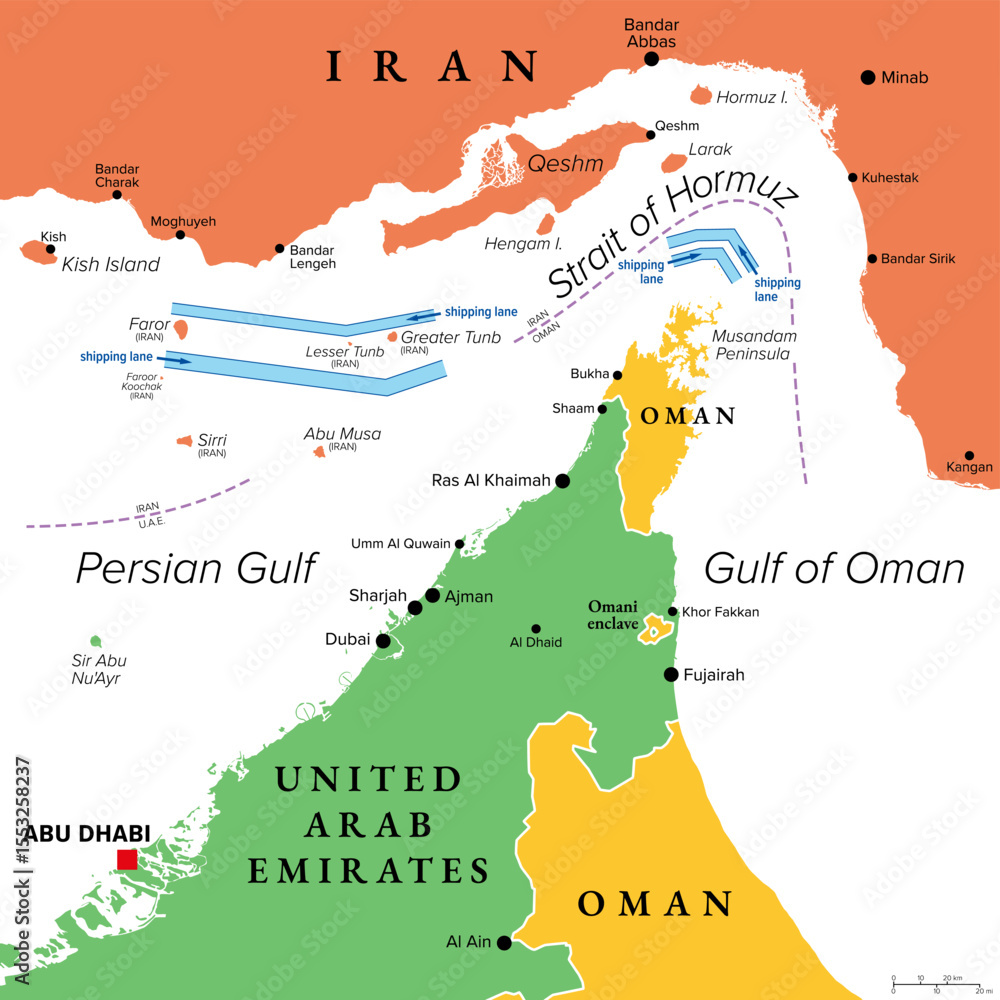
It's not in Iran's best interests to keep the Persian Gulf closed forever, but it is to Iran's advantage to maintain active control over the formerly open passage. It is doing this now by threat of force, because cargo and tanker ships are slow and vulnerable, but legal control recognized by some international agreement would be better for Iran, not least because this would create a mechanism for it to charge tolls.

Accordingly, its counter-offers at the negotiating table have made a priority of recognizing its de facto ability to cripple world trade (and its willingness to do so). But to give the appearance of regional unity, those proposals have generally offered to split the proceeds with the nation of Oman, which sits on the other side of the entrance to the Strait of Hormuz.

Strait of Hormuz, colored political map showing the shipping lanes. Sea  passage from Persian Gulf to 

Oman, which has maintained some backchannel diplomatic relationships with Iran, has played a key role in negotiations, which may explain why Iran's government has offered them that olive branch.

Today, at a Cabinet meeting where he once again had difficulty staying awake, Trump was asked about the possibility of joint Omani-Iranian oversight of the Strait. Trump, whose company is "developing" a luxury resort hotel in the capital Muscat largely paid for by the Omani and Saudi governments, responded that if Oman tried to enter into any such arrangement, "we'd have to blow them up."

Oman is a military ally of the United States, and has been attacked directly because of the war. Nineteen of its citizens have died in those attacks.

This is at least the fifteenth country that Trump, who complained bitterly for months about not receiving the Nobel Peace Prize, has threatened to launch military attacks against. Many of them, like Panama, Canada, Ukraine, Denmark, Mexico, and now Oman, are military and diplomatic allies. 

Why does this matter?

  • No matter how many times Donald Trump does it, threatening or attacking the United States' allies is an evil act that makes the United States less secure. 
  • A president who can't remember or doesn't care who is on which side of a war he's fighting is unfit for command.   
  • If Trump were in a position to dictate terms about how the Strait of Hormuz is reopened, it would already be open. 
  • Constantly making empty threats shows weakness, not strength.

Monday, May 25, 2026

What did Donald Trump do today?

He launched attacks against Iran while simultaneously claiming he was inches away from a peace deal.

This evening, the United States military launched missiles at Iranian targets in what it call "defensive strikes." In and of itself, this isn't very unusual: neither Iran nor the United States has paid much attention to the so-called "ceasefire" that Trump declared last month. In practice, the war has continued as it started, only at a slower pace, during which time Iran has begun to replenish its drone and missile stocks.

But today's attack happened as Trump was insisting that a peace deal really, truly is in the works this time. There aren't many specific details forthcoming: in fact, Trump made a point of saying that "nobody has seen it, or knows what it is." That may be literally true: details between different accounts don't seem to match at all

It's not easy to keep track of the number of times Trump has announced that the war is over, only to be immediately contradicted by Iran. This reflects the dilemma he's in: Trump can't win the war to the extent he's already claimed without a massive and likely doomed full-scale invasion of Iran, but neither is he psychologically capable of escaping the humiliation trap he's set for himself by making the kind of concessions Iran is now in a position to demand.

That bind has led to the absurd position he is in today, trying to hype a peace deal that has no support from either his friends or enemies.

  • Iran's government rejected any suggestion that a deal like Trump described was in the works. Instead, it responded by reiterating its own demand for even agreeing to continue talking: billions of dollars of offshore Iranian funds unfrozen. Iran also categorically refused to commit to even discussing the two most urgent priorities for the United States, giving up its nuclear leverage and relinquishing control of shipping through the Persian Gulf.

  • Benjamin Netanyahu, the Israeli Prime Minister who convinced Trump to launch the war in the first place, refused to agree to Iran's condition that hostilities in Lebanon would cease. Netanyahu, like Trump, is facing serious criminal charges and is protected from prosecution only while he remains in office.

  • Congressional Republicans, including some of the biggest supporters of the initial attack, are appalled at the prospect of unfreezing billions of dollars in Iranian assets while allowing Iran to continue its de facto control of the Strait of Hormuz. Trump himself has railed against the Obama administration unfreezing some Iranian funds as part of the JCPOA, the successful nuclear agreement that Trump pulled the United States out of in 2018.
  • Other nations involved in the peace process have their own problems. Gulf states like Saudi Arabia and the United Arab Emirates, which as US allies have taken the brunt of Iran's counterattacks, are desperate for a resolution to the conflict. But Trump added a bizarre coda to his litany of demands: that all parties involved "at a minimum" normalize relations with the Netanyahu government in Israel. This is something that is not only unthinkable for Iran at present, but also practically impossible for American allies in the region. That includes Pakistan, which has been acting as a mediator, and strongly objected to the suggestion today. 


Why does this matter?

  • This continues to be a humiliating disaster for the United States, whether or not Trump is able to understand it.  

Tuesday, May 5, 2026

What did Donald Trump do today?

He fell on his face with Iran, and then tried to say it was what he meant to do all along.

On Sunday, Trump announced what he called "PROJECT FREEDOM." This was meant to be an arrangement of some kind where US Navy ships would "guide" commercial ships safely out of the Persian Gulf. Crucially, however, this was not to be an escort: the Navy has not entered and apparently will not enter the Gulf.

Even with an escort, it would be very difficult if not impossible for the United States to guarantee the safety of the enormous, dead-slow, and in some cases literally explosive oil tankers and cargo ships stranded in the Gulf. More than two days after Trump announced the plan, it appears that at most two civilian ships have been safely "guided" out, though the Navy isn't saying exactly how. Iran has been permitting a few ships per day to transit regardless.

Of course, Iran doesn't have to destroy every ship that tries to run its blockade in order to render the entire Persian Gulf completely useless for commercial purposes. Even one ship in a hundred being seriously threatened would be catastrophic, and it is almost trivially easy for Iran to carry out that kind of threat with cheap drones and speedboats, or even divers armed with limpet mines. Shipping companies and merchant sailors have been unwilling to take that risk for good reason. 

That was the backdrop for a press availability today in which Trump was asked about whether and how he would respond to the fact that Iran has fired on US ships. Trump, who fell asleep at his desk later in the event, didn't seem to know. It's not at all clear from his slurred, garbled response that he was even aware those attacks had happened.

Q: Can I ask you about Iran, Mr. President? They've fired at US ships several times in the last 24 hours. What do they need to do to violate the ceasefire?

TRUMP: Well, you'll find out, because I'll let you know. They know what to do, and they know what to do [unintelligible]. And they know what not to do, more importantly, actually. And, uh— they fired [unintelligible] little boats, with pea-shooters, you know what a pea-shooter is? Little boat with a little—you know why, cause they don't have any boats anymore. 

Later, Iran's attacks against American ships forgotten (or forgotten again), Trump claimed that diplomacy with Iran was going so well that he was going to pause "Project Freedom" to focus on negotiations. 


In other words, Trump has gone from being unable to prevent Iran from blocking the Strait, to being unable to prevent Iran from blocking the Strait while trying to do something about it, to being unable to prevent Iran from blocking the Strait while claiming it was his idea.

Elsewhere today, Secretary of State Marco Rubio claimed that the United States' goal in Iran is to open the Strait of Hormuz—or, in other words, to get back to the situation before Trump launched attacks in the first place.

Of course, at some point, Iran will begin to permit traffic through the Strait again, as its own government has acknowledged. The question is when, and on whose terms. For the moment, Iran's ruling regime seems content to prove that Trump can't force it to do anything, and Trump seems determined to prove them right.

Why does this matter? 

  • A president who can't remember or doesn't care about the details of an ongoing war isn't fit for office. 
  • Neither is a president who can't stay awake in the middle of the day.  
  • It's bad that Trump doesn't seem capable of understanding how humiliating this is for him and for the United States.

Monday, May 4, 2026

What did Donald Trump do today?

He replayed his old threats of atrocities, to no effect.

Today, with Iran showing no interest in bargaining for peace on his terms, Trump retreated to an earlier tactic: threatening atrocities. From the safe space of a Fox News interview, Trump blustered that Iran would be "blown off the face of the Earth" if it used military force against US Navy ships in the Persian Gulf. He didn't specify the ruling regime, any more than he did when he said that Iran's "whole civilization will die" if it didn't open the Strait of Hormuz back in early April.

In reality, Iran hasn't opened the Strait then or since, which once again goes to the practical problem that Trump has trapped himself in: nobody is taking him seriously.

From a humanitarian standpoint, that's a good thing: what Trump is threatening (or pretending to threaten) is genocide, the mass punishment of Iranian civilians for the misdeeds of the dictatorial regime that rules the country. Even his lesser "threats" against the Iranian people, to destroy critical civilian infrastructure under the paper-thin justification that power plants and bridges help the Iranian military, would likely kill hundreds of thousands.

But in terms of the United States' ability to influence world events, the Iran situation is disastrous and getting worse with each new attempt by Trump to turn the page. Today was the day that ships trapped in the Persian Gulf were supposed to be "guided" safely out through the Strait of Hormuz by the United States, according to Trump's announcement of what he calls "PROJECT FREEDOM" yesterday. But no US Navy ships entered the conflict zone, and it doesn't appear that any neutral ships made it out of the Gulf without Iran's blessing. 

Instead, Iran responded to Trump's ploy by attacking the Trump-aligned UAE and, apparently, at least one civilian ship in the Persian Gulf, a South Korean cargo vessel. Trump's reaction was to demand that South Korea join the fight—in other words, the same angry plea for the rest of the world community to extricate him from the quagmire that he's made several times in the past.

Why does this matter?

  • It's a problem that Donald Trump can't find a way out because at this point there's no hiding how unbelievably badly he has fucked this up.

Saturday, May 2, 2026

What did Donald Trump do today?

He blustered about destabilizing NATO because Germany spoke honestly about his war in Iran.

Earlier this week, German chancellor Friedrich Merz said this about the current state of the Iran War, in which Iran enjoys a stronger position than it had before Trump launched attacks, while Trump is desperate for a face-saving way of backing down: 

The Iranians are obviously very skilled at negotiating, or rather, very skilful at not negotiating, letting the Americans travel to Islamabad and then leave again without any result. An entire nation is being humiliated by the Iranian leadership, especially by these so-called Revolutionary Guards. And so I hope that this ends as quickly as possible.

Merz saying that Trump was being humiliated by Iran was apparently a worse provocation than the actual humiliation, and in response, Trump vowed to start pulling American forces out of Germany.

Asked about it today at his vacation resort in Florida, Trump doubled down, saying that "We're going to cut way down, and we're cutting a lot further than 5,000."

American forces in Europe are there for the benefit of the United States, not just its European allies. The installations where American troops and aircraft are stationed allow the United States to project its military force much further than it otherwise could. Trump himself was outraged when, for example, Spain—which hosts only about 3,800 American troops—refused to allow him to use its airbases to conduct attacks on Iran. Trump fumed in the media about imposing an embargo on Spain before, apparently, forgetting about it.

Trump has made no secret of his contempt for NATO, the basis for those joint security arrangements, and—outside of demands that European countries join in wars he launched without consulting them, or help him escape from the consequences—has looked for excuses to degrade the United States' military alliances with its traditional allies wherever possible. 

The main benefactor of these efforts is the Putin regime in Russia. Trump is personally, financially, and politically beholden to Putin, who has interfered in American elections to help him.

Why does this matter?

  • American national security is more important than Donald Trump's ego, or the favors he owes.  

Friday, May 1, 2026

What did Donald Trump do today?

He blabbed about a top secret operation and in the same breath admitted he'd screwed it up.

Last month, Trump hinted at the existence of an otherwise secret plan to give weapons to Iran's Kurdish minority, who would in turn distribute them among opponents of Iran's ruling regime and overthrow it in the chaos caused by Trump's war.

In reality, of course, what happened is that the war made the clerical-military alliance stronger and less vulnerable to internal challenges than ever. The attacks killed a number of senior leaders on the first day, including the Supreme Leader, Ayatollah Ali Khamenei, but the nature of the regime hasn't changed. It is now led by Ali's son, Ayatollah Mojtaba Khamenei, who is one of the few surviving members of his family.

Trump has been the only member of his administration to even hint about US plans to arm Iranians, meaning that it was classified and should not have been spoken about at all. That's especially true because the United States is no more popular with anti-government Iranians than the Khamenei regime is, and having public American backing weakens the movement.

Today, he elaborated: not only had the secret plan been put into action, but it had failed. Trump apparently brought up the subject with reporters just to complain that he was "not happy with the Kurds" for keeping the weapons.

It's not clear why Trump thought that giving weapons to the relatively isolated and ethnically separatist Kurdish population would be a conduit to the urban, majority Persian protestors in a different part of the country that he had wanted to prop up. It's especially baffling given the lack of trust that he should have expected. Trump famously betrayed the Syrian Kurds who had been helping the United States campaign against ISIS. More than ten thousand of them died in that conflict, after which Trump called for their ethnic cleansing.

In an attempt to minimize the scope of the problem, Trump claimed that it had only been a "small amount" of weapons, but this is almost certainly a lie. For one thing, it was "a lot of guns" the last time Trump talked about it, not "a small amount." And for another, there wouldn't be much point in sending only a few token weapons into a country the size and population of the entire US eastern time zone. 

While there is a growing movement supporting Kurdish independence from Iran, it does not yet have autonomy in practice, and the IRGC is still in de facto control of Kurdish regions. That means that one possible outcome is that any American military hardware will simply end up in the hands of the Iranian military.

Why does this matter?

  • Donald Trump's need to blame everyone else for his mistakes doesn't justify blurting out classified information. 
  • When you rush into war on the assumption that it'll all work itself out and other people will win it for you, you get this kind of stupid and slapdash thing.