Sunday, May 31, 2026

What did Donald Trump do today?

He threatened a federal judge over his "military top-secret ballroom."

Today, Trump once again took to social media to rant about the legal obstacles he's facing in building what he has called a "military top-secret ballroom." Initially, Trump's fixation on the "ballroom" was simply for the event hosting space he was imagining. He claimed that presidents for "150 years" (so, presumably, back to the Ulysses S. Grant administration) had yearned for "a large event space on the White House complex."

But the idea that Teddy Roosevelt or Dwight Eisenhower lay awake at night dreaming of ballrooms they couldn't build didn't play well with the public, and neither did the ballroom itself, or Trump's obsession with it. Gradually, he introduced the "military" aspect to his frequent diatribes about it, recasting what he still calls a ballroom as some kind of space-age fortress with a bunker, secure communications facilities, and a hospital. (The White House already has all of these things except a hospital, which might actually be useful for a President whose "annual physicals" now occur every few months and on short notice.)

Today's emotionally overwrought post was about the "DronePort" that he claims the current litigation against the ballroom is holding up. He specifically called out the Republican-appointed judge overseeing the case, Richard Leon, and said that Leon would "be held responsible for the Death and Destruction caused to our Country."

Drawing attention to people by name in this way, in the knowledge that someone among perhaps millions of followers will try to threaten or hurt them, is called stochastic terrorism. Trump has a great deal of experience with it, including against Republicans like Judge Leon.

Trump didn't say what "Death and Destruction" he envisioned happening because the White House lacked an "ornately designed and carefully crafted space, with a seated capacity of 650 people." But he posted it from the clubhouse of one of his Virginia golf resorts, which lacks any of the White House's defensive fortifications or a drone port.

Why does this matter?

  • Laws and judicial proceedings don't cease to exist just because Donald Trump gets upset by them. 
  • Adding paranoia to a preexisting obsession doesn't make it any better.


Saturday, May 30, 2026

What did Donald Trump do today?

He got very emotional about the performing arts, and how much better he is than the people who do them.

On Wednesday, organizers for the "Great American State Fair" announced the headliners for a series of concerts scheduled to take place in Washington next month. The event is part of Trump's attempts to capitalize on the 250th anniversary of American independence, which also include a UFC cage match on the grounds of the White House. The announcement also revealed that Trump would be personally appearing at the concerts.

Immediately, the musicians on the schedule began pulling out. By Friday, all but two of the nine headliners had canceled their appearance. All of the performers who dropped out issued statements saying the same thing: that they had been misled into thinking that this wasn't a partisan political event.


Trump responded emotionally today on social media. His first impulse was to fantasize about "performing" himself: 

Artists are getting “the yips” having to do with their performance on Wednesday, so I am thinking about bringing the Number One Attraction anywhere in the World, the man who gets much larger audiences than Elvis in his prime, and he does so without a guitar, the man who loves our Country more than anyone else, and the man who some say is the Greatest President in History (THE GOAT!), DONALD J. TRUMP, to take the place of these highly paid, Third Rate “Artists,” and give a major speech, rallying the Country forward like I have done ever since being President!

In reality, Trump often struggles to draw crowds to his rallies, which have limited appeal beyond the very core of his base. He's often not even the real draw at events he headlines: crowds routinely get up to leave and beat the traffic during his long-winded and often bitter speeches. It's a sensitive subject for Trump, who as a sitting president once boasted about getting one million ticket requests for a rally in Oklahoma where 6,200 people actually showed up. ("Elvis in his prime" once played to more than 60,000 people, filling one of the largest stadiums in existence at the time.)

Within a few hours, though, Trump had decided to give up entirely, saying in a separate post that the whole event should be canceled. He then launched into another emotional tirade against the judge who ordered his name taken off of the John F. Kennedy Center for the Performing Arts.
 

Why does this matter?

  • This kind of tantrum from the President of the United States doesn't get any less embarrassing just because it happens all the time. 
  • There are more important things for a president to worry about right now than micromanaging event planning.  

Friday, May 29, 2026

What did Donald Trump do today?

He got slapped down hard by courts, twice.

Kathleen Williams, the federal judge in Trump's now-dismissed lawsuit against the IRS reopened the case today, citing "grievous allegations" that Trump had perpetrated a fraud against the court. While it's highly unusual for a judge to issue this kind of order, courts have the inherent power as a co-equal branch of government to enforce their own rules. In this case, that means investigating (as 35 retired federal judges implored Williams to do in a friend-of-the-court brief) whether the "settlement" that created a $1.8 billion slush fund and excused Trump and his family from ever having tax laws enforced against them was reached in good faith between two genuinely opposed parties.

The settlement, which has enough money in it to provide every convicted insurrectionist who tried to forcibly overturn the result of the 2020 election with more than $1.1 million dollars, is incredibly politically toxic for Trump. Congressional Republicans normally loyal to Trump have called it "stupid on stilts" and "a slush fund to pay people who assault cops" that's "utterly stupid" and "morally wrong."

It's extremely unlikely that it would ever have been allowed to go into effect, even if Judge Williams hadn't reopened the case to investigate the apparently fraudulent nature of the case. But even if Trump starts cutting checks without legal authority to do so, state governments have already started working on legislation to claw back any such payouts through special 100% taxes—the sort of showy move legislators only do when it's a sure political winner.

It's not clear if Trump knows or cares about Williams' order, but another federal judge provoked a torrent of outrage from him today. In a 93-page ruling, Judge Christopher Cooper found that Trump had no legal authority to slap his name on the John F. Kennedy Center for the Performing Arts. The name of the center, as Cooper noted, was fixed by the law establishing it, and cannot be changed unless Congress passes another law.

Trump's obsession with the Kennedy Center is personal. He stocked its board with loyalists, made himself its Chairman, and gave himself the emcee gig at its annual awards (which saw record low ratings). He also had his name physically put on the façade above President Kennedy's. He responded to Cooper's ruling with a furious 580-word tantrum on his social media. 

Cooper's order also halts Trump's plans to shut the Kennedy Center down for two years for "renovations," which were really an excuse to cover up the fact that artists and patrons were boycotting what had once been one of the most important artistic venues in the world.

Why does this matter?

  • The laws of the United States and the rules of its courts apply to Donald Trump. 
  • There are more important things in the world than Donald Trump's ego.

Thursday, May 28, 2026

What did Donald Trump do today?

He lied about using the power of the state to criminally punish a woman he raped.

In 2023, a jury found that Trump had raped E. Jean Carroll and then defamed her by calling her a liar when she accused him. Trump repeated the defamatory statements after the verdict was returned, earning him a second and much larger defeat in court. Trump continues to drag the case through the appeals process, but he has lost every round in court so far.

Yesterday, news broke that the Department of Justice was investigating Carroll for the crime of perjury. Several news agencies independently confirmed the story with DOJ sources.

The substance of the investigation was a claim that Carroll, 82, made during a deposition in which she said that she was not receiving external funding for her lawsuit. That deposition took place two years after her attorneys accepted some financial support on her behalf from a Chicago nonprofit organization, and which Carroll had evidently forgotten about or was unaware of.

At Trump's attorneys' request, the trial judge held a hearing, and accepted that Carroll's statement was an innocent mistake with no bearing on the case. The jury never heard any false statement regarding the matter. 

Today, facing outrage at still yet another obvious attempt by Trump to use the power of the presidency to get revenge against his enemies, he sent a US Attorney to make a misleading statement of his own. Andrew Boutros "categorically" rejected the reporting and insisted that no such investigation into Carroll existed. His statement read:

In light of wide-spread reporting and intense media and public interest into the E. Jean Carroll matter in New York, the Chicago U.S. Attorney’s Office can confirm that it has not opened — and has never opened — a criminal investigation into E. Jean Carroll. Any claim to the contrary is categorically false. 

(Boutros has been in the news for other reasons this week, trying to do damage control after his office was found to have grossly abused the grand jury process to obtain false indictments of people protesting against Trump's immigration terror campaign.) 

But given the certainty that the investigation does exist, it appears that Boutros's statement was carefully worded to conceal that reality. Further reporting today revealed that the organization that helped fund Carroll's suit is itself under investigation—and since that would amount to a criminal conspiracy if Carroll actually had knowingly lied during her deposition, an investigation into the donor is an investigation into Carroll regardless. 

In other words: Trump's DOJ, which is led by Trump's former personal defense attorney, is targeting for criminal prosecution the woman that a jury found he raped and twice defamed for alleged false statements that her lawyers voluntarily corrected, and a judge held harmless—and then lying about it when called out. 

Trump has spent much of the last month trying to pay himself and supporters who committed crimes on his behalf billions of taxpayer dollars for the supposed "weaponization" of government against them.

Why does this matter?

  • This is pretty much what you'd expect an unrepentant sexual abuser to do with the powers of the presidency. 
  • The Department of Justice is not supposed to be Donald Trump's private goon squad.

Wednesday, May 27, 2026

What did Donald Trump do today?

He casually threatened to "blow up" Oman, a military ally and diplomatic partner in his war on Iran.

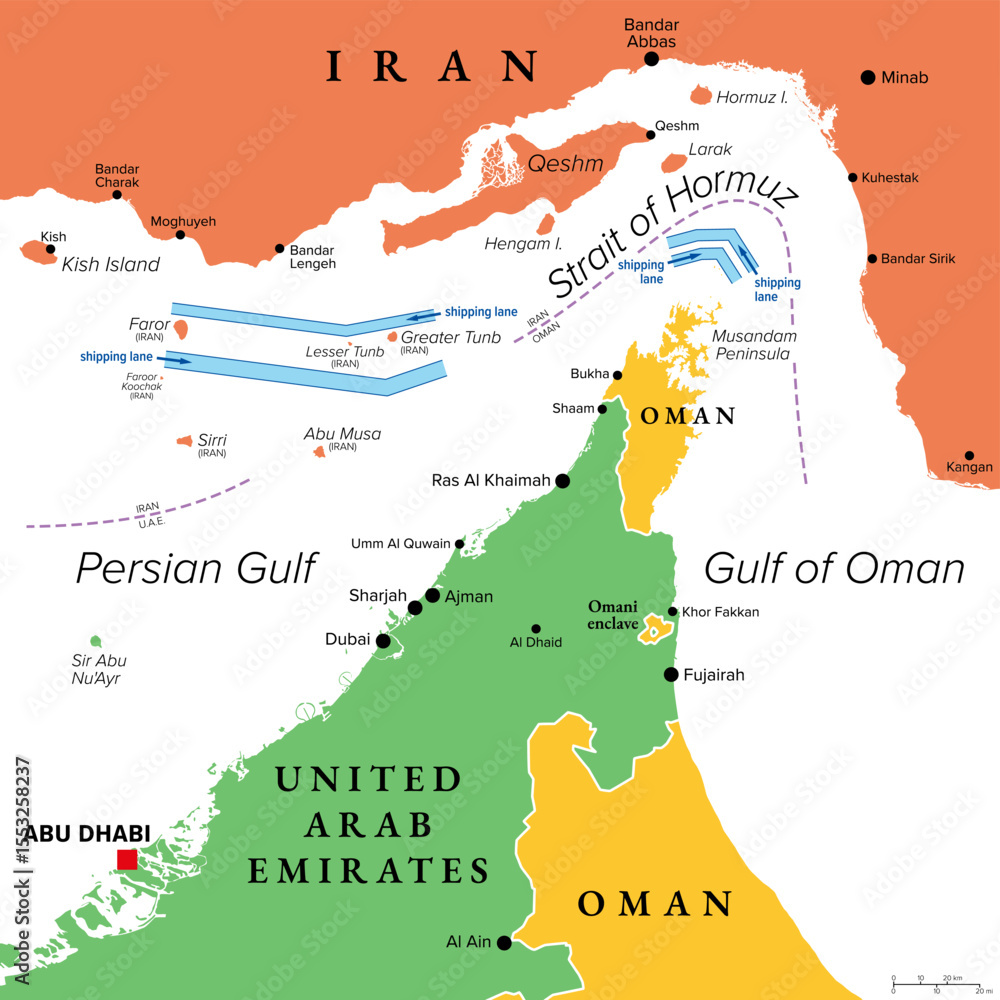
It's been 89 days since Iran functionally closed the Persian Gulf to all but a few ships per day, drastically affecting the world economy and forcing the United States to sue for peace with a nation that Trump has repeatedly claimed was already defeated.

NBC News tracker

It's not in Iran's best interests to keep the Persian Gulf closed forever, but it is to Iran's advantage to maintain active control over the formerly open passage. It is doing this now by threat of force, because cargo and tanker ships are slow and vulnerable, but legal control recognized by some international agreement would be better for Iran, not least because this would create a mechanism for it to charge tolls.

Accordingly, its counter-offers at the negotiating table have made a priority of recognizing its de facto ability to cripple world trade (and its willingness to do so). But to give the appearance of regional unity, those proposals have generally offered to split the proceeds with the nation of Oman, which sits on the other side of the entrance to the Strait of Hormuz.

Strait of Hormuz, colored political map showing the shipping lanes. Sea  passage from Persian Gulf to 

Oman, which has maintained some backchannel diplomatic relationships with Iran, has played a key role in negotiations, which may explain why Iran's government has offered them that olive branch.

Today, at a Cabinet meeting where he once again had difficulty staying awake, Trump was asked about the possibility of joint Omani-Iranian oversight of the Strait. Trump, whose company is "developing" a luxury resort hotel in the capital Muscat largely paid for by the Omani and Saudi governments, responded that if Oman tried to enter into any such arrangement, "we'd have to blow them up."

Oman is a military ally of the United States, and has been attacked directly because of the war. Nineteen of its citizens have died in those attacks.

This is at least the fifteenth country that Trump, who complained bitterly for months about not receiving the Nobel Peace Prize, has threatened to launch military attacks against. Many of them, like Panama, Canada, Ukraine, Denmark, Mexico, and now Oman, are military and diplomatic allies. 

Why does this matter?

  • No matter how many times Donald Trump does it, threatening or attacking the United States' allies is an evil act that makes the United States less secure. 
  • A president who can't remember or doesn't care who is on which side of a war he's fighting is unfit for command.   
  • If Trump were in a position to dictate terms about how the Strait of Hormuz is reopened, it would already be open. 
  • Constantly making empty threats shows weakness, not strength.

Tuesday, May 26, 2026

What did Donald Trump do today?

He tried to make public servants sign the same nondisclosure agreements his ex-wives had to.

The Trump administration released a draft proposal today that would force federal employees to sign nondisclosure agreements, or NDAs, in an apparent attempt to stop embarrassing and politically damaging leaks

Of course, there are already legal means to bar the release of classified information, but most of what happens in government offices isn't classified. Stories about Trump being manipulated by junior staffers, or paying inappropriate sexual attention to them, or throwing temper tantrums when he doesn't get his way aren't matters of national security—but they are things that government employees witness, and tell Congress or the press about. They're also firsthand witnesses to incompetence, immorality, and corruption on the part of Trump's senior officials.

It's this kind of sunlight that Trump's rule would try to shut out, by giving him new ways to punish and financially ruin government employees who witnessed wrongdoing. He's tried it before in both public and private life. For example, in 2019, he threatened to sue a former White House employee who had written a tell-all book for violation of an NDA. Trump ultimately backed down, in part because without any legal authority behind it, the agreement was almost certainly unenforceable

Trump's also made extensive use of NDAs in his private life. He's forced each of his ex-wives to sign one as part of their divorce settlements, and they're a routine part of working for his businesses. But even then, they don't always have the desired effect. Trump tried unsuccessfully to use NDAs to keep the adult film actress Stormy Daniels from revealing their sexual encounter, which took place shortly after the birth of Trump's youngest son. That arrangement, signed under a pseudonym ("David Dennison"), became a key element in Trump's conviction on 34 felony counts in New York.

Whistleblower protections are baked right into federal law, and for good reason. Government officials engaging in corrupt or illegal behavior usually try to keep it secret. Bringing public scrutiny to bear on the details is sometimes the only way of rooting out that kind of corruption. Likewise, journalists who publish internal government information that sources bring them usually can't be forced to reveal those sources, or be prosecuted themselves, although it hasn't stopped Trump from trying to do just that in the past.

It was exactly this kind of protected whistleblower action that led to Trump's first impeachment. Alexander Vindman, an Army lieutenant colonel working for the National Security Council, was the first to raise alarms about the phone call in which Trump tried to strongarm Ukraine's president into ginning up a fake investigation against Joe Biden's son. Trump had correctly believed that Biden would be the Democratic nominee in 2020, and that he would need to manufacture some disqualifying scandal in order to beat Biden in the general election. But the resulting blowback, which saw many Republicans openly disgusted by Trump's abuse of an allied power in pursuit of domestic political dirty tricks, helped cost Trump the election instead.

Why does this matter?

  • The purpose of government isn't to help Donald Trump cover up his scandals.  
  • One way to stop people from sharing evidence of corruption and incompetence is to run a less corrupt and incompetent administration.

Monday, May 25, 2026

What did Donald Trump do today?

He launched attacks against Iran while simultaneously claiming he was inches away from a peace deal.

This evening, the United States military launched missiles at Iranian targets in what it call "defensive strikes." In and of itself, this isn't very unusual: neither Iran nor the United States has paid much attention to the so-called "ceasefire" that Trump declared last month. In practice, the war has continued as it started, only at a slower pace, during which time Iran has begun to replenish its drone and missile stocks.

But today's attack happened as Trump was insisting that a peace deal really, truly is in the works this time. There aren't many specific details forthcoming: in fact, Trump made a point of saying that "nobody has seen it, or knows what it is." That may be literally true: details between different accounts don't seem to match at all

It's not easy to keep track of the number of times Trump has announced that the war is over, only to be immediately contradicted by Iran. This reflects the dilemma he's in: Trump can't win the war to the extent he's already claimed without a massive and likely doomed full-scale invasion of Iran, but neither is he psychologically capable of escaping the humiliation trap he's set for himself by making the kind of concessions Iran is now in a position to demand.

That bind has led to the absurd position he is in today, trying to hype a peace deal that has no support from either his friends or enemies.

  • Iran's government rejected any suggestion that a deal like Trump described was in the works. Instead, it responded by reiterating its own demand for even agreeing to continue talking: billions of dollars of offshore Iranian funds unfrozen. Iran also categorically refused to commit to even discussing the two most urgent priorities for the United States, giving up its nuclear leverage and relinquishing control of shipping through the Persian Gulf.

  • Benjamin Netanyahu, the Israeli Prime Minister who convinced Trump to launch the war in the first place, refused to agree to Iran's condition that hostilities in Lebanon would cease. Netanyahu, like Trump, is facing serious criminal charges and is protected from prosecution only while he remains in office.

  • Congressional Republicans, including some of the biggest supporters of the initial attack, are appalled at the prospect of unfreezing billions of dollars in Iranian assets while allowing Iran to continue its de facto control of the Strait of Hormuz. Trump himself has railed against the Obama administration unfreezing some Iranian funds as part of the JCPOA, the successful nuclear agreement that Trump pulled the United States out of in 2018.
  • Other nations involved in the peace process have their own problems. Gulf states like Saudi Arabia and the United Arab Emirates, which as US allies have taken the brunt of Iran's counterattacks, are desperate for a resolution to the conflict. But Trump added a bizarre coda to his litany of demands: that all parties involved "at a minimum" normalize relations with the Netanyahu government in Israel. This is something that is not only unthinkable for Iran at present, but also practically impossible for American allies in the region. That includes Pakistan, which has been acting as a mediator, and strongly objected to the suggestion today. 


Why does this matter?

  • This continues to be a humiliating disaster for the United States, whether or not Trump is able to understand it.  

Thursday, May 21, 2026

What Trump Did Today will resume publication on Monday, May 25.

What did Donald Trump do today?

He either got very confused, lied to cover up a mistake, or both.

Last Friday, as part of an ongoing tantrum against the United States' NATO allies in Europe, Trump canceled the deployment of 4,000 American troops to Poland.

Today, he announced in a social media post that he was surging 5,000 extra U.S. servicemembers to Poland.

Trump didn't acknowledge the discrepancy with the order he gave less than a week ago, but explained that the new order was "Based on the successful Election of the now President of Poland, Karol Nawrocki, who I was proud to Endorse."

Nawrocki was indeed elected to the presidency of Poland—in June of 2025.
 

Why does this matter?

  • American forces should be deployed based on the best interests of the United States and its allies, not a president's whim. 
  • It shouldn't be this easy to think that the President of the United States doesn't know what year it is.

Wednesday, May 20, 2026

What did Donald Trump do today?

He threw a tantrum about not getting a billion dollars for the "free" ballroom he wants to build.

Trump has tried to justify building his "military top-secret ballroom" by claiming that it is being paid for by private donations. Even setting aside the obvious corruption implications of letting companies with business before the White House buy the president's goodwill by paying for his pet project, Trump's claim isn't true: the "gifts" that tech companies, crypto scammers, lobbyists, and tobacco companies are making are tax-deductible. There's no difference between a dollar the Treasury spends and one it never receives—taxpayers are footing the bill either way.

But it's also false because Trump has demanded $1 billion in appropriations for the ballroom project, directly from taxpayers. Specifically, he's demanded that Senate Republicans try to force that funding through the budget reconciliation process, where Democrats could not mount a filibuster. Budget reconciliation is a complex parliamentary procedure and in order to be included in it, an appropriation must meet a number of legal standards. The person who adjudicates that process, under the Senate's rules, is the Senate Parliamentarian.

Over the weekend, the parliamentarian (whose name is Elizabeth MacDonough) ruled that the ballroom budget line did not qualify. Trump responded today by ranting about how she was appointed by President Obama in 2012 and demanding that she be fired.

Trump is confused: the president doesn't appoint the Senate Parliamentarian. But in any event, Senate Republicans, who rely on the consistent process that MacDonough oversees as much as Democrats, don't seem eager to take Trump up on his demand. 

In spite of the fact that the reason he was angry was that MacDonough's ruling means he won't be able to get a billion-dollar appropriation of public funds for his ballroom, Trump then immediately repeated his claim that the building was his personal "gift" that wouldn't cost taxpayers anything. "All this is being paid for by myself," Trump said, although he himself isn't contributing anything at all, unless he decides to pay his taxes this year.

Why does this matter?

  • No amount of repetition makes the phrase "military top-secret ballroom" less embarrassing for a president to say. 
  • The rest of the United States government doesn't need Donald Trump's permission to do its job.  

Tuesday, May 19, 2026

What did Donald Trump do today?

He wrote himself a get-out-of-jail-for-tax-fraud-and-evasion-free card.

Contrary to popular belief, most extremely wealthy Americans do pay their taxes. The reason that many of the very richest Americans often end up paying a much lower rate than poor and middle-class citizens is that the tax code is written with loopholes only they can take advantage of. (Many of them were put there by Trump himself, and meant to benefit him primarily.)

Donald Trump, however, is the exception: he is, without question, one of the most flagrant tax cheats in American history, surpassing even his rival dabbler on the New York real estate scene, Leona Helmsley. Investigative reporting, criminal prosecutions of his businesses and his fraudulent charity, and a few tax returns that the public managed to see all tell the same story. The leaked data that formed the basis of Trump's recently settled lawsuit against the IRS for its "negligence" in letting a third party contractor see his returns during his first term didn't change that picture—it only confirmed what reporters had already learned

Most of this was already known in general terms during the 2016 campaign, which is why Trump—unlike every other major party candidate since Nixon—refused to release his tax returns for public inspection. But the scope was much worse than most voters had any reason to expect: if Trump had been honest about his tax returns and released them, they would have shown that he'd paid nothing at all in taxes for 10 of the previous 15 years, and only $750 in 2016. Even a part-time, minimum-wage employee would pay more than that.

Yesterday, the DOJ announced that Trump's executive branch had "agreed" to settle Trump's private lawsuit against the IRS, in exchange for a slush fund to pay off the convicted criminals who tried to help him throw out the results of the 2020 election. Today, it released another detail: it was permanently exempting Trump, his businesses, or his family members from any investigation or prosecution for tax crimes—forever.

As the memo signed by Acting Attorney General and former Trump defense attorney makes clear, that is not an exaggeration.

The United States RELEASES, WAIVES, ACQUITS, and FOREVER DISCHARGES each of the Plaintiffs from, and is hereby FOREVER BARRED and PRECLUDED from prosecuting or pursuing, any and all claims, counterclaims, causes of action, appeals, or requests for any relief, including injunctive relief, monetary relief, damages, examinations or similar or related reviews, appeals, debt relief, costs, attorney’s fees, expenses, and/or interest, whether presently known or unknown, that—as of the Effective Date of the Settlement Agreement—have been or could have been asserted by Defendants against any of the Plaintiffs or related or affiliated individuals (including, without limitation, family or others filing jointly), or parties including trusts, parent, sister, or related companies, affiliates, and subsidiaries, by reason of, with respect to, in connection with, or which arise out of (1) any matters that were raised or could have been raised in the Case or the Pending Agency Claims; (2) Lawfare and/or Weaponization; or (3) any matters currently pending or that could be pending (including tax returns filed before the Effective Date) before Defendants or other agencies or departments. 

Even ignoring the fact that Trump is writing himself a get-out-of-jail-free-card by agreeing on behalf of the government not to even begin an investigation into him as a private citizen, this document would save Trump enormous amounts of money in the future. Not only would it effectively incentivize him to commit ongoing tax fraud (which the IRS would be forbidden to take any notice of), it would save him from having to repay hundreds of millions of dollars in taxes he's already evaded.

Trump's promise not to investigate himself is not likely to be legally binding on future administrations.
 

Why does this matter?

  • There is only one reason that a government official would try to exempt themselves from criminal investigation. 
  • Even if he writes himself a note on Presidential letterhead saying that he is above the law, Donald Trump is not above the law.  

Monday, May 18, 2026

What did Donald Trump do today?

He tried to create a slush fund to pay tax dollars to insurrectionists who tried to help him cling to power after 2020.

The Department of Justice, which is led by Trump's personal defense lawyer Todd Blanche, announced today that it was creating a $1,776,000,000 fund to make payments to for "victims" of the Biden Administration's "weaponization" of government. This is apparently part of a settlement of Trump's $10 billion lawsuit against the IRS for "negligence" against him personally while he himself was in charge of it.

In practice, the creation of an almost $2 billion slush fund would mean that Trump could make payments at his sole discretion to anyone who had been prosecuted for committing crimes on Trump's behalf, whether by rioting at the Capitol to disrupt the certification of President Biden's election on January 6, 2021, or trying to cast fake electoral votes, or any of the other criminal acts that Trump and his supporters committed for his benefit. 

Divided up equally among the roughly 1,500 January 6 criminal defendants, that would mean that they would be paid nearly $1.2 million dollars each by taxpayers of the country whose elections they were trying to invalidate. That would include Jake Lang, who was thrown out of Washington Nationals game yesterday for unveiling a white supremacist banner. It would also put that same million-dollar payout in the hands of at least 78 people who have been convicted of other crimes since 2021. That includes people convicted of two murders, three rapes, and nine cases of child sexual abuse.

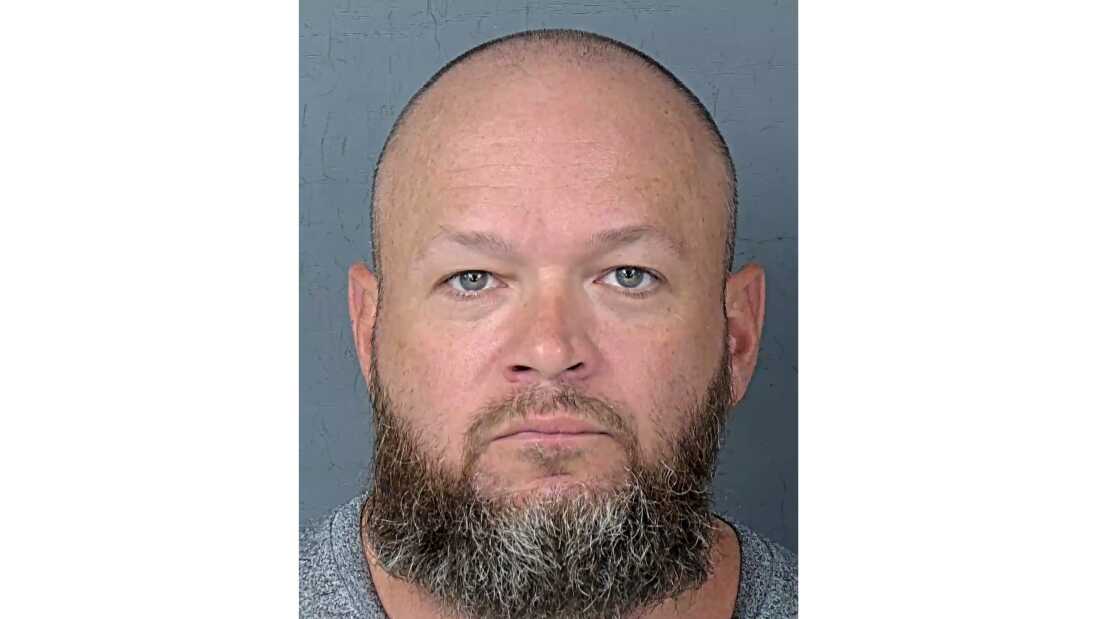
One of those convicted sexual abusers, Andrew Paul Johnson, tried to keep his middle school-age victims quiet by promising to share the money he said Trump would be paying convicted January 6th criminals—which is, of course, exactly what Trump is now proposing to do.

Andrew Paul Johnson was convicted of multiple state charges of child molestation and exposing himself to children. Johnson was charged in Florida after receiving a full pardon from President Donald Trump for his role in the Jan. 6, 2021 riot at the U.S. Capitol.  


Trump has already pardoned most of his criminal co-conspirators, and has dabbled in settlements that pipe money to them. Trump's DOJ, which has refused to prosecute federal agents who killed protestors, turned against the police who shot a January 6th rioter who was about to breach the lines of police defending retreating members of Congress and paid out $5 million to the survivors. 

Congressional Democrats immediately vowed to block the fund in the courts. The most obvious objection is that Trump has no legal authority to pay billions of taxpayer dollars to a private militia. Congress would have to authorize that like any other spending, and given how politically toxic Trump's desperate attempts to stay in power are, that would never happen. 

By Trump's logic, he could spend any amount of money on anything he wanted by calling it a "settlement" for some other imagined government wrongdoing. That violates the Constitution, which gives Congress the sole power to appropriate money through legislation. But Trump's attempt to shovel taxpayer money with no oversight to people who committed actual crimes on his orders is so far out of the realm of the law that it's almost certainly unconstitutional on entirely different grounds. The Fourteenth Amendment, ratified after the Civil War, has a clause that dictates that

neither the United States nor any State shall assume or pay any debt or obligation incurred in aid of insurrection or rebellion against the United States.

In practice, this was meant to ensure that the United States government would not be obliged to pay debts incurred by the Confederacy. It has sat dormant ever since, but Trump's attempt to prevent the duly elected President Biden from taking office (conduct for which he was impeached and indicted, and is still liable for prosecution if and when he leaves office) would likely count as an insurrection for these purposes, meaning no "debt" owed to the people who participated in it would be valid.

Incredibly, Trump claimed today that he didn't know about the fund and "wasn't involved" in it, despite it being linked to his $10 billion lawsuit.

Why does this matter?

  • Glorifying and rewarding people who use violence to keep the leader in power is what dictators do. 
  • Neither Trump nor people who attacked police, ransacked the Capitol, threatened Congress, falsified evidence, or committed any other crime on his behalf are victims. 
  • The money in the Treasury, which comes from Americans who actually pay their taxes, is not Donald Trump's personal piggy bank.

Sunday, May 17, 2026

What did Donald Trump do today?

He spent public money promoting a specific religious message and glorifying him as God's chosen one.

An event called "Rededicate 250" was held on the National Mall in Washington D.C. today. It was billed as a "national Jubilee" of "prayer and worship." Virtually all of the "faith leaders" who spoke were from a particular Christian nationalist sect, and all of them were political supporters of Donald Trump.

Speaker after speaker rained down praise on Trump by name, with many speaking of him as a present-day prophet or special instrument of God's will. This echoes Trump's own language on the special and unique place he says he has in God's plan, which he's made a part of his stump speech. At times, it verged on parody: one speaker, Eric Metaxas, expressed disbelief that it had taken God "two centuries to raise up a great man to bring that ballroom finally to stand where it needs to stand."

Trump himself was on the program, and has been trying to drum up a crowd over the past week, apparently worried about yet another underwhelming crowd response to one of his flashy public events. Early estimates are that a few thousand people attended, with crowds thicker on the ground than they were for Trump's disastrous Soviet-style military parade last year, but not nearly as many as attended (for example) the Boise, Idaho "No Kings" protest in March.


But in spite of the advance billing, Trump wasn't present, and he didn't even address the group live, as he sometimes does at events like this. Instead, attendees saw him reading a passage from the Bible from a teleprompter that had been taped weeks ago for an unrelated event. Trump was resting at one of his private DC-area golf courses while the recording played.

Trump's Interior Department has set aside $100 million in funds for this and similar events, although it hasn't said exactly how much was spent for today's "prayer Jubilee." Under the normal rule of law in the United States, public money could not be used to promote a specific religious agenda, or for what amounted to political campaign event. And the explicit endorsement of a particular form of Christianity was absolutely clear. As the Washington Post reported:

In an eight-hour lineup, speakers including top government officials framed America as a country founded to be explicitly Christian — and in danger if its population turns from their version of that religious faith.

Sitting, standing, dancing and praising with hands raised toward a blazing sun, attendees appeared riveted as speakers took the stage during “Rededicate 250: A National Jubilee of Prayer, Praise & Thanksgiving.” Many said they were thrilled to see an event that tied the nation and its government so overtly to Christianity.

“We welcome Jesus into this place!” worship leader Andy Frank said at the start of the event, belting from a stage with ivory-colored pillars that evoked the neoclassical architecture of the capital’s federal buildings.

Trump hasn't been shy about embracing the Christian nationalist declaration that, Constitution be damned, the United States is and ought to be an explicitly Christian place. This is not a popular view with American Christians or Americans in general, most of whom believe that having the government endorse one religious belief over another is an infringement on freedom and a desecration of faith.

But then, neither is Trump repeatedly comparing himself to Jesus, and that hasn't stopped him.

Why does this matter?

  • Cynically trying to coopt people's religious beliefs to drum up political support is what tinpot dictators do.  
  • The United States government is a democracy, not a theocracy, and not a cult of personality.
  • Whatever he may personally believe, Trump is not God, the son of God, or anything like a god.

Saturday, May 16, 2026

What did Donald Trump do today?

He bragged about not knowing about what was happening with a major transit strike.

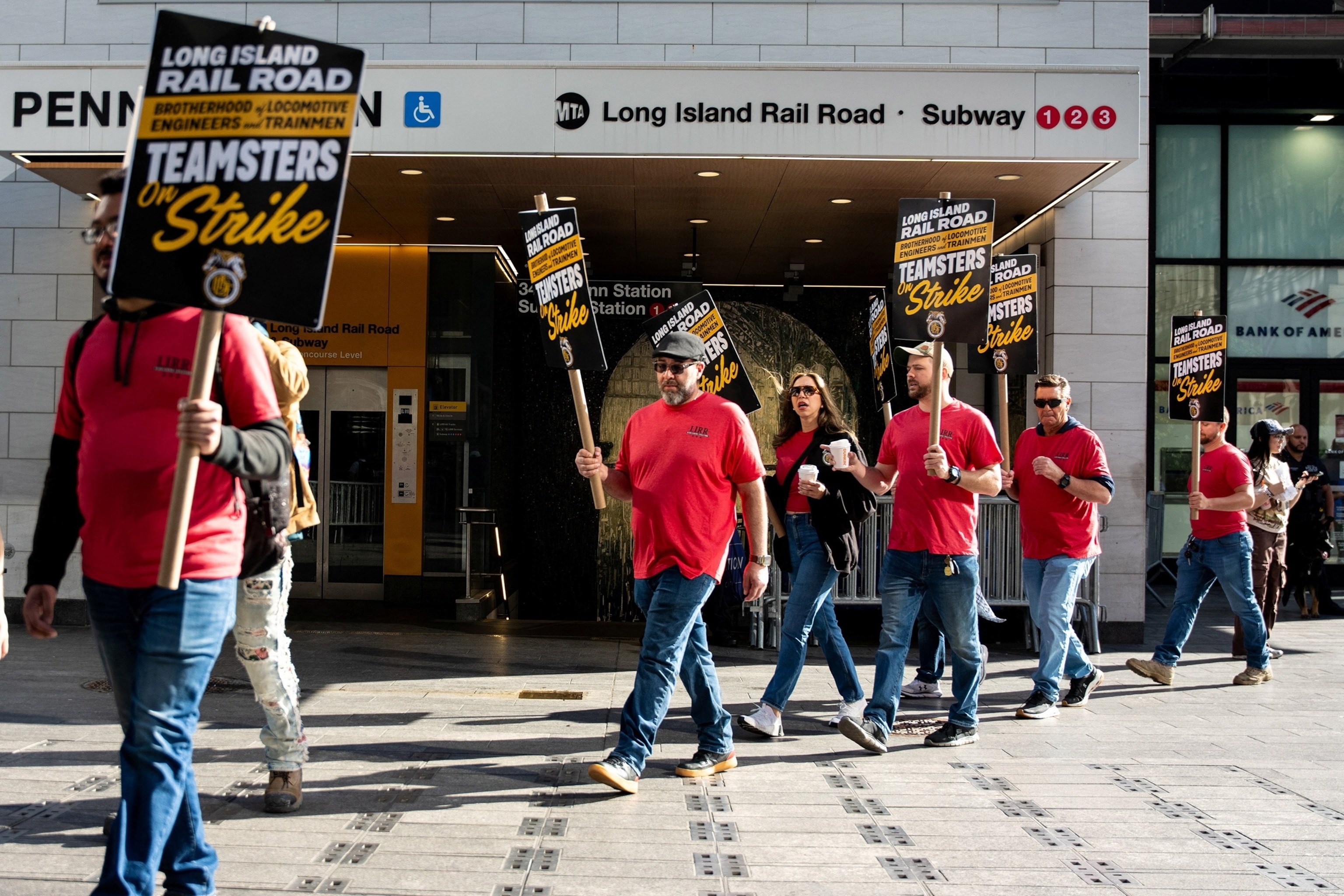
3,500 employees of the Long Island Railroad (LIRR) went on strike today. The striking workers have not received a raise in three years, meaning they've taken a de facto pay cut amid sharply rising inflation. Talks with the Metropolitan Transit Authority (MTA) have been stalled for years.

LIRR workers go on strike after negotiations with MTA fail - ABC News 

New York's Democratic governor, Kathy Hochul, opposes the strike and supports only a 3% raise—almost certainly not enough to outpace this year's rising prices—but in a statement she made almost nine months ago, she also criticized Trump and his appointees to the board that helps mediate labor disputes in the railroad industry. She reiterated that today, saying that the strike was the "direct result of reckless actions by the Trump Administration to cut mediation short and push these negotiations toward a strike."

Trump responded not by disputing her claim, exactly, but by bragging about how he'd never even heard about any LIRR strike:

Failed New York State Governor Kathy Hochul, a Dumacrat, just blamed ME for her Long Island Railroad STRIKE, when she knows, full well, that I have NOTHING TO DO WITH IT - never even heard about it until this morning.
To be clear, Trump is almost certainly telling the truth, because a president admitting they had no clue about a major railroad strike is incredibly damning. Railroads, both commuter and freight, are considered so essential to the proper functioning of government that they have an entire separate legal apparatus designed specifically to avoid strikes. Presidents can legally order striking railroad workers back on the job under certain circumstances, as President Biden did in 2022. 

But railroad workers also have special protections and benefits unique to them, including recourse the National Mediation Board whose members were supposed to prevent this or any other transit strike from happening in the first place. Trump appointed the current chair and fired one of the Biden appointees, quite probably illegally, essentially paralyzing the two remaining members from taking any action. 

Three members, the original two Biden appointees and one Trump appointee, would have been able to take valid legal action to avert the strike.

270,000 people use the LIRR on a daily basis.

Why does this matter?

  • It's bad if a president doesn't have the first clue about major events his administration is supposed to be working on.  
  • It's worse if he thinks that's a good thing.

Friday, May 15, 2026

What did Donald Trump do today?

He toed Xi Jinping's line on Taiwan.

One of the less talked-about consequences of Trump's disastrous war on Iran is how much it has strengthened China. Any failure of the United States to project power good for China, to say nothing of one as humiliating as Trump's inability to dictate terms to the vastly weaker Iran. But because China has influence over Iran, it now has influence over Trump as he becomes increasingly desperate to disentangle himself without admitting defeat.

President Xi Jinping said as much yesterday to Trump's face, although it's extremely unlikely Trump caught the reference. Xi said that he hoped the United States and China could avoid a "Thucydides trap," meaning a situation in which a decaying power is so threatened by the existence of a rising power that war becomes inevitable. In the original reference by Thucydides' History of the Peloponnesian War, it was waning Sparta and growing Athens, but Xi obviously meant the United States and China.

Trump may not understand classical history or foreign policy theory, but he does seem to be aware that he was going to China hat in hand, whether for Xi's intercession with Iran, or a handout for his family's businesses. That may explain why he was willing to happily repeat Beijing's talking points on the matter of greatest importance to Xi: Taiwan. Trump, following Xi, urged Taiwan to "cool down" and stop calling for independence.

But Taiwan, which could be utterly destroyed in a full-scale invasion, isn't planning to declare independence. Its overriding strategic goal is to protect its self-determination. To have the President of the United States, essentially the only real guarantor of its continued freedom, accuse it of going too far while standing next to the President of China, is an enormous concession to Beijing.

Trump didn't stop there, though. Speaking to reporters after the trip had concluded, he backed away from the once iron-clad commitment that the United States had made to sell defensive weapons to Taiwan, saying with some hesitation that he would "make a determination over the next short period." This is, to put it mildly, an abandonment of a close ally on par with his treatment of Ukraine.

It's worth noting that Trump's parroting of China's lines during his trip may have been down to confusion. Trump obviously could not recall the name of the Taiwanese president, Lai Ching-Te, saying that before he made a decision he'd have to "speak to the person who is, right now, you know, you know who he is, that's running Taiwan."

That wasn't even the only cognitive misstep Trump had on Taiwan. Asked a question about Taiwan, he meandered into an answer about Iran, and needed a reporter's help to find his way back to coherence.
 

Why does this matter?

  • The United States needs a president who is not so incredibly easy for actual strongmen to manipulate. 
  • Both Taiwan and the United States need a president who can remember all the way to the end of a single sentence what country he was supposed to be talking about.  

Thursday, May 14, 2026

What did Donald Trump do today?

He let a foreign billionaire white-collar criminal off the hook for the dumbest and most corrupt of reasons.

Gautam Adani is an Indian national who was indicted by the Department of Justice in 2024 for his part in a staggeringly large international bribery scheme. Adani didn't just pay billions of dollars in bribes; he also took part in an elaborate scheme to hide the bribes from the United States government. This is the kind of white-collar crime that the DOJ takes extremely seriously because foreign corruption defrauds and disadvantages American markets and investors. That is, it takes it seriously except when Trump, a convicted white-collar criminal himself, is in charge of it.

Today, Adani reached a settlement with the Securities and Exchange Commission for the civil portion of the complaint against him. But that appears to be in concert with a planned settlement in the criminal case too, in which the Trump DOJ would drop all charges against him in exchange for a promise to invest $10 billion in American companies and create 15,000 jobs. 

This proposed deal is shocking for three reasons. First, it is a bedrock concept in ethical prosecution that wealthy criminal defendants shouldn't be able to buy their way out of punishment. The belief that billionaires can always buy their way out of legal trouble is corrosive enough when there's some truth to it, but the Department of Justice has essentially never endorsed the idea that it's a desirable thing, until now.

Second, this kind of vague promise of future investment is one that Trump has sought before, from individuals and foreign countries. But they are virtually never kept, because they're inherently unenforceable. Over and over and over and over and over and over again, Trump has bragged about collecting IOUs in exchange for policy or trade concessions of real value, but it's hard to point to a single dollar of foreign investment that resulted that wouldn't have happened because of normal market opportunities. 

Which leads to the third problem: Adani had already made exactly this "pledge" before he'd offered it up as part of a plea bargain. In fact, he made that promise just a few weeks after the 2024 election—loudly and publicly—and explicitly tied his sudden goodwill towards the United States to Trump's victory.

In other words, Trump's DOJ is about to drop a multi-billion corruption charge because the defendant is wealthy enough to offer Trump a campaign talking point, in the form of a meaningless pledge to make investments he was going to make anyway, that he had already made anyway in an attempt to curry favor with Trump. 

Why does this matter?

  • It's wrong to hold the wealthiest people in the world to a lower standard of justice, or no standard at all. 
  • Presidents who aren't so eager to take bribes themselves usually have a problem with criminals who offer them.   
  • A competent dealmaker wouldn't get taken in by people offering meaningless promises so often.

Wednesday, May 13, 2026

What did Donald Trump do today?

He got sued for his domestic corruption while he brought his family's private business to China.

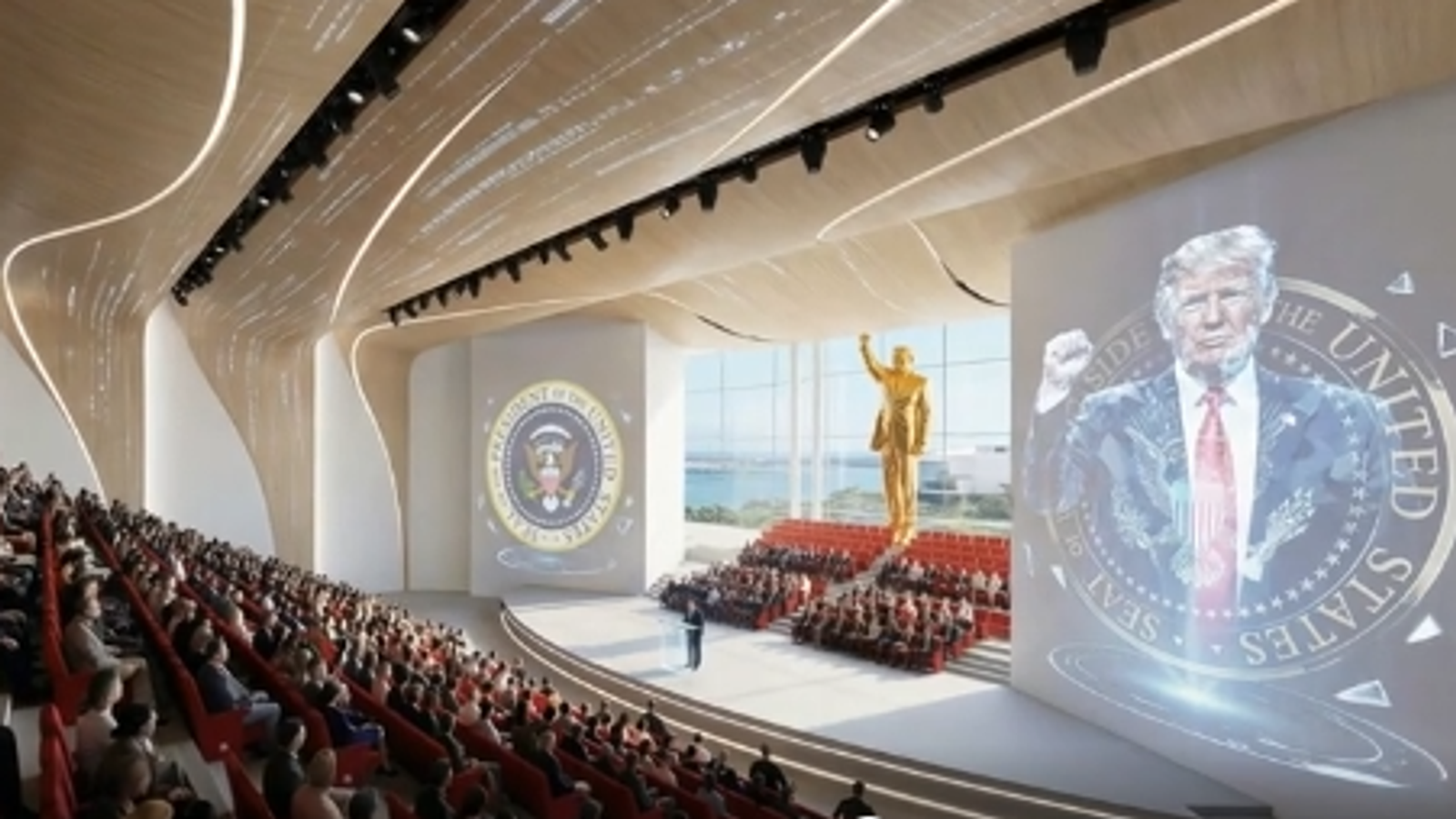
Trump has been revealing increasingly gaudy plans for his future presidential "library" in Miami, although by his own insistence, it won't actually have a library. Instead, Trump envisions it as a 50-story for-profit hotel atop a "presidential center" featuring giant golden statues of him. (These are not to be confused with the giant golden statue he's recently had installed at one of his golf courses.) 

Computer-generated image of Trump's supposed library plans, with a gallery of people staring at a giant gold Trump statue
Screenshot from AI-generated Trump video announcing the "library"

Presidential centers—that is, the bottom floors of Trump's proposed hotel—are privately-funded nonprofits. Trump, whose fraudulent New York charity was shut down and dissolved after he was caught using it for any number of illegal activities, has been using these kinds of entities as pay-for-access bribes, from his inauguration fund to the one for his pet "ballroom" project. 

But that isn't the corruption that got him sued today in Florida. Instead, it's the massive $300 million giveaway of valuable public land belonging to Miami Dade College that Trump-friendly governor Ron DeSantis and his handpicked college trustees has engineered in an apparent attempt to curry favor with him. Trump himself called it "the best block in Miami," and that's probably not far from the truth in economic terms. 

The parcel is almost certainly worth more than MDC's entire endowment. DeSantis's appointees sold it to Trump's presidential center for $10. Trump has always struggled to turn a profit with hotels, even with the help of decades of fraud to prop them up, to say nothing of his habit of forcing the US government to pay top-dollar rents to them. In spite of those illegal and gray-area advantages, he's famously bankrupted many of his hospitality properties while others strugglefra. But a hotel built on free land in a major tourist destination would have an enormous advantage over all other competition.

Trump didn't comment on the corruption lawsuit today: he was busy flying to China for a visit with its president, Xi Jinping. Traveling with him was his son Eric, a private citizen whose company is actively pursuing a deal with the Chinese government to build data centers in the United States.

Why does this matter?

  • Corruption is always bad, even when Americans have gotten used to it from Trump. 
  • When you have to buy the president's attention, only the corrupt and powerful will benefit.

Tuesday, May 12, 2026

What did Donald Trump do today?

He tried to lie his way out of his latest vanity project boondoggle.

Since returning to office, Trump has been obsessed with what amount to redecorating projects. Some, like his covering the White House in gold-colored plastic gewgaws and mall signage, are merely odd. Some, like his utter destruction of the historic East Wing of the White House, have been catastrophic. And some, like his fixation on a "militarily top secret ballroom"—that is an exact quote—run the gamut from absurd to pathetic to flagrantly corrupt at the same time.

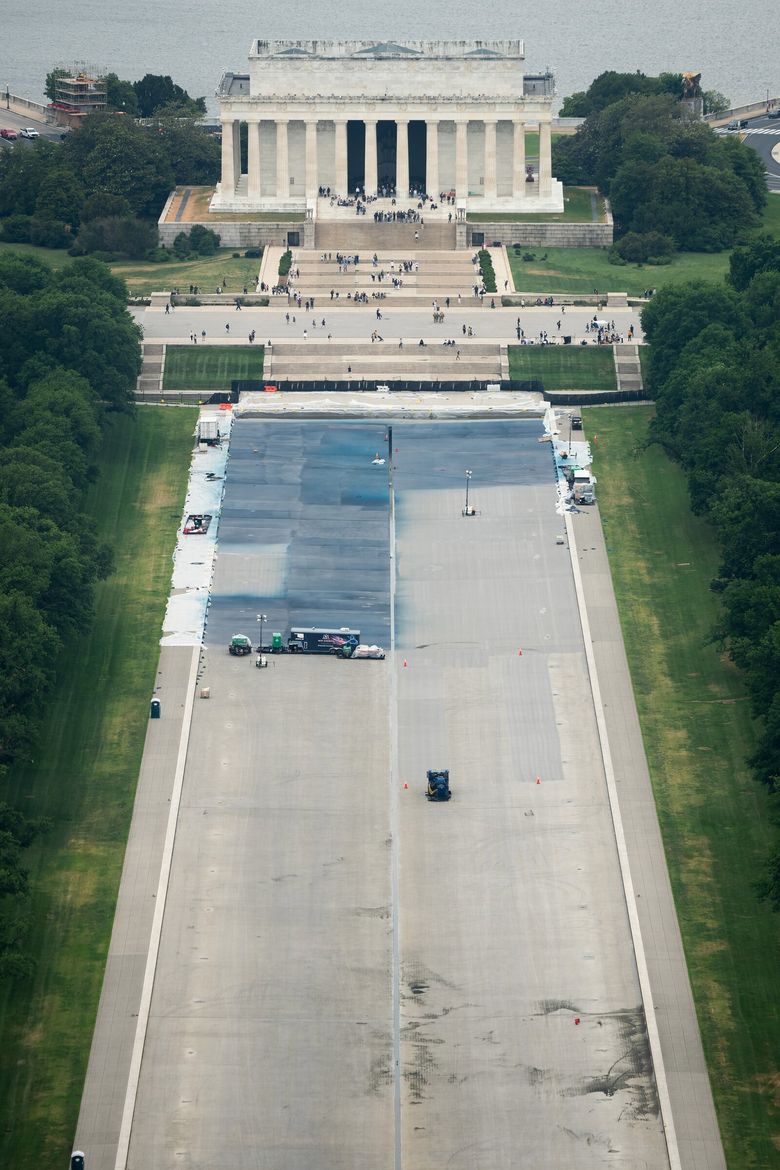
His latest preoccupation, announced just a few weeks ago, is with covering the Lincoln Memorial's reflecting pool in a coating akin to a backyard pool's liner. Work has already begun, thanks to an emergency no-bid contract that Trump rushed through to try to have it completed in time for 4th of July celebrations. In pitching the project to an increasingly angry electorate, Trump made a number of claims. Specifically, he said that

  • the project would cost $1.3 million
  • it would be done by "his pool guys," contractors who had installed pools at his resort properties and were experts in this kind of work
  • it would take "two weeks" to finish
  • it would save hundreds of millions of dollars over the cost of replacing the leaky plumbing underneath the pool

As recent reporting makes clear, none of this is true. Costs are already ballooning to over $13 million and rising, and the work is nowhere near complete after more than "two weeks" of work. It may not even be ready by July, which was the whole justification for the "emergency" no-bid contract. 

Reflecting Pool repairs to cost $13.1 million. Trump had promised $1.8M |  The Seattle Times 

What little work has been done is visibly shoddy. The blue color Trump demanded is uneven and splotchy, and the surface is bubbling and tearing, indicating it's not adhering to the granite and won't be waterproof. In fact, it's likely that the "repairs" will do more damage than they fix, which is the basis for a lawsuit filed this morning to halt the work. That means that the leaky pipes underneath will still need to be fixed at some point in the future, hopefully by a contractor with some experience on jobs like this, which the awardee of the no-bid contract—Atlantic Industrial Coatings—admits it doesn't have.  

Trump also completely changed his story on his "pool guys" today, and now says he'd never worked with them, blaming the Interior Department for hiring them. But his new claim still contradicts the story the White House is telling: Trump now says he'd never heard of them, but Trump's spokespeople are saying he ordering them hired based on what he'd supposedly heard about them "as a builder." 

The conflicting stories means it's not clear how the company obtained the lucrative contract, which is one reason that no-bid contracts are usually illegal.

It wasn't the only awkward moment for Trump today where his vanity projects are concerned. In spite of Trump's constant claims that his "ballroom" will not cost public money, his party is already preparing supplemental budget requests of more than a billion dollars in taxpayer funds. Asked by a reporter about the ever-increasing costs today, a visibly emotional Trump snapped at her, calling her a "dumb person" and insisting that the project (which may never be built) was still "under budget."

Why does this matter?

  • Even if Trump knew what he were doing, this would be a terrible use of a president's time and energy. 
  • Just because he's not fooling anyone doesn't mean it's okay for the president to lie to the American people. 
  • Donald Trump's aesthetic sensibilities being upset is not an "emergency" requiring the waste of tens of millions of taxpayer dollars.

Monday, May 11, 2026

What did Donald Trump do today?

He floated the idea of temporary undoing less than a week of the inflation he's caused.

Rising gasoline prices are one of the most visible effects of Trump's disastrous war with Iran. Most Americans buy gas regularly, and the prices are prominently displayed—and for Americans who can't charge the cost of their travel to the taxpayers, it's usually a major household expense.

The fact that Americans feel changes in the price at the pump so clearly, even though the cost of filling up a tank isn't necessarily the most severe problem that Iran's ongoing successful blockade of the Persian Gulf will cause, makes it a political crisis for Trump. And that is why today he proposed pausing collection of the 18.4-cent-per-gallon fuel tax.

The funds raised from that particular tax are earmarked for transportation construction projects, so that the heaviest users of roads are also contributing the most to their maintenance. There's no free lunch: every dollar lost to a gas tax holiday would either have to come from other revenue sources, or through canceled maintenance on an already aging and rickety highway infrastructure

But the real problem with Trump's idea is how little it would offset the damage done by the Iranian blockade that he instigated. Even assuming that wholesalers, resellers, and retailers all dropped their prices the full 18.4 cents—and there is no guarantee they would—it would only cancel out about five days of recent gas price inflation

A better and more permanent solution would be a resolution of the conflict, but Trump seems both unable and unwilling to move towards that goal. Unable, because Iran has a much stronger negotiating position in the short term: its authoritarian government's control has been strengthened by the war, and it had already been cut off from global trade even before hostilities began. Iran's ruling regime has shown no interest in giving Trump in easy off-ramp. And unwilling, because there is essentially no path forward for Trump that doesn't end in utter humiliation for a man who is incapable of admitting even trivial, harmless mistakes.

And unfortunately for Americans and the rest of the world economy, even a quick end to the conflict and the sudden reopening of the Persian Gulf wouldn't avoid serious long-term consequences. Global oil reserves are approaching critical levels, after which it won't be possible to put any brakes on the upward spike in prices. Production has already shut down in many Gulf oil fields, and capped wells can't be reopened quickly or cheaply. Trade disruptions have already driven the price of basic feedstocks like plastics, sulfur, nitrates, helium, and aluminum, and that in turn has already led to likely permanent price increases in sectors ranging from agriculture to computing to manufacturing in general.

The federal gas tax is set by law and Trump has no authority to order it paused.

Why does this matter?

  • Donald Trump's pride is less important than the American and world economy. 
  • No remotely competent president would ever have let the situation get this bad in the first place. 
  • Americans generally like having food to eat even more than they like having gas for their cars.

Sunday, May 10, 2026

What did Donald Trump do today?

He once again brought up the subject of his popularity.

Trump had another lazy Sunday afternoon, with nothing more pressing than "executive time" on his schedule, which is the euphemism his aides use for time he spends on social media, watching TV, or sleeping. That gave him the opportunity to reflect on his boutique social media service about a favorite subject: how much he thinks Americans love him.

It's no exaggeration to say that Trump is historically unpopular. No president since modern polling began with the Eisenhower administration with has ever been this unpopular at this point in his term, and few presidents have ever been as unpopular at any point as he is right now—not even fi
rst-term Donald Trump.


Only Richard Nixon was less popular at this point in his second term, and in May 1974 he was just a few months away from being forced to resign in disgrace.

Trump's unpopularity is crashing through boundaries not normally possible. He's underwater in ruby-red states like Mississippi, Montana, and Utah.

Polls aren't perfect predictors of elections, but that suggests that buyers' remorse has set in so hard with American voters that Trump would lose another presidential election today by an absurd margin in the electoral college. 

Even Trump-friendly poll aggregators like RealClearPolitics.com agree: Trump is approaching the level of unpopularity he spiked to after the Jan. 6 insurrection.

Trump didn't specify which "Poll Numbers" he thought were "Excellent," although he rarely does, and when he does it's usually clear he's not understanding what he's seeing. Last month, he gushed over a poll showing him with 96% approval, either not knowing or not caring that it was a poll of attendees at a pro-Trump political conference. He also seized on CNN's Harry Enten mentioning that his support was at 100% among self-described "MAGA voters"—meaning, again, that Trump's self-proclaimed supporters support him. Enten later clarified that a better way to describe Trump's popularity—which was higher then than it is now—was as a "steady fall into the abyss." 

Of course, Trump—who "jokes" about attempting another coup and staying on past the end of his second term—isn't on the ballot and won't ever be again. But his party is in 2026, and in spite of aggressive gerrymandering done at Trump's behest to disenfranchise Democratic voters, especially African-Americans, it now seems likely that Trump will be a historical anchor in the midterms. Trump may even cost his party the Senate, in a year when the map of seats up for election is terrible for Democrats.  

Projected chance of winning the House (racetothewh.com)


All that having been said, there is a smidgen of good polling news for Trump, whose increasingly fragile health has been a real concern. By a plurality of 45-31, Americans believe that the 79-year-old Trump could still successfully beat up an 8-year-old boy. (24% thought it was too close to call.)

Why does this matter?

  • The only thing more pathetic than thinking you can trick other people into liking you is tricking yourself into believing you've done it.

Saturday, May 9, 2026

What did Donald Trump do today?

He made money off the presidency at one of his golf courses for the second consecutive weekend.

Trump spent the day at Trump National Golf Club in Sterling, VA, watching the third round of a LIV tour event. LIV is an upstart golf tour seeking to challenge the PGA Tour's dominance. Backed by the Saudi government, with whom Trump is deeply financially entangled, it's been a lifeline for Trump's golf courses, which—like so much of the real estate empire he inherited—have often lost shocking amounts of money. As one 2021 article put it, the reason that the avid golf fan Trump can't seem to make money even on a business he ought to have some understanding of might be "incompetence, vanity, or something more sinister" like tax fraud. 

Families of September 11th victims have protested LIV events at Trump courses, correctly noting that before Trump started taking Saudi money, he had blamed the Saudi royal family for their complicity in allowing the attacks to happen. (There's no clear evidence that the Saudi government was directly involved in the 9/11 attacks, but it absolutely has committed atrocities like the kidnapping and murder of Saudi-American journalist Jamal Khashoggi—and gotten Trump to run interference for it on multiple occasions.)

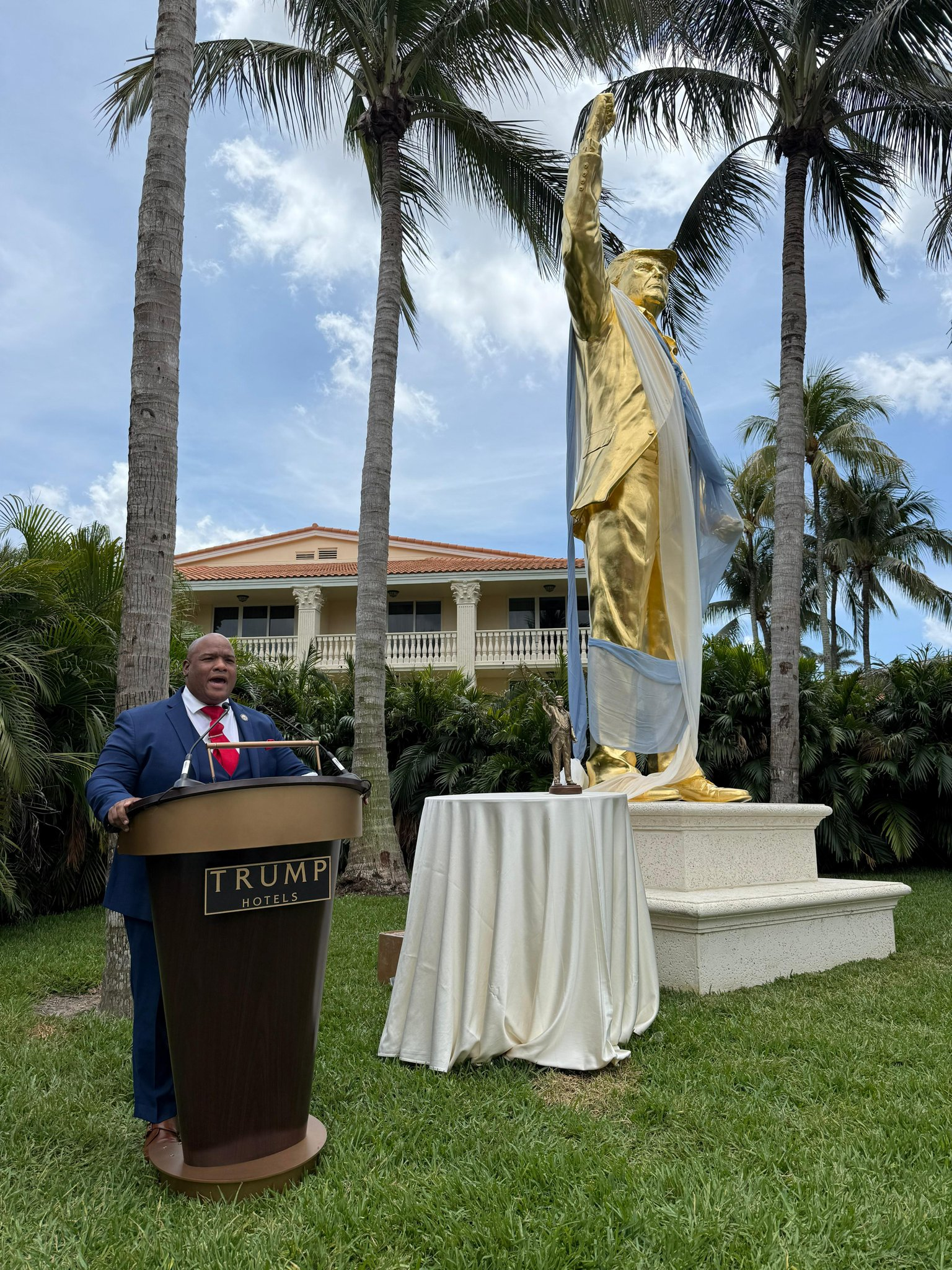
This is the second weekend in a row that Trump, who has been open about accepting thinly-disguised bribes during his second term, has made money off of a major professional golf tournament. Last week it was the PGA Tour's turn to pay the piper at Trump National Doral. That course saw the unveiling of a 15-foot golden statue of Trump this week, so reminiscent of a biblical idol that a televangelist supporter of Trump felt obliged to preemptively address the issue: "Let me say this plainly: this is not a golden calf."


Why does this matter?

  • Using the power of the state to force people to pay you money is what tinpot dictators and Russian oligarchs do. 
  • It's bad to have a president in hock to so many foreign governments, and worse that they're all dictatorships. 
  • One way to avoid people thinking you're making golden idols of yourself is not to make golden idols of yourself.