Showing posts with label authoritarianism. Show all posts

Wednesday, October 28, 2026

What did Donald Trump do today?

He got slapped down by a judge in his attempts to disenfranchise voters during an ongoing election.

A federal judge today denied the Trump administration's request to force California to suspend the ballots of some 20,000 people that it contends are not eligible to vote. 

In a blisteringly contemptuous ruling, federal district judge David O. Connor rejected Trump's claim to be the "sole sovereign" over elections that, per the Constitution, are solely under the authority of the states. He flatly called the Trump administration's claims "not credible." He also drew the somewhat obvious conclusion that Trump was simply trying to disrupt the election for the sake of disrupting it, rather than because of any real belief that the targeted voters (or anyone else) were casting illegal ballots.

Never before in American history has the federal government, on the eve of an election, sought to coerce a state and local government to abandon their own Constitutional elections procedures and bend to the will of the Executive Branch. In bringing this lawsuit, the Executive would have this Court believe that it reigns as a sole sovereign. But California and its people are sovereign, too.

The right to vote has long been understood as integral to both citizenship and participation in our democracy. Ronald Reagan described this right as “the crown jewel of American liberties, and we will not see its luster diminished.” Remarks on Signing the Voting Rights Act Amendments of 1982 (June 19, 1982) (extending the Voting Rights Act of 1965). But access to voting has always been contested. At the inception of our country, African Americans and women of all ethnicities were denied access to the ballot. Their push to be recognized as equal citizens of this nation led to the Fifteenth Amendment in 1870 and the Nineteenth Amendment in 1920, which declared that the right to vote could not be denied due to someone’s race or gender. But these amendments did not guarantee all citizens’ enfranchisement in practice. Minority communities continued to fight for suffrage. Poll taxes, literacy tests, and other obstacles were further used to prevent individuals from casting their vote.

Every generation in our history has witnessed repeated clashes between those who seek to limit access to the ballot and those who fight to ensure it. In this case, the federal government seeks to segregate and exclude over 20,000 ballots. This request violates longstanding constitutional principles mandating that states have control over their elections. If Plaintiff’s last-minute request for relief were granted, either party could create chaos for their own political purposes to disrupt the election process. Over 20,000 registered Californians would potentially lose the right that generations of Americans have fought to preserve.

…The Executive’s requested relief …would wreak havoc and disrupt the election that is already underway, create a chilling effect on election workers and voters alike, and discount the votes of United States citizens. The Executive Branch cannot replace the remedy Congress carefully enacted with its own unlawful and unconstitutional solution instead. Eroded trust in our democracy is irreparable. Once a vote is segregated, lasting harm has occurred. If the Executive can discount votes and threaten an ongoing election due to unproven allegations, then our democracy is in danger.

This Court declines to be a party to such process. 

It's worth noting that Trump has made similar claims in other states: earlier this year, his administration insisted that some 16,000 Nevada voters were noncitizens and therefore ineligible. The state investigated and found that every single person on that list was fully entitled to vote. In that case and the California one ruled on today, the Trump administration has refused to say by what method it came up with such inaccurate lists.

Trump's actions in the California case appear to be designed not to win on the legal merits, but to cast doubt on the integrity of American elections. This is also true of his fruitless attempts to have the Alaska Senate election set aside if and only if his preferred candidate doesn't win, or his rejected demands to force states to turn over their voting rolls to the federal government.

Trump has never once agreed to abide by the outcome of elections unless he approves of the result, and who is still criminally liable for his role in attempting to overthrow the results of the 2020 election once he leaves office. His party has slim odds of keeping control of the House of Representatives and may very well lose the Senate as well, in spite of—or because of—his "help" in campaigning for them.

Voter fraud in general is extremely rare, and intentionally casting an illegal ballot is even more so, and illegal voting by people who know they are not citizens is so rare as to possibly be without precedent in modern politics. 

Ironically, today saw the announcement of just such a prosecution for deliberate voter fraud: conservative "activist" James O'Keefe was charged with impersonating a dead person on Minnesota's voter rolls, dressing up in what he called "Muslim" clothes that obscured his face. (This is not the first time O'Keefe has committed crimes in pursuit of material for his video brand, which involves doctored footage that tries to embarrass politicians and public figures he doesn't like.) But O'Keefe—unlike the imagined undocumented immigrants casting ballots in Trump's claims—actually stood to make real monetary gain from the criminal scheme he's accused of, or would have if he'd gotten away with it.

Two days ago, Trump "offered" a $1 million reward for evidence leading to a conviction for voter fraud—though without giving any details or means of collecting the bounty. He has not commented on whether the state of Minnesota will be receiving $1 million if O'Keefe, an ardent supporter of Trump's, is convicted.

Why does this matter?

  • Fucking with elections is not just what dictators do, it's what weak and incompetent dictators losing their grip on power always do. 

Tuesday, October 27, 2026

What did Donald Trump do today?

He offered sanctuary to a kindred political spirit.

On Sunday, Brazil's president Luiz Inácio Lula da Silva won re-election over Flávio Bolsonaro. Lula had trailed Bolsonaro in the first round of voting, but a massive mobilization of his supporters horrified at the prospect of returning to the corruption of his predecessor, Jair Bolsonaro—Flávio's father—carried the day in spite of overt attempts by Bolsonaro loyalists to disrupt the election.

If he had been elected, Flávio Bolsonaro would have been in a position to do what Trump did on returning to power: use his familiarity with the office to orchestrate a far more effective purge of law-abiding civil servants and install loyalists to seek revenge against his political enemies, or anyone who tried to enforce the rule of law against him. 

Instead, he is now likely to face charges that he was part of a conspiracy to sabotage Sunday's election, among other serious allegations against him. Supporters of his in key government positions shut down the buses that poorer Brazilians—who mostly supported Lula—rely on to reach polling places. Many voters in urban, pro-Lula, working-class districts also had their polling places moved without warning.

Today—still insisting that he had won the election—Flávio Bolsonaro fled to the United States with his family. The Trump administration issued them visas, in spite of legal orders by Brazilian authorities for Bolsonaro to surrender his passport. Trump had spoken out on Bolsonaro's behalf, declaring the election "rigged," which is how he has described literally every election since 2016 where he doesn't like the result.

Fleeing to the United States is, by now, a well-established Bolsonaro family tradition. Flávio's brother Eduardo was convicted in absentia by a Brazilian court for illegally lobbying the Trump administration after he, too, fled to the United States. Prior to Sunday's election, Eduardo publicly encouraged Flávio to seek the protection of the Trump administration if he lost. 

More notably, Flávio Bolsonaro's father, former president Jair Bolsonaro, also fled Brazil for Florida on his last day in office in 2022 ahead of certain prosecution for crimes he committed while in office. These included a January 2023 coup attempt he orchestrated from the safety of the United States, in an uncanny parallel of the January 6, 2021 coup attempt in the United States. He was forced to return when it became clear that the Biden administration would not ignore extradition requests from the lawful government of Brazil, and was eventually convicted of fraud, abuse of power, and plotting a coup d'état.

Trump has a long history with the Bolsonaro family, who share his right-wing authoritarian approach to governing. Last year, Trump tried to force Brazil's lawful government to abandon attempts to prosecute Jair Bolsonaro by imposing a 50% tax on Americans who imported Brazilian goods. (This kind of overt political meddling is why Trump's original tariff scheme, which was supposedly about an economic emergency, was struck down.)

It now appears that Trump will shelter Flávio Bolsonaro from Brazilian justice, much as he did for the people who attempted to overthrow the 2020 United States presidential election on his own behalf.
 

Why does this matter?

  • Sheltering dictators is bad. 
  • There doesn't appear to be any reason for Trump's fondness for the Bolsonaros except that they're corrupt authoritarians who think they're above the law.


Friday, October 23, 2026

What did Donald Trump do today?

He took his theory that elections don't count unless he likes the results and made it a literal federal case.

The DOJ has filed a lawsuit in federal court asking a judge to preemptively block the results of Alaska's Senate elections if one specific candidate, incumbent Sen. Dan S. Sullivan, doesn't win. Asked about it today, Trump insisted that it was his idea, and that he ordered the DOJ to go ahead with it.

Again, what that means is that Trump is ordering a federal agency to intervene for purely political reasons in an election, and he is openly admitting it.

It would be generous to call this lawsuit frivolous. Trump's theory of the case is that because there are two candidates with similar names—the incumbent senator, and an independent candidate named Daniel J. Sullivan, Jr.—any result that doesn't have the "correct" Sullivan winning was the result of voter "confusion," and the results should be thrown out.

But Alaska's Supreme Court has already ruled that the independent candidate Daniel J. Sullivan has a right to run for office under his own name. It's very unlikely that Alaska voters will actually be confused: the ballot clearly lists different party affiliations for the two men, and indentifies Dan S. Sullivan as the incumbent. Even if they were confused, it's a ranked-choice ballot. A hypothetical voter who only knew that they wanted to vote for "Sullivan" and not the Democratic candidate, Mary Peltola, could simply rank either Sullivan above her.

Peltola is a slight favorite to win regardless, for the same reason that Democrats and independent are competitive in states that haven't elected Democrats in decades or even a century: many voters who are normally staunch Republicans, or independents who voted for Trump as recently as 2024, are horrified at how his second term has unfolded. 

Whether or not Trump actually knew what he was admitting to, it's likely the real intention of the lawsuit is to undermine faith in the legitimacy of American elections, something he has done in essentially every election cycle since 2016—with a healthy dose of assistance from the Putin regime in Russia. Trump has never once committed to accepting the validity of "elections" whose result he doesn't like, and even tried to foment an insurrection when he lost the 2020 election.

Why does this matter?

  • If you're not willing to accept the results of an election, you're a dictator, or a wannabe dictator.

Thursday, October 15, 2026

What did Donald Trump do today?

He sued California as a pretext to declaring election results he doesn't like invalid.

Two days ago, the Trump DOJ sent California election officials a list of 20,000 voters it claimed, without evidence, were noncitizens, It demanded that any mail-in ballots cast by those voters be segregated and not counted.

The list was sent on a flash drive with a password on a sticky note attached to it. (For reasons that should be obvious to anyone who has worked in an office in the last 20 years, or paid attention to the US government's own warnings about cybersecurity, nobody in California's government was dumb enough to plug the flash drive into a computer.)

Today, moments after the DOJ's self-imposed 48-hour deadline for compliance expired, the Trump administration sued California, asking a judge to force the state to block the counting of ballots cast by the voters it was targeting. One election law expert said that the "frivolous" legal filing made it seem as though "the sole purpose of this is to set the stage for false claims about elections."

As California officials pointed out, Trump has forced the DOJ to make these kinds of claims before, to (literally) zero effect. The Trump administration recently presented Nevada with a list of 16,000 supposed noncitizens on its voting rolls. The state investigated and found that every single voter on the list was a citizen and eligible to vote legally. 

Under the United States Constitution, states—not the federal government—administer elections. There is no master list of American citizens eligible to vote, and courts have struck down Trump's efforts to create what would be, at best, a shoddy and error-ridden imitation of such a list. As plaintiffs in those suits have noted, sowing chaos and doubt about the legitimacy of elections while threatening legitimate voters in states that elect Trump opponents is in his interests. 

For obvious reasons, voter fraud is unbelievably rare, quite literally one of the least commonly committed crimes on the books. One way of looking at it is that Donald Trump has personally been convicted of more felonies than there are hypothetical cases of mail voting fraud in any major election year going back twenty years, according to exhaustive studies done by the Brookings Institute and the ultraconservative Heritage Foundation.

Facts aside, Trump has a long history of making preposterous claims about noncitizens voting. After winning the 2016 election but losing in the popular vote to Hillary Clinton by three million votes, Trump insisted that the whole margin was due to 3-5 million "illegal" votes, all cast for Clinton. 

Needless to say, this is a lie, presumably one he told as a way of emotional self-soothing over losing in any kind of popularity contest to Clinton. Trump has never explained how he knew about the supposed plot to rig an election he won anyway, or how he knew all those "illegal" votes were for Clinton, or why a conspiracy involving five million participants couldn't have been organized well enough to distribute itself better among swing states, or the name of a single noncitizen voter in that election.

In fact, Trump has never committed to honoring the will of the American people free and fair elections where he doesn't like the results, and he's repeatedly said so in advance of the elections. The difference is that this time, he is starting the frivolous legal challenges to them ahead of the election itself.
 

Why does this matter?

  • Nobody—not even Donald Trump—believes this is about keeping noncitizens from voting. 
  • There's only one reason why an unpopular politician who claims he's allowed to be a dictator would try to undermine faith in elections. 

Monday, October 5, 2026

What did Donald Trump do today?

He said reporters should be arrested for noticing that he couldn't quite fill an Ohio high school gym with supporters.

In a highly emotional social media post today, Trump (or someone posting on his behalf) called for reporters to be arrested for saying that he had failed to fill a high school gym in a recent campaign stop in Ohio. In the post, Trump misleadingly implied the high school gym was an "arena," and that it held "50,000" people. 

The Ohio Arena was already full to the brim — And yet these people were still trying to get in. The New York Times said, "There were empty seats" when, in fact, there were none, and thousands of people had to be turned away. The New York Times, and many other Artificial Media Outlets, should be arrested for their dishonesty and disservice to our Country. When Bernie Sanders has 500 to 1,000 people, they make it sound like it's the biggest event that ever took place. When PRESIDENT DONALD J. TRUMP has 50,000 people, they make it sound like nobody showed up! President DONALD J. TRUMP 

But the reporting was correct. The Vandalia, Ohio facility is pretty large for a gym, seating about 4,500 people at maximum capacity, and it was well over half-full—but it was not at maximum capacity, even while Trump was speaking. News photos and video show the upper sections only partially filled. 

Trump is famously sensitive about crowd sizes. He launched his campaign with actors who'd been paid $50 to play supporters filling out the small room he announced in. He also routinely falsely accuses counter-protests, which can be enormous, of being full of paid actors.

That obsession has continued ever since. His top priority on his first day in office in 2017 was to send his press secretary out to angrily shout a prepared—and false—statement about his lackluster inaugural crowds. (Trump moved his second inaugural indoors at the last minute after hotel booking rates for the weekend stayed low, suggesting few attendees.) This past summer, he became obsessed with the fact that his "Great American State Fair" was practically deserted for weeks on end. And in between, he's been caught angrily lying about crowd sizes, and reporting on them, any number of times.

It's not illegal to report on a president's crowd size, much less to do so accurately.

In related news, after four days on the campaign trail (and one in which he recuperated at the White House), Trump today began walking back his initial promise to visit every swing state before the midterms. That came as incumbent Texas governor Greg Abbott announced that he would not appear with Trump, citing (previously unmentioned) prior engagements.

Why does this matter?

  • Throwing people in jail for suggesting that the leader is not universally beloved what tinpot dictators do.   
  • If Trump thought he could get 50,000 people to show up for a rally he wouldn't have booked a high school gym.

Tuesday, September 29, 2026

What did Donald Trump do today?

He unveiled a chatbot that would already have been fired for disloyalty if it were one of his human employees.

Trump signed an executive order today establishing a chatbot service, America.gov. It's a simple Large Language Model (or LLM) intended to answer questions about laws, government services, and other information of interest to constituents.

Within minutes of its launch, social media commenters were impressed with its accuracy in at least a few regards. For example, it correctly identified Joe Biden as the winner of the 2020 election. 


 It refuted Trump's belief that he has an "Article II power to do whatever I want."

It identified several of the many reasons that Trump's destruction of the East Wing of the White House was not legal.


It correctly identified Congress, not the executive branch, as the body with the authority to levy tariffs.


For good measure, it admitted what Trump does not: that tariffs are taxes, and that it is not foreign governments that pay them.

It agreed with the elected Democrats Trump tried to have prosecuted for saying that American military personnel had an obligation to disobey illegal orders.


It even flatly rejected one of Trump's more infamous medical theories.


It correctly refused to exonerate Trump for rerunning a 2024 campaign ad using taxpayer dollars just because Trump insisted it was a "public service announcement."

And, in perhaps the unkindest cut of all, it refused to talk about Trump the way he talks about himself.


It's worth saying that, like any LLM, America.gov is not really "thinking" or "saying" anything. It's simply a software program processing information in its databases according to a series of internal rules.

The good news, from Trump's perspective, is that the "problem" of the America.gov software accurately summarizing facts that virtually everyone but Trump acknowledges, is that it can be "fixed." LLMs are only as accurate as the information they're allowed to use, and they can easily be tweaked to give desired results along an ideological spectrum. Trump can also order it to draw from sources that give the answers he wants, rather than the vast database of government records, most of which he's been unable to purge.

That's exactly what Trump's political patron Elon Musk did with the LLM developed for Twitter. After Musk was embarrassed by "Grok" giving unflattering (but accurate) answers to questions about Musk himself and seemingly contradicting Musk's fringe-right ideology, he ordered it to be tweaked. Within days, Grok was calling itself "Mechahitler" and making unprompted racist and antisemitic remarks. 

Trump is heavily financially invested in the AI industry, which may account for his unwillingness to even consider regulating it, and his politically toxic embrace of unpopular data centers. 

Why does this matter?

  • It's bad if the President of the United States lives inside a bubble of lies or fantasy—and that's true whether or not a computer says so.

Thursday, September 17, 2026

What did Donald Trump do today?

He said he had the power to "ban fishing" and in all likelihood probably believes that he does.

Today is Constitution Day. By law, all federal agencies and federally funded schools are required to provide educational programming on the history of the American Constitution on September 17th.

Trump's unofficial contribution came during a disjointed digression in a fundraising speech for his PAC. It started off with Trump complaining about a Biden-era restriction on boat speeds close to shore, and then became a story in which the lifelong New York City resident said that the only president who loved the outdoors more than him was Teddy Roosevelt. 

He also became visibly confused while trying to explain an executive order he had just signed, and needed to ask Secretary of the Interior Doug Burgum what was in it.

Then, he claimed that he had the power as president to ban all fishing in the United States.

He does not. 

Referring to the billionaire CEO of Bass Pro Shops, Johnny Morris, he said this:

TRUMP: I could have made it so you couldn’t sell. You couldn’t sell anything. I could have banned fishing. I’ll tell you what. The power of this office is crazy. I could have banned fishing and driven Johnny right the hell out of business. Okay. I think I’m going to do that. Just maybe just a quick order, just for a day or two, till he calls me and he says, "Please, President, please, you’re putting me out of business, sir."

Trump often "jokes" about doing things he has no legal authority to do, like running for a third term. In this case, he probably was actually joking about trying to do it—but he also likely believes that he could. Trump has spoken in all seriousness about how Article II of the Constitution gives him "the right to do whatever I want as president."

It does not.

Why does this matter? 

  • It's not surprising if someone who thinks they have the powers of a dictator acts like one, but it's still a problem.
  • Presidents should know, and care, and be able to remember what was in the papers they just signed.

Tuesday, September 1, 2026

What did Donald Trump do today?

He managed to make a nearly defunct navigation app the top download in the United States.

Last month, Trump imposed a 50% tariff on a wide variety of essential Canadian goods, raising prices for American consumers on everything from basic construction materials to specialized medical devices. This outraged the Canadian public and virtually guaranteed that the Liberal government would respond with retaliatory tariffs, rather than accommodating Trump's demands.

Trump was left with no stronger response than to mockingly—but officially, for US government purposes—"rename" Lake Ontario to Lake America.

That act of trolling has had a few interesting consequences. The most predictable one is that Canadian resolve was hardened even further, with spontaneous boycotts of American goods arising. Needless to say, Canadian approval of the Liberal government's decision to impose retaliatory tariffs is high. Much more surprisingly, a plurality of Americans also approve of Canada's government matching Trump's tariffs. 

It also highlighted the extent to which Trump has corrupted the independence that the private sector once had from government interference. Apple Maps and Google Maps both changed their products to show "Lake America" to US clients. There is no legal requirement that they do so, and public opinion of Trump's gesture is extremely low. But Trump has made no secret of his willingness to punish companies that aren't willing to make political gestures of submission to him.

But that has created an opportunity for MapQuest, a pioneer in internet maps that most Americans haven't used in twenty years. While it gets its location data from the same federal database as Google and Apple, it has refused to change its name for Lake Ontario, just as it refused last year to re-label the Gulf of Mexico at Trump's demand. Effectively "too small to fail" from Trump retaliation, MapQuest has leaned into its choice, publicly announcing its decision by tweeting "We're not changing it."

Americans have responded by making its app—which previously saw a few hundred downloads a day—the most popular app of any kind on Apple's own platform today, and fifth on Android as of this posting. Another way of saying that is that downloads are up about 160,000%.

Changing the default map software on a phone won't really hurt Trump, or Google or Apple for that matter, but it's still an ominous sign for Trump that this kind of organic protest against him can catch on so quickly. He remains at the lowest levels of support any president has ever had going into midterm elections—including himself during his first term, when Democrats gained 41 seats in the House of Representatives.

MapQuest has also been allowing users to create custom maps "renaming" Lake Ontario as they like. Some recent examples:


Why does this matter?

  • You can't win trade wars—or real wars—with internet trolling, and nobody stupid enough to think you can should be president. 
  • Making everyone pretend to love the leader or be punished is what happens in fascist dictatorships.

Sunday, August 30, 2026

What did Donald Trump do today?

He pretended he already has the fascist powers he wants.

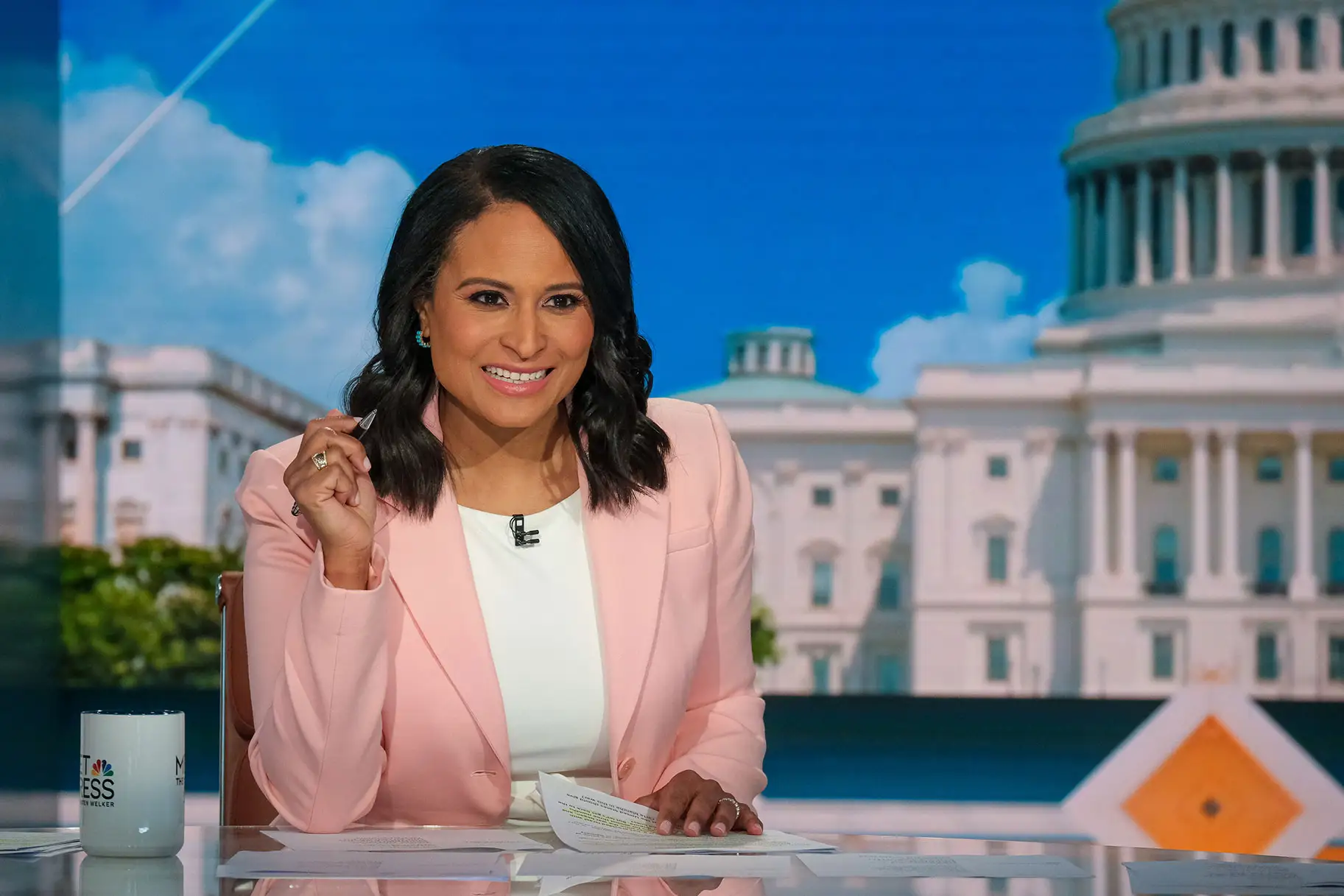
This morning, Trump—or someone posting as though they were him—threatened to have the FCC inflict "rebuke or punishment" on Meet the Press host Kristen Welker. Her offense, according to Trump, was pointing out that Trump had had "mixed results" in endorsing candidates.

The First Amendment to the Constitution of the United States specifically bars Trump or any other government official from trying to "punish" journalists, or anyone else, merely because they said something he interprets as criticism.

Who Is Kristen Welker? Inside The Nbc Journalist's Career, Salary, And  Family Life ◇ FEA for All 

That said, Welker's observation is factually true. Trump is extremely sensitive about his ability to "win" primary elections with his endorsements. He's made a habit of "endorsing" candidates who are running unopposed or with no serious challenger to run up his score. And when his chosen candidate loses, Trump has a habit of attacking them for making him look bad, as he did recently with his "friend" Cory Mills.

He's so fixated on this that he once endorsed "Eric" in the 2022 Missouri Senate primary. (Eric Schmitt defeated Eric Greitens in that race; Trump never specified a last name until the election was safely over.)

But with Trump's brand absolutely toxic after 18 months back in office, more and more Republicans are willing to challenge him—and some who do are winning their primaries. Ten candidates for Congress or statewide office that he's endorsed so far have lost in the primaries. That's as many as in the last three election cycles combined.

Why does this matter?

  • "Rebuke or punishment" for criticizing the leader only happens in dictatorships. 
  • Making up things to throw tantrums about isn't a sign of great cognitive health.

Friday, August 28, 2026

What did Donald Trump do today?

He remained a convicted felon.

U.S. District Judge Alvin K. Hellerstein ruled today against Trump's latest attempt to have his 34 New York state felony convictions set aside.

The ruling was in one sense procedural: Hellerstein found that Trump waited too long to try to move the trial to federal court after his conviction in May of 2024. Trump would likely have been within his rights to ask that the trial be "removed" to federal court, in which a federal judge and jury would apply New York State law. But federal law requires that any such motion be made within 30 days of an accused criminal's arraignment, which for Trump would have been in April of 2023. Trump waited until after a jury had found him guilty and his sentencing was imminent, and did not show the required "good cause" for a later motion.

That rule exists, as Hellerstein wrote, so that defendants cannot "play one court off another," nullifying a state verdict in the hopes of another chance in federal court.

But there's another reason Trump wanted the case heard in federal court: his new argument that the crimes he committed were part of his official duties as president, and therefore subject to a special presidential immunity for official acts.

The "official presidential acts" Trump sought to sweep under the rug included:

  • paying a tabloid publisher money in 2015, before he ever became president, to buy the rights to the story of his affair with a porn actress, among other stories

  • using money from his chartered business for that personal matter and creating fraudulent business records to conceal it 
  • lying to federal election officials about the nature of those expenditures 
  • failing to disclose them as the illegal in-kind campaign contributions they were 
  • falsifying other business records to make his bagman's work look like legitimate legal billing 

As Hellerstein wrote in his ruling, "There is no way that discussions regarding hush money payments to cover up the President's relations with Stormy Daniels could be an official act. An affair, or a cover-up of an affair, is not within the 'outer perimeter' of the President's official responsibilities."

Trump has already escaped all real consequences of his criminal actions. He was sentenced just days before returning to office, but a judge gave him the extremely rare sentence of an unconditional discharge, freeing him from any punishment, including even fines or probation. Under normal circumstances, Trump would likely have been on probation for the rest of his life, and would have been at genuine risk of being sentenced to a short prison term.

Trump remains the only president ever convicted of a felony, but those 34 counts are not the last ones he will necessarily face. Even setting aside illegal acts he's committed since returning to office, he is still liable for prosecution on state charges of election tampering and conspiracy in Georgia, and federal charges for his attempts to overturn the results of the 2020 election and his theft of classified materials. Those cases were dismissed for various reasons before he returned to office, but could be refiled.
 

Why does this matter?

  • In a democracy, no one is above the law. 
  • Anywhere that the rule is "The leader can do whatever he wants and we'll find a way to make it legal" is a dictatorship.

Tuesday, August 11, 2026

What did Donald Trump do today?

He flirted with declaring an "emergency" over people being able to vote as they always have.

Today, a federal judge expanded her injunction against two executive orders that are part of Trump's attack on voting by mail. Nearly a third of all Americans vote by mail—notably including Trump himself—but he continues to insist without evidence that it's part of a conspiracy to rig elections against him. 

The injunction, which is now nationwide, bars the United States Post Office from complying with Trump's demand that it not deliver ballots in any state that hasn't agreed to purge voters who don't appear on a list curated by the Trump administration. (States keep their own voting rolls. There is no master database of citizens eligible to vote.)

There's growing concern that Trump won't stop with just unlawful orders to disrupt or defeat the 2026 midterm elections, and not only because he's already tried to overturn the will of voters once. He's been spinning conspiracy theories about American elections being "rigged" since before he was first elected, and in his second term he's turned the full mechanism of the federal government towards punishing "enemy" jurisdictions where a majority of Americans didn't vote for him.

In an interview with far-right podcaster Wayne Root today, Trump hinted that he'd be open to conducting the midterm elections under what amounts to martial law. Root suggested (incorrectly) that Trump had the power to declare a state of emergency and force elections to take place under the rules he wants to put in place, which would instantly disenfranchise millions of legally registered voters.

The Constitution explicitly gives states the power to set the rules for elections and conduct them. No emergency declaration could change that, and any attempt to impose Trump's rules by force would result in chaos—which, this cycle, would almost certainly work to his advantage. Trump winked at Root's suggestion, saying that "stranger things have happened."

Why does this matter?

  • The only conspiracy to sabotage American elections was the one Donald Trump was indicted and impeached for.

Saturday, August 8, 2026

What did Donald Trump do today?

He accidentally told the truth about his attempts at voter suppression.

Trump has been pushing a voter suppression bill for months now known as the SAVE Act. It would instantly disenfranchise tens of millions of legitimate voters, if it were allowed by courts to go into effect—which it almost certainly wouldn't. It would require voters to show not only photo ID like a driver's license, but also "documentary proof of citizenship," which in most cases would mean either a passport or a birth certificate matching their current legal name.

That means that, for example, a married woman who took her husband's name and didn't have a passport would not only have to be able to present her original birth certificate, but also court paperwork for her name change. Many people simply don't have those documents handy, or have lost them over the years, and getting replacements can take months. Anyone in that situation would be unable to vote in the 2026 elections.  


The lengths to which Trump has been flogging this DOA bill have infuriated Senate Republicans, who are now in real danger of losing control of the chamber in spite of a terrible map for Democrats. Today, the Senate adjourned for five weeks, killing any chance of a last-minute vote. (Democrats could block it with a filibuster, but the bill is so toxic at this point that most Congressional Republicans are trying to sweep it under the rug themselves.)

In what was apparently intended to be a comment on this fact, Trump posted an Instagram video featuring an unusual guest on his private microblogging page: former Vice-President Kamala Harris. In the video, Harris accurately laid out the various forms of voter suppression that Trump and his political allies were looking to enact, and said this specifically about the SAVE Act:

HARRIS: So you've got the Supreme Court doing its thing, then, this president is trying to push this SAVE Act, which basically would require that for people to register to vote, you're going to have to have proof of who you are through a passport, which a lot of Americans don't have. Or a birth certificate—same point. Obstacles to make it difficult for you to register to vote.

At some point during the morning the original post was taken down and replaced with one where the video cut off after "proof of who you are," making it sound like Harris was objecting to there being any verification of voters at all.

Why does this matter?

  • There's only one reason a politician tries to make it hard for citizens to vote. 
  • If Trump could make the case for this bill, he wouldn't have to lie about it.

Saturday, August 1, 2026

What did Donald Trump do today?

He once again demanded that heads roll over imaginary anti-Trump "vandalism" that even his own DOJ won't touch.

Yesterday, the Department of Justice dropped charges against David Hearn, the man they had accused of "vandalizing" the Lincoln Memorial reflecting pool. Hearn, 67 and a former Olympic champion canoeist, had bent to touch some of the newly installed spray-on lining that had peeled off from the bottom of the pool due to what the DOJ now admits was faulty installation. 

But Trump, who was reeling from embarrassment over the debacle that had become of his latest pet renovation project, was insisting that the deteriorating lining and even the normal algae bloom that followed the pool's refilling were the work of "vandals." He insisted that there was a "300-yard" gash that criminals had carved down the middle of the pool, even though nobody had seen any "vandals" wading out into the middle of the heavily surveilled pool, or could point to the existence of that huge gash.

With Trump ranting on social media about "criminals" trying to sabotage him, National Guard troops and park rangers were deployed to harass curious tourists, including Hearn, who had come to see the debacle for themselves.

In reality—as many experts had predicted even as the work was underway—the problem was that Trump hired inexperienced contractors to apply precisely the wrong kind of coating in precisely the wrong way, and had been caught on tape trying to fix their mistakes as they went along while the clock ticked on the Fourth of July celebration. Making that deadline was the "emergency" that Trump had used to justify a no-bid contract, which he gave to two companies owned by people who'd made large donations to his political funds and, in one case, had paid for a membership at Mar-a-Lago.

The DOJ's motion to dismiss charges against Hearn admitted that contractor error was to blame for the rapid deterioration of the lining. The motion was signed by US Attorney and Fox News host Jeanine Pirro, who had earlier gone on a media tour to gloat over the possibility that the "violent" Hearn would spend ten years in prison for his "willful destruction of property." But in the dismissal motion, Pirro directly accused the Department of the Interior of providing false information about what park employees had witnessed, and of covering up the "rushed and flawed" nature of Trump's alterations to the pool.

That, finally, brings us to today.

Trump lashed out bitterly at Pirro in a social media post this morning, part of an emotionally overwrought binge of almost 50 posts—mostly low-quality AI slop images—in quick succession. He wrote that he "100% disagreed" with Pirro's admission that no vandalism was involved, sputtering, "I don't know what she was thinking?" He also dispatched Doug Burgum, Secretary of the Interior, to repeat Trump's claims about the invisible vandalism he insists must have happened.

Neither Burgum nor Trump addressed the photographic evidence provided in the dismissal motion of blistering, peeling, bubbling, and adhesion problems the lining was suffering even before it was complete.

It is, as usual, impossible to tell whether Trump actually still believes that a senior citizen and former torchbearer for the US Olympic team was part of a conspiracy to embarrass him by touching the peeling paint in a public park. 

Hearn will not be reimbursed for his attorney's fees or the lost time he spent in preliminary court appearances, and in spite of even Republican commentators saying that he should sue the government for malicious prosecution, that would be very unlikely to succeed. Trump has insisted—contrary to his acting attorney general's promises—that he would find a way to force the government to create a slush fund for anyone he deems has been harmed by the "weaponization of government" and unjustly prosecuted for crimes for political reasons. It doesn't look like Hearn is exactly who Trump has in mind, though.

At least six other people have been charged with similar "crimes."

Why does this matter?

  • Trump prosecuting an obviously innocent man to make political hay is somehow less disturbing than Trump actually believing a word of what he's saying. 
  • Selecting citizens at random for prosecution for "crimes" in order to make the leader look strong is what happens in dictatorships.

Tuesday, July 28, 2026

What did Donald Trump do today?

He filed the latest in an endless series of appeals to avoid paying a woman he raped and defamed what a jury said he owed.

In 2023, a New York jury found that Trump had raped E. Jean Carroll in the mid-1990s, and that his public statements accusing her of lying about it for money and attention were defamatory. As a result of those defamatory statements, Carroll, 82, endured public humiliation and death threats. The result of the trial was that Trump was ordered to pay her $5.6 million in damages.

Carroll is one of about thirty women who, at various different times dating back to his first marriage, have accused Trump of sexual assault, sexual harassment, or lewd conduct towards minors. (That list does not include conduct Trump may have participated in or known about related to his friendship with Jeffrey Epstein.)

While the trial continued in the penalty phase (but after the jury's verdict) Trump repeated his defamatory comments. That resulted in a separate judgment, this time for $83.3 million. The higher damages were intended to deter Trump from continually reoffending. (They've worked: Trump no longer repeats the defamatory claims.)

Trump subsequently lost every single appeal, including one at the Supreme Court—and even an extra bite at the apple he gave himself by demanding that the Court reconsider its judgment. The original $5.6 million verdict, plus interest, was ordered paid to Carroll earlier this month. (Trump is challenging even that routine order, claiming that Carroll should not be able to invest the money in the stock market, where it might lose value, because he may someday, somehow be able to get a verdict affirmed by the highest court in the land overturned.)

Today, Trump filed an appeal of the second, $83.3 million verdict to the Supreme Court, even though it springs from identical conduct and was issued as a continuation of the same trial. 

Trump's actual argument in this appeal is that he should be immune from civil liability for defamatory statements he made while he was in office. In this case, that means that Trump is arguing that he should be allowed to call Carroll a publicity-seeking liar for saying he raped her—which a jury established as fact—because he was President at the time. This is the same argument that the Supreme Court rejected earlier, leaving a lower court's ruling intact.

He also argued, unsuccessfully, that the United States government should be allowed to replace him as the defendant, which would allow him to use taxpayer money to satisfy the verdict rather than his own.

The Department of Justice had historically declined to prosecute sitting presidents for criminal acts while they are in office, although until Trump that meant that presidents who broke the law in office could still be prosecuted after the fact. This was a custom, rather than established law, until Trump's own appointees on the court provided the majority in Trump v. United States (2024). That ruling carefully granted criminal immunity to presidents exercising unspecified "core powers" and, at least temporarily, got then-candidate Trump free from federal indictments relating to his attempts to overthrow the results of the 2020 election and stay in power illegally. (Trump could still be prosecuted for the underlying crimes under a new indictment, assuming he survives his current term and leaves office voluntarily.)

In the current case, Trump is arguing that calling his own rape victim a liar is a "core power" of the presidency.

Notably, while Trump relies on his control of the DOJ to avoid prosecution, he's succeeded in getting a criminal investigation launched against Carroll, on the theory that she committed perjury. That appears to have been a more or less empty threat: the investigation does not appear to have really commenced and even Trump diehards, like his former defense lawyer and current acting Attorney General, Todd Blanche, have distanced themselves from it.

Trump has spent much of this year trying to pay himself and supporters who committed crimes on his behalf billions of taxpayer dollars for the supposed "weaponization" of government against them.

Why does this matter? 

  • This is pretty much what you'd expect an unrepentant sexual abuser to do with the powers of the presidency.   
  • The American people are not Donald Trump's piggy bank and the Department of Justice is not his personal goon squad.  
  • Flaunting your ability to get away with horrific acts against your political enemies is what tinpot dictators do.

Tuesday, July 21, 2026

What did Donald Trump do today?

He used illegal Medicaid cuts to punish his political opponents in two blue states.

The Trump administration announced today that it was "pausing" Medicaid disbursements to Minnesota and California, over supposed fraud. The governors of each of those states are both political rivals to Trump: Gavin Newsom of California is a likely Democratic presidential candidate in 2028, and Minnesota's Tim Walz was the Democratic vice-presidential nominee in 2024.

Trump has made this threat before: in February, he said he'd withhold $259 million from Minnesota. He never carried it out, though. Courts have stopped Trump from politically motivated interference with healthcare programs before. In spite of the attention that Trump's HHS officials—former lawyer Robert F. Kennedy Jr. and daytime talk show host Mehmet Oz—tried to bring to the move today, it's not clear that any money has been withheld yet.

There is Medicare fraud in Minnesota and California—and in every other state, and probably almost every individual county. Committing fraud against the government for these kinds of programs is easy, but getting away with it is more difficult—as Trump, whose business was convicted of defrauding the State of New York, is well aware. (That is not to be confused with Trump's criminal conviction on 34 felony charges, which dealt with different matters.) Even if he didn't have personal experience with it, Trump has pardoned many wealthy and politically connected Medicare and Medicaid fraudsters, who collectively stole billions of dollars.

Regardless, Trump has no authority to withhold Medicaid funding for any state, or impose conditions on its release outside of what the law permits. Doing so violates Congress's constitutionally granted control over appropriation, as well as the 1974 Impoundment Control Act.

Trump has made little secret of his intention to punish states that don't support him politically at the federal level—even though, to use California as an example, that means punishing millions of people who voted for him. He's also effectively stopped approving disaster relief for blue states in his second term.

 Presidential approval rates for disaster requests from Democratic-led states and Republican-led states

Why does this matter?

  • Cutting off basic government services to punish areas the leader thinks aren't sufficiently loyal to him is what dictators do. 
  • It's beyond evil to punish poor children by withholding medical care to score political points against Americans who politically oppose you. 
  • Presidents who care about fraud generally commit less of it.

Friday, July 17, 2026

What did Donald Trump do today?

He made a new kind of empty tariff threat against the United States' largest trading partner.

Wildfires in Canada are causing smoke and other forms of particulate air pollution to drift into the United States. This is a serious health issue for anyone, Canadian or American, in the path of the smoke. Fire season is getting longer and more intense across North America due to the rapidly changing climate, and Canadian and American firefighting organizations have been working together to coordinate their efforts to control the most dangerous fires across borders.

Canadian 'Super Scooper' plane grounded after hitting civilian drone over Los  Angeles wildfires | CNN
A Canadian CL-415 "Super Scooper" firefighting plane prepares to drop water on last year's Los Angeles wildfires

Trump responded to the news by calling the smoke an "invasion" and threatening to increase taxes on Americans who buy Canadian goods or raw materials.

Trump, who calls climate change a "hoax," has made a long habit of using natural disasters, and in particular forest fires, to play political games. He famously insisted that the Prime Minister of Finland—a country with a cool, wet climate and thin alpine forests—had told him they no forest fires because they "raked" the forest floor. 

Trump has also shown genuine confusion that water from northern California can't flow "down" onto the tops of mountains in the Los Angeles area, apparently in the childish belief that north always means "up." That's not just an embarrassing misunderstanding of how maps work: he dug in and wasted billions of gallons of water emptying California reservoirs during an active drought and fire emergency.

Trump's tariff threat to Canada is empty, or at least it's empty where Canada is concerned, which is rapidly reorienting its trade networks in favor of other countries. American consumers and manufacturers can still be hurt by higher prices or the loss of more Canadian business. 

But at home, Trump is openly playing favorites with which Americans he's willing to allow to benefit from government help in disasters. He's approved 89% of requests for disaster declarations from states governed by Republicans, and only 23% from states governed by Democrats. 

Presidential approval rates for disaster requests from Democratic-led states and Republican-led states 

Why does this matter?

  • Rewarding "loyal" subjects with good government while punishing the opposition with ineffective government is what dictators do. 
  • A president who can't understand third-grade geography or middle-school meteorology isn't competent to do the basics of his job. 
  • Making American houses more expensive because there was a tax increase on the Canadian gypsum in the drywall won't put out any fires.

Thursday, July 9, 2026

What did Donald Trump do today?

He fired every federal election watchdog he could.

The Election Assistance Commission is an independent federal agency whose function, as the name suggests, is to assist states in the conduct of elections. Under the Constitution, states, and not the federal government, conduct elections. The EAC tests and certifies voting machines, coordinates the distribution of federal funds in support of elections, and maintains the national mail voter registration form. It was created in 2002 as a bipartisan organization that was supposed to be insulated from White House interference.

Trump, who conspired with a hostile foreign power to influence the 2016 election and then coordinated a violent riot in an attempt to overturn the result of the 2020 election, fired the two Democratic members today, and accepted the resignation of the sole remaining Republican. This leaves the organization with no members, which means it can take no actions in support of the 2026 midterms. 

Trump's abysmal approval ratings are widely expected to cost Republicans the House of Representatives in those elections, and possibly even the Senate.
 

Why does this matter?

  • Nobody does this kind of stuff who intends to honor the results of free and fair elections if they can possibly help it. 

Tuesday, July 7, 2026

What did Donald Trump do today?

He threatened state election officials with prosecution, just in case he needed to.

Via the Department of Justice, which is now run in an acting capacity by one of his former criminal defense lawyers, Trump issued a veiled threat to state election officials today about the possibility that he would try to have them prosecuted after this November's elections.

The letter listed dozens of specific federal statutes regarding the conduct of elections, and emphasized that state officials could be prosecuted under those laws if Trump-appointed prosecutors weren't satisfied with their efforts to, for example, keep noncitizens from voting.

The statutes cited have not been used to prosecute state officials in decades, if ever. No official at any level of American government, down to the smallest municipality, has ever been accused of conspiring to allow noncitizens to vote, much less convicted.

The DOJ also demanded that officials "respond to this letter within five days informing us how
the state of Michigan intends to ensure it is complying with these federal laws." There is no such legal requirement. The United States Constitution gives states full authority to conduct elections.

In reality, people intentionally casting fraudulent ballots is almost completely unheard of. For example, the ultra-conservative Heritage Foundation conducted a study of reported voter fraud in past elections. In just one of the states they examined, Pennsylvania, they found 39 individual reports of voter fraud out of more than 100 million votes cast, meaning that 0.00004% of ballots cast over the course of three decades might have been illegally cast. 

Thanks in large part to Trump himself, Republicans stand a good chance of losing control of the House of Representatives in November's elections, and possibly even the Senate. 

Many things are against federal law. For example, it's a crime to use the powers of a federal office—like a federal prosecutor role—to mistreat people for unlawful purposes, like political revenge. It's also a crime to submit a false instrument—like a declaration by a slate of fraudulent electors that Trump had won their state in the 2020 election—with the intent to defraud the federal government. And, of course, it's an extremely serious federal crime to commit acts of insurrection or sedition.

Why does this matter?

  • This is not what you do if you intend to abide by the results of a free and fair election.

Saturday, July 4, 2026

What did Donald Trump do today?

Most of what the Declaration of Independence was talking about.

Today is the 250th anniversary of the date that the Second Continental Congress adopted the Declaration of Independence. The document is an explanation for why the thirteen colonies had been moved to sever their political ties from the British crown, which at the time was an unprecedented act. 

Most of the text is an explicit list of grievances against the colonies' unjust treatment by King George III:

The history of the present King of Great Britain is a history of repeated injuries and usurpations, all having in direct object the establishment of an absolute Tyranny over these States. To prove this, let Facts be submitted to a candid world. 

He has refused his Assent to Laws, the most wholesome and necessary for the public good.

He has forbidden his Governors to pass Laws of immediate and pressing importance, unless suspended in their operation till his Assent should be obtained; and when so suspended, he has utterly neglected to attend to them.

He has refused to pass other Laws for the accommodation of large districts of people, unless those people would relinquish the right of Representation in the Legislature, a right inestimable to them and formidable to tyrants only.

He has called together legislative bodies at places unusual, uncomfortable, and distant from the depository of their public Records, for the sole purpose of fatiguing them into compliance with his measures.

He has dissolved Representative Houses repeatedly, for opposing with manly firmness his invasions on the rights of the people.

He has refused for a long time, after such dissolutions, to cause others to be elected; whereby the Legislative powers, incapable of Annihilation, have returned to the People at large for their exercise; the State remaining in the mean time exposed to all the dangers of invasion from without, and convulsions within.

He has endeavoured to prevent the population of these States; for that purpose obstructing the Laws for Naturalization of Foreigners; refusing to pass others to encourage their migrations hither, and raising the conditions of new Appropriations of Lands.

He has obstructed the Administration of Justice, by refusing his Assent to Laws for establishing Judiciary powers.

He has made Judges dependent on his Will alone, for the tenure of their offices, and the amount and payment of their salaries.

He has erected a multitude of New Offices, and sent hither swarms of Officers to harrass our people, and eat out their substance.

He has kept among us, in times of peace, Standing Armies without the Consent of our legislatures.

He has affected to render the Military independent of and superior to the Civil power.

He has combined with others to subject us to a jurisdiction foreign to our constitution, and unacknowledged by our laws; giving his Assent to their Acts of pretended Legislation:

For Quartering large bodies of armed troops among us:

For protecting them, by a mock Trial, from punishment for any Murders which they should commit on the Inhabitants of these States:

For cutting off our Trade with all parts of the world:

For imposing Taxes on us without our Consent:

For depriving us in many cases, of the benefits of Trial by Jury:

For transporting us beyond Seas to be tried for pretended offences:

For abolishing the free System of English Laws in a neighbouring Province, establishing therein an Arbitrary government, and enlarging its Boundaries so as to render it at once an example and fit instrument for introducing the same absolute rule into these Colonies:

For taking away our Charters, abolishing our most valuable Laws, and altering fundamentally the Forms of our Governments:

For suspending our own Legislatures, and declaring themselves invested with power to legislate for us in all cases whatsoever.

He has abdicated Government here, by declaring us out of his Protection and waging War against us.

He has plundered our seas, ravaged our Coasts, burnt our towns, and destroyed the lives of our people.

He is at this time transporting large Armies of foreign Mercenaries to compleat the works of death, desolation and tyranny, already begun with circumstances of Cruelty & perfidy scarcely paralleled in the most barbarous ages, and totally unworthy the Head of a civilized nation.

He has constrained our fellow Citizens taken Captive on the high Seas to bear Arms against their Country, to become the executioners of their friends and Brethren, or to fall themselves by their Hands.

He has excited domestic insurrections amongst us, and has endeavoured to bring on the inhabitants of our frontiers, the merciless Indian Savages, whose known rule of warfare, is an undistinguished destruction of all ages, sexes and conditions.

Trump hijacked the nonpartisan celebration of the 250th anniversary that had been planned for years and then put on some pathetically slapdash events celebrating himself instead. Attendance has been comically low, thanks to media coverage of everything from empty displays to broken ice cream freezers to construction foam oozing out of the joints of Trump's soggy plywood mockup of the "triumphal arch" he wants to build. Any of those might be forgivable in the context of a real state fair (something the United States genuinely excels at) but there really weren't any other attractions, except for a lone Ferris wheel… which also broke down. 

Trump is scheduled to give a speech at 11 PM, which will likely push most or all of the fireworks celebration to the fifth of July.
 

Why does this matter?

  • Tyrants are as tyrants do, regardless of what year it is.