Showing posts with label tariffs. Show all posts

Thursday, September 10, 2026

What did Donald Trump do today?

He sent his staff out to clean up the mess he made trying to bribe Americans for votes last night.

Last night, in the first of two speeches he's giving at the two-night "midterm convention" he called in Dallas, Trump blurted out a plan to give every adult American $5,000—but only if Republicans win the midterm.

TRUMP: And here is my promise. If the Republicans win the House of Representatives and the United States Senate, both of them, because of our economic, tremendous economic success—in history, we have never had anything like what's happening—I will issue a dividend to every adult citizen in the United States of America for $5,000.

It's possible Trump made it up on the spot, although a handful of his aides are now saying they'd been looped in. Most, however, were clearly surprised by Trump announcing what amounts to an election bribe of $1.3 trillion dollars.

For comparison, that is more than half of the total individual income tax revenue collected last year. It's bigger than the defense budget, but it's smaller than the roughly $12 trillion Trump has added to the United States' total $40 trillion national debt during his time in office.

Reaction to Trump's latest attempt to make himself the focus of the midterm elections can be divided into two camps. Democrats and independents reacted with scorn and mockery, while Republicans mostly expressed emotions ranging from discomfort to horror

The one thing that everyone seems to agree on is that no such money will ever be forthcoming. Even Trump's assistant press secretary, Davis Ingle, refused to actually acknowledge the sum of money or any plans to pay it out, saying only that Trump would "keep delivering real results."

Where promises to pay Americans thousands of dollars out of their own government's treasury is concerned, though, Trump has never delivered a single dollar. In his second term alone, he's promised at least $12,000: the $5,000 from last night, a separate $5,000 "DOGE dividend," $2,000 in "tariff rebates," and $1,000-$1,500 to take the place of the Affordable Care Act.

Whether or not Trump had any intention of making those payments, there wouldn't have been any money to give out. DOGE's real purpose was to purge nonpartisan government employees, but what "savings" it delivered while destroying important parts of the machinery of the federal government amount to less than $10 per American. Tariff revenues—which Trump has already "spent" anyway, at least in his mind—are about $130 billion higher than in previous years, or about $390 per American. (That's money Americans already lost in the form of higher prices.) And the ACA money, in Trump's mind, would have been to replace all health insurance and return to paying all medical bills out of pocket.

Trump also tried to join in the clean-up effort today, although not in a way that's likely to help much. In an interview with Fox News that aired today, he was asked why, if he had any intention of issuing such a "dividend," he didn't do it now instead of demanding a victory for his party in the midterms first. Trump stammered, "Because they can't—I tell you what, the Democrats can't do it."

Republicans, not Democrats, currently control both houses of Congress.

Why does this matter?

  • Past a certain point, all a lie tells you is how stupid the person telling it thinks you are. 
  • Even the worst presidents before Trump never got this desperate.

Tuesday, September 1, 2026

What did Donald Trump do today?

He managed to make a nearly defunct navigation app the top download in the United States.

Last month, Trump imposed a 50% tariff on a wide variety of essential Canadian goods, raising prices for American consumers on everything from basic construction materials to specialized medical devices. This outraged the Canadian public and virtually guaranteed that the Liberal government would respond with retaliatory tariffs, rather than accommodating Trump's demands.

Trump was left with no stronger response than to mockingly—but officially, for US government purposes—"rename" Lake Ontario to Lake America.

That act of trolling has had a few interesting consequences. The most predictable one is that Canadian resolve was hardened even further, with spontaneous boycotts of American goods arising. Needless to say, Canadian approval of the Liberal government's decision to impose retaliatory tariffs is high. Much more surprisingly, a plurality of Americans also approve of Canada's government matching Trump's tariffs. 

It also highlighted the extent to which Trump has corrupted the independence that the private sector once had from government interference. Apple Maps and Google Maps both changed their products to show "Lake America" to US clients. There is no legal requirement that they do so, and public opinion of Trump's gesture is extremely low. But Trump has made no secret of his willingness to punish companies that aren't willing to make political gestures of submission to him.

But that has created an opportunity for MapQuest, a pioneer in internet maps that most Americans haven't used in twenty years. While it gets its location data from the same federal database as Google and Apple, it has refused to change its name for Lake Ontario, just as it refused last year to re-label the Gulf of Mexico at Trump's demand. Effectively "too small to fail" from Trump retaliation, MapQuest has leaned into its choice, publicly announcing its decision by tweeting "We're not changing it."

Americans have responded by making its app—which previously saw a few hundred downloads a day—the most popular app of any kind on Apple's own platform today, and fifth on Android as of this posting. Another way of saying that is that downloads are up about 160,000%.

Changing the default map software on a phone won't really hurt Trump, or Google or Apple for that matter, but it's still an ominous sign for Trump that this kind of organic protest against him can catch on so quickly. He remains at the lowest levels of support any president has ever had going into midterm elections—including himself during his first term, when Democrats gained 41 seats in the House of Representatives.

MapQuest has also been allowing users to create custom maps "renaming" Lake Ontario as they like. Some recent examples:


Why does this matter?

  • You can't win trade wars—or real wars—with internet trolling, and nobody stupid enough to think you can should be president. 
  • Making everyone pretend to love the leader or be punished is what happens in fascist dictatorships.

Monday, August 24, 2026

What did Donald Trump do today?

He tried to project strength as his personal and political problems got worse by the moment.

Trump is so incapable of admitting any kind of mistake or failure that he once told a group of evangelical Christian leaders that he'd never even asked God for forgiveness. (By Christian standards this is, to put it mildly, blasphemy.) Perhaps the only time he's ever even come close to apologizing in public was during the 2016 campaign, immediately after the infamous Access Hollywood video in which he talked about grabbing women "by the pussy" without consent—and even then, he tried to deflect blame onto others.

But over the past week, he's been uncharacteristically back on his heels. A casual reference to his aide Natalie Harp, sometimes referred to as the "human printer" for her habit of carrying around printouts of news articles meant to soothe Trump emotionally, blew up into a major scandal. Members of his own inner circle told reporters they were worried about the intensity of the hold the erratic Harp had over Trump and his agenda. Those letters showed that Harp shared Trump's unusual habit of incorrectly capitalizing random words in the middle of sentences, suggesting she was the author of far more of his social media announcements than previously suspected.  

Possibly related, Trump's wife Melania got into a public argument with him yesterday in full view of television cameras, which the White House unlawfully tried to get shut down as Melania stormed away.

Trump is also suffering defections from previously loyal constituencies as his approval rating has sunk to the low 30s—inches above where Nixon was when he was forced to resign. Congressional Republicans who can afford to are distancing themselves. One Republican voter in a swing Ohio district where Trump has backed an incumbent Congressman accused of child abuse, was asked about his message for Trump. His response: "Resign." Even beef ranchers are lashing out at Trump, furious for dropping protections on beef imports while herds recover from a screwworm infestation caused by Trump's killing a cheap eradication program.

This morning, Trump seemed to try to get back on his feet by lashing out at friends like Canada and foes like Iran in equal measure. Iran's response was predictable: mockery and threats to carry out assassination attempts in revenge for his assassination of regime leaders at the start of the war. But Canada's was much more serious. Trump had demanded that Canada "fall in line" or suffer "far worse" consequences than tariffs, an approach that couldn't possibly anger the Canadian public more than if that had been the intent. Prime Minister Mark Carney's government prepared to release details on the American industries it will attack with retaliatory tariffs, and Ontario premier Doug Ford threatened to cut off the billions of dollars worth of electricity that Canadian power plants provide to northeastern states. If that happened, it likely physically couldn't be replaced on the American side.

Trump responded by mocking Ford's dead brother

Why does this matter?

  • The economy would be much, much stronger right now if the President of the United States had the emotional control of a toddler. 
  • Nobody who can't keep their personal problems from affecting their work is fit to serve as president.

Saturday, August 22, 2026

What did Donald Trump do today?

He took two completely opposite positions on tariffs in the space of a single 24-hour period.

Trump has imposed new tariffs at an astronomical 50% rate on a range of Canadian goods. They went into effect at 12:01 AM today, and will raise the price for American consumers on auto parts, alcoholic beverages, medical supplies, and products made of essential raw materials like steel or wood. Canada is the United States' single largest and most economically integrated trading partner.

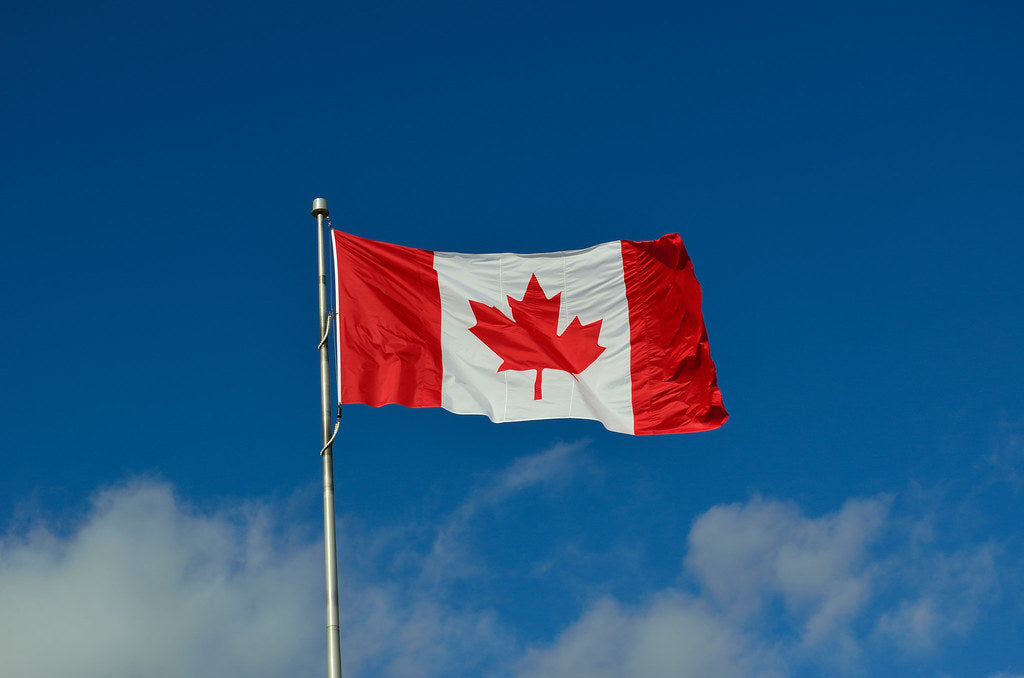
Why Is the Canadian Flag a Symbol of Unity and National Pride? – UCANADA 

Predictably, Canada responded with dollar-for-dollar tariffs of its own, which will go into effect next month. These are targeted at products manufactured in critical swing states in the upcoming Senate elections. The Canadian economy is smaller than the United States', which would normally put them at a disadvantage in this kind of tit-for-tat response, but the Canadian public has rallied around the aggressive stance taken by Prime Minister Mark Carney, who has been working to decouple the economic links between the two countries in favor of more stable trading relationships overseas. In fact, in a very real sense, Carney owes his current job to Trump: his Liberal Party was widely expected to lose in to the Conservatives in the 2025 elections, until Trump's first round of tariffs and taunts about annexing Canada as the "51st state" rallied voters around Carney.

As with most of the import taxes Trump has imposed on American consumers, it's not immediately clear that he has any legal authority to do so. Most of the tariffs he's tried to impose have been overturned in court, although with the inflationary damage already done to Americans' bank accounts.

But less than 24 hours before raising prices on Americans who buy Canadian goods, Trump took exactly the opposite tack on another trade issue. He said he was temporarily cutting tariffs on beef, and said he was doing so explicitly to lower prices for Americans. The cut was tiny relative to overall consumption—about three week's worth, and then only if those savings actually trickle down the supply chain all the way to grocery stores—but for once, he was correctly framing tariffs as something that raise prices for Americans.

At least, that was what his social media post on the subject said, and Trump is very often not the author of policy pronouncements that go out under his name. In person, when asked about it by reporters, Trump was much hazier, and wouldn't (or couldn't) even say what countries he'd be lowering beef tariffs on.

Why does this matter?

  • It never gets any less stupid to start a trade war with your largest and most important economic ally. 
  • Nothing that raises costs American consumers while hurting American participation in the world economy going forward is a good idea.  

Friday, July 17, 2026

What did Donald Trump do today?

He made a new kind of empty tariff threat against the United States' largest trading partner.

Wildfires in Canada are causing smoke and other forms of particulate air pollution to drift into the United States. This is a serious health issue for anyone, Canadian or American, in the path of the smoke. Fire season is getting longer and more intense across North America due to the rapidly changing climate, and Canadian and American firefighting organizations have been working together to coordinate their efforts to control the most dangerous fires across borders.

Canadian 'Super Scooper' plane grounded after hitting civilian drone over Los  Angeles wildfires | CNN
A Canadian CL-415 "Super Scooper" firefighting plane prepares to drop water on last year's Los Angeles wildfires

Trump responded to the news by calling the smoke an "invasion" and threatening to increase taxes on Americans who buy Canadian goods or raw materials.

Trump, who calls climate change a "hoax," has made a long habit of using natural disasters, and in particular forest fires, to play political games. He famously insisted that the Prime Minister of Finland—a country with a cool, wet climate and thin alpine forests—had told him they no forest fires because they "raked" the forest floor

Trump has also shown genuine confusion that water from northern California can't flow "down" onto the tops of mountains in the Los Angeles area, apparently in the childish belief that north always means "up." That's not just an embarrassing misunderstanding of how maps work: he dug in and wasted billions of gallons of water emptying California reservoirs during an active drought and fire emergency.

Trump's tariff threat to Canada is empty, or at least it's empty where Canada is concerned, which is rapidly reorienting its trade networks in favor of other countries. American consumers and manufacturers can still be hurt by higher prices or the loss of more Canadian business. 

But at home, Trump is openly playing favorites with which Americans he's willing to allow to benefit from government help in disasters. He's approved 89% of requests for disaster declarations from states governed by Republicans, and only 23% from states governed by Democrats. 

Presidential approval rates for disaster requests from Democratic-led states and Republican-led states 

Why does this matter?

  • Rewarding "loyal" subjects with good government while punishing the opposition with ineffective government is what dictators do. 
  • A president who can't understand third-grade geography or middle-school meteorology isn't competent to do the basics of his job. 
  • Making American houses more expensive because there was a tax increase on the Canadian gypsum in the drywall won't put out any fires.

Wednesday, June 10, 2026

What did Donald Trump do today?

He said he "loved" consumer prices going through the roof.


The basis of Trump's tariff policy in both terms has been his mistaken belief that when one country has a trade deficit with another—meaning it sells fewer goods and services than it buys—it is somehow "losing" or being "ripped off." In reality, for a wealthy country, moderate trade deficits are normal. Deficits in specific industries can be warning signs, but for the economy as a whole, they aren't usually an indicator of anything more than a country having the money to import the things it needs.

That false belief has driven Trump to try to drastically reduce the trade deficit with the United States' trading partners by imposing enormous tariffs based, in part, on the magnitude of the deficit with individual companies. Tariffs are taxes on imports that increase the price for consumers. 

Targeted tariffs can help steer buyers to domestic products, lessening a deficit. But that deficit-reduction only works to a certain extent, and only if there is a domestic industry ready to take on the excess demand. Trump's trade wars against (for all practical purposes) the entire world at once left consumers with no alternative but to pay the increased price on imported goods, while domestic prices rose too because of the inflationary effect.

More proof of that inflation came today, with the release of a government report showing year-on-year inflation at 4.2%. That's more than twice as high as the 2% inflation that economists believe is a healthy target.

Trump was asked about that troubling number today:

Q: Are you concerned, Mr. President, about the latest inflation numbers that came out this morning?

TRUMP: No, I love it. The, the numbers were great.

Trump's response on the deficit has also been backwards, even by his own generally confused understanding of trade policy. Yesterday, he posted a headline "bragging" that the US trade deficit had increased to record levels.


It wasn't even a recent occurrence: that link went to a Reuters article from January of this year

In other words, Trump spent more than a year trying to drive down the deficit in the mistaken belief that it was money that the United States was "losing," only to forget that and claim that a spike in trade deficits was a good thing. 

Why does this matter?

  • Presidents who can't keep straight whether high inflation is good or bad aren't mentally competent for the job. 

Thursday, April 16, 2026

What did Donald Trump do today?

He ranted about his ballroom at length.

Last year, Trump destroyed the East Wing of the White House, without permission from Congress. He did this with as much secrecy as is possible, hastily knocking it down behind construction barriers after lying to the American public that he was only making minor alterations to it. He had claimed that the ballroom he wanted to build "wouldn't interfere" with the East Wing immediately before having it destroyed.

Since then, despite an obsessive interest in the proposed ballroom's construction, Trump has been held up by legal challenges. A federal judge ruled earlier this month in favor of the National Trust for Historic Preservation, the agency established by law to protect historical buildings, and ordered a halt to construction of the ballroom. Today, the same judge clarified that an exception he had made for the construction of national security facilities under the ballroom was not a blank check to construct the whole thing anyway.

This outraged Trump to the point that he spent the whole afternoon posting four lengthy rants to his boutique social media website, railing against the Republican-appointed Richard Leon as a "Trump Hating Judge" and making absurd claims about the planned ballroom. Some of the most outrageous:

  • Trump asserted, as he often does, that the ballroom is "free" because it is being paid for by corporate sponsors. Even if this weren't a bribe—and Trump has made clear that he regards contributions to the construction fund as the cost of doing business with his White House—it's still not true that taxpayers won't end up paying for it. The "donations" that corporations are making are tax-deductible and secret, so money comes out of the budget either way. Trump also recently gave a Luxembourg steel company a special break on tariff rates in exchange for a "donation" of $34 million worth of steel, reducing revenue and undermining the American steel industry at the same time. 
  • Trump also said, and this is a direct quote, that "The Ballroom is deeply important to our National Security" because it will contain "Top Secret Military Installations." Setting aside the question of how secret they are if Trump is tweeting about them, the judge's order doesn't prevent Trump from building an underground bunker if that's what he wants to do. It simply prevents him from violating the law by building an entire new structure on the grounds of the People's House without authorization from the people's representatives in Congress. 
  • Trump insisted that nobody had legal standing to stop him. In reality, of course, Trump is not the whole government, and doesn't rule by fiat, especially where Congress has given its own agencies jurisdiction. 
  • Finally, Trump claimed that the ballroom was "not a joke to me, or the people of America." It's completely clear that Trump is deadly serious about the ballroom. As for the American people, polls show they overwhelmingly think it's a joke, and a pretty bad one.

The posts appeared at 2:45, 3:47, 4:05, and 6:41. Trump then reposted all of them again about a half an hour after the last one. They come to a grand total of 782 words. 

Why does this matter?

  • A president ranting that "The Ballroom is deeply important to our National Security" is deeply embarrassing. 
  • Even by Trump standards, this is bizarre, and sad.

Friday, February 27, 2026

What did Donald Trump do today?

He asked if he could get the Supreme Court's first ever do-over.

Still fuming over the Supreme Court's decision to strike down the taxes Trump illegally imposed based on a "national emergency" only he could see, Trump posted a legal question to his private microblogging site today: 
 

The recent Decision of the United States Supreme Court concerning TARIFFS could allow for Hundreds of Billions of Dollars to be returned to Countries and Companies that have been “ripping off” the United States of America for many years to come, and now, according to this Decision, could actually continue to do so, at an even increased level. I am sure that the Supreme Court did not have this in mind! It doesn’t make sense that Countries and Companies that took advantage of us for decades, receiving Billions and Billions of Dollars that they should not have been allowed to receive, would now be entitled to an undeserved “windfall,” the likes of which the World has never seen before, as a result of this highly disappointing, to say the least, ruling. Is a Rehearing or Readjudication of this case possible???

No.

Losing parties in court can appeal verdicts to the Supreme Court, but after that they don't get to keep appealing until they get the verdict they want, because there is no higher authority than the Supreme Court on legal questions, including the president. The law and its interpretation change over time, but nobody—ever—gets to demand an immediate do-over just because.

Most Americans learn that much in elementary school, but there is a reason Trump might be confused. As a private citizen, Trump used the literally thousands of civil lawsuits he was a party to (as plaintiff or defendant) as a sort of bludgeoning tool, betting that he could drag out proceedings long enough that less wealthy opponents would be forced to settle on his terms. One judge even called him "the mastermind of strategic abuse of the judicial process."

Trump was notorious for this during his failed real estate career, suing contractors on a pretext to avoid having to pay workers for jobs they'd already completed. That tactic worked almost as well in criminal court: he was only convicted in one of his trials before his return to the presidency saved him from prosecution on other pending matters—at least for the moment. And even the 34 criminal counts that he was found guilty of by a jury yielded no actual sentence, for the same reason.

And, whether or not Trump really didn't know what a third-grader knows about how the Supreme Court works, he's using the same strategy with the tariffs case. Late today, his administration filed a motion with a lower court asking for a delay of at least four months before it had to begin answering requests for refunds of Trump's illegally collected taxes.

Why does this matter?

  • Presidents should have at least a middle-school understanding of how the legal system works. 

Tuesday, February 24, 2026

What did Donald Trump do today?

He quietly admitted he'd been lying about his recent promises before making dozens more.

Much of the political news tonight dealt with Trump's address to Congress, which was mostly the same litany of grievances and agitation he's been reciting in political speeches since returning to the campaign trail. It would take far longer than the 100-minute speech to unpack why virtually all of it consisted of lies, and for that reason it arguably isn't even worth trying to do, although some instant debunking is available here and here.

Trump came into the speech with abysmally low approval ratings, reflecting voter anger at everything from his terror campaign against American cities to his botched trade war to his tenuous mental health. In an attempt to turn that around, his speechwriters put promises of better times in his mouth. Among other things, he pledged to abolish (or at least "substantially replace") the income tax and to abolish the health insurance by giving Americans a one-time cash payout of a few thousand dollars to buy health care on the open market. (As usual, he neglected to say how this would cover, for example, the $20,000 hospital sticker price of a routine pregnancy.)

The fact that Trump is neither able nor even necessarily willing to do these kinds of things isn't the point. Instead, they're a form of political insurance: Trump and his handlers hope that the promise will make him popular in the short term and be forgotten in the long term. That's also why Trump promoted policies he doesn't actually support, like forcing AI companies to pay premiums on the electricity they use to prevent rate spikes for residences. Trump is heavily indebted to the extremely precarious AI sector, and has been cutting sweetheart deals for it since returning to office, including killing what few regulations governed it in the first place. But by coming out theoretically in favor of a bill that would cost these companies real money, Trump hopes to give himself political cover in the meantime.

It's the same strategy he employed with the bill requiring the release of the DOJ's Epstein documents. When the winds shifted late last year after months of stonewalling calls to release the documents he'd campaigned on releasing, and Congress presented him with a near-unanimous bill requiring him to do that, Trump insisted he'd wanted to all along—and then continued to not do it. Today, news broke that many documents that did implicate Trump in wrongdoing have been silently removed from the public release

That was one of several stories, just from today, of Trump backpedaling on recent flashy promises or threats. His administration also admitted today that the medical ship he'd said was already "on the way!!!" to Greenland, as a result of a tantrum this past weekend over an American sailor getting medical help from Denmark's military, would not be going at all and had never left port.

He even backed down today on the extra five-percent flourish he'd added to his recent attempt to impose a legally valid tax on imported goods: in the wake of last Friday's Supreme Court ruling striking down most of his tariffs, he declared that Americans would have to pay 10% on all foreign goods, and then the next day—without offering any explanation—insisted that he'd decided it should be 15% instead. Today, it went into effect at the original 10%.

Why does this matter?

  • It's still wrong to lie, even if nobody really believes you anymore. 
  • Presidents who have good ideas that anybody likes, and the mental energy to follow through on them, don't need to lie about getting things done.

Sunday, February 22, 2026

What did Donald Trump do today?

He tried really hard to act like he still had a tariff plan.

On Friday, the Supreme Court struck down most of the tariffs Trump had imposed since returning to office as illegal, because the law he cited as an authority didn't apply to his actions. By the end of the day, he said he would use other legal authorities to impose a flat 10% import tax on goods from the rest of the world. (These measures are legally dubious themselves, but will probably go into effect at least for a while.)

On Saturday, without explanation, he changed that figure to 15%—almost as though to make sure that domestic and world markets understood there would be no relief from the constant chaos and uncertainty of the past year.

Today, he sent out members of his administration to insist that Trump could and would still do whatever he wanted in terms of forcing American consumers to pay higher prices, and that this would somehow work out for the best. But in practice, this meant two things: sprinting away from any hope that consumers would recover the thousands of dollars they'd paid in higher prices as a result of the illegal taxes Trump imposed, and putting pressure on Congressional Republicans—many of whom want nothing to do with Trump's deeply unpopular trade war—to give him the authority he'd claimed to have all along.

(Trump himself hid away from public sight today.) 

Treasury Secretary Scott Bessent has been given the job of explaining away Trump's now-revoked promises of tariff rebates, which is the closest Trump has ever come to acknowledging that American consumers are the ones who pay the cost of tariffs. For the most part, he tried to shift the blame to the courts, who will now have to address the question of whether businesses can recoup the taxes that Trump illegally collected at customs. (Bessent called this "corporate welfare," although he didn't say why he thought the federal government should keep illegally collected taxes just this one time.)

Meanwhile, Trump has another problem: what little leverage he gained from declaring a trade war on the rest of the world has evaporated, and the handful of "deals" he's been trumpeting are now moot. The European Union is already rattling its saber at Trump, whose new 15% tariff will expire in 150 days without Congressional approval that absolutely will not be forthcoming. Even worse, as was obvious at the time, most of the "deals" Trump made involved vague and unenforceable promises to "invest" in the United States at some point in the future. Even if those countries had intended to honor those pledges, there's no reason to now, except to take advantage of an opportunity to buy in a depressed American market.

Meanwhile, the countries that Trump hit with the highest tariffs last year are seeing their strategy of not negotiating with him pay off, as taxes on their imported goods drop to the same as nations that played ball. It is not a coincidence that the world's largest economies, and the ones who do the most business with the United States, are the ones now celebrating a shutout victory in their standoff with Trump—while many of those who made concessions are seeing their tariffs unilaterally increased to the flat 15%. What's more, each of those countries will now have the option of maintaining their own retaliatory tariffs against the United States, putting Trump and the United States in exactly the bind he had hoped to put the rest of the world.


Faced with questions about all of this today, Trump's chief trade representative, Jamison Greer, simply took a page from Trump's book and insisted, all evidence to the contrary, that "the policy hasn't changed."

Why does this matter?

  • A president who wasn't a complete disaster at running businesses would know that markets hate uncertainty. 
  • It was always a stupid idea to declare a trade war on the literal rest of the world, and it's even stupider to try to do it with less leverage than you had while you were losing before. 
  • The economy of the United States and the well-being of Americans is infinitely more important than Donald Trump's wounded pride.

Friday, February 20, 2026

What did Donald Trump do today?

He threatened the "disloyal" judges who overturned his illegal import tax scheme.

As had been expected for months, the Supreme Court today struck down most of Trump's tariffs as illegal taxes that he had no statutory authority to levy. Certain laws already on the books do give the president a very limited authority to impose tariffs in a bona fide national emergency. But Trump seemed to go out of his way to make the case against himself, declaring in social media rants that he was imposing specific tariffs to punish his political enemies or because foreign governments tried to fight corruption caused by his own political allies.

Trump held a press conference shortly after the ruling was announced, and gave a bitter and sarcastic monologue about what he saw as flaws in the decision. Not for the first time, he treated the votes against him by justices he'd appointed, Neil Gorsuch and Amy Coney Barrett, as personal betrayals. In fact, he paid the Court's three liberal members a backhanded compliment for what he imagined was their partisan "loyalty," although anger at Trump's tariffs is a pretty bipartisan thing these days: the impact of the illegal taxes hit red America the hardest, and staunch Republican groups like the US Chamber of Commerce were among the challengers.

But in a clearly emotional tone, Trump said he was "absolutely ashamed" of Gorsuch and Barrett and, for some reason, added that their families would be too. (Trump has a history of trying to menace judges by talking about their families.) He also said that the justices who voted against him were captives of an unspecified "foreign influence," but refused to provide any details when asked.

(Trump himself is known to be under the direct influence of the Putin regime in Russia, which he directly begged to interfere in the 2016 election. This is a conclusion that was endorsed by a Senate committee led by a majority of Republicans in 2020, even before the election he lost to Joe Biden that year, and before his attempts to illegally install himself in office in spite of that election. He's also sought and received financial gifts from foreign governments while in office, ranging from mere gold bars to luxury jets to scam cryptocurrency profits.) 

Of course, Trump is entitled to his opinion, and this is far from the first time he's lashed out at judges who held him to the law. In fact, usually his outbursts are a lot worse and more overtly threatening

But he's also made it clear that he thinks only he is entitled to an opinion, and that people who criticize judges who have issued rulings he liked are somehow breaking the law. Just before returning to office, Trump called for people who say things like he did today about Supreme Court Justices to be put in jail for trying to influence them. At the time, he was talking about the court's decision overturning Roe v. Wade and women's right to reproductive freedom. Most Americans support those rights and were critical of the ruling, but none of them had the power to force the executive branch to "investigate" justices for ties to supposed foreign puppetmasters.

Perhaps the only clear and consistent message out of the Trump administration on the subject of tariffs today was that everyday Americans will not see any kind of refund for the thousands of dollars in taxes that they indirectly paid. (Importing businesses might be able to recoup those taxes, but unlike a surprise surtax like the ones Trump imposed, windfall profits are never passed along to consumers.) Asked about it today, Treasury Secretary Scott Bessent literally laughed at the notion, saying "I got a feeling the American people won't see it." 

Why does this matter?

  • Donald Trump is not the only American who gets to have an opinion or a say in how the United States is governed.  
  • Puppets installed in glass White Houses shouldn't throw stones.

Wednesday, January 21, 2026

What did Donald Trump do today?

He got called out on a lie or hallucination about Greenland in real time.

In an abrupt but not particularly surprising twist, Trump appeared to back down on his threats to invade NATO ally Greenland today. More accurately, he kept up his threat that Greenland would, necessarily, become part of the United States. But he ruled out using military force, the only means by which that could happen, since both Greenland and its parent country Denmark have flatly rejected Trump's "offers" with respect to the territory.

In what may have been an attempt to square that circle, Trump posted to his private microblogging service that he'd agreed on a "framework of a future deal" with Mark Rutte, the Secretary-General of NATO. Immediately pressed for details, Trump evaded the question by saying "it's a little bit complex" but that he'd explain at some unspecified point in the future.

There are two problems with Trump's story. First, NATO has no authority to make deals on behalf of one of its member states. Rutte could no more agree to give Greenland to the United States than he could give Florida to Denmark.

That leads to the second problem: Rutte denies that any such discussion about Greenland ever took place

Being caught in an easily disproved lie is nothing new for Trump, but it raises the question of why Trump has finally backed down, at least momentarily, from the absurd prospect of boosting the United States' "national security" by starting a war with the rest of NATO. One possibility is that he began to fear—probably correctly—that the U.S. military would simply refuse to follow any such order. While the subordination of American military forces to the President is normally absolute, there's precedent: during the lame duck period of Trump's first term, Congressional leaders sought and received assurances from the Joint Chiefs of Staff that the military would not assist him in a coup attempt or suicidal nuclear attack.

Alternatively, in the face of virtually unanimous public opinion against any such invasion and a united European front, Trump may have been trying to save face by claiming a "deal" that will never exist. If so, it doesn't seem to be working.

Finally, Trump may have said that he had a nonexistent conversation with a Dutch military bureaucrat about ceding an independent Danish territory because he genuinely believed he had. It wasn't the only time Trump got confused about which country was which: during his shambling address to the World Economic Forum today at Davos, he repeatedly confused Greenland with Iceland.

Why does this matter?

  • There's no practical difference between a president who won't tell the truth and who doesn't have any idea what the truth is. 
  • Just because someone can be distracted, scared or shamed off of an incredibly stupid course of action doesn't mean it wasn't an incredibly stupid course of action to pursue in the first place.  

Monday, January 12, 2026

What did Donald Trump do today?

He tried to shift the blame for his (probably illegal) tariffs to the Supreme Court.

The Supreme Court is likely, although not certain, to announce on Wednesday that it is allowing a lower court's ruling against most of Trump's tariffs to stand. Legal experts have been saying for months that Trump's case is weak, and even the extremely deferential majority he's appointed to the Court is unlikely to rule in his favor.

That would mean that the federal government would likely be required to refund the bulk of the taxes collected to the importers that paid them in the first place—although it would not help American consumers, who have been repaying those importers in the form of higher prices.

The Constitution gives Congress, not the president, the power to set tariffs. The flaw in Trump's argument is that the laws he has invoked to set the tariffs himself require there to be a "national security" justification in the form of an "unusual and extraordinary threat." But Trump has frequently and openly cited his personal anger or desire for political revenge as a reason for imposing tariffs. 

Even when he hasn't done that, the Court seems unwilling to accept that national security is threatened by American consumers not paying through the nose for groceries. 

Trump has apparently realized that the game is up, and is now trying to shift to blame the Court itself, saying that the country will be "SCREWED" by having to refund illegally collected taxes. He's partially right: it will be an enormous mess, and many small- and medium-sized businesses may find it too burdensome or legally costly to try to recover their losses. And, of course, many businesses didn't survive the initial shock of seeing the imports they relied on to make their own products soar in price. That's been an even bigger problem for America's farms

But even as businesses and consumers are hurting from having to pay those taxes in the first place, the bottom line of the Treasury won't be affected very much. For all Trump's rhetoric, import taxes still account for a very small proportion of overall federal revenue: only about 3.5%, and much of those are in legally imposed tariffs that predate Trump's return to office.

Why does this matter?

  • It's catastrophically stupid and harmful to impose illegal taxes and even a remotely competent administration would never have done this.   
  • Courts are not responsible for the acts of people who break the law. Lawbreakers are. 
  • No matter how angry or surprised it makes him, Trump is not the whole of the government and he is not above its laws.

Friday, January 9, 2026

What did Donald Trump do today?

He "called for" still yet another economic rescue he has no power to implement.

Last night, for the first time in the history of the Bureau of Labor Statistics, employment numbers were leaked in advance of this morning's official release. Trump posted a summary to his private microblogging service, apparently in the belief that they were good news. They are not: December's tiny contribution to the 2025 numbers made it the worst year for jobs outside of an outright recession since 2003. 


Asked about his leak today, Trump shrugged and said, “I don’t know if they posted them. They gave me some numbers. When people give me things, I post them.”

Notably, Trump's reaction suggests that he doesn't know what is being posted under his name or who might be doing it. And the fact that the White House is launching an internal investigation into who "gave [Trump] some numbers" to mindlessly post suggests there's more to the story, whether or not Trump is in the loop.

There's a reason that BLS jobs numbers are some of the most closely kept secrets in the economic world: they can move markets, and anyone who knows the data or knows when it might be released by surprise can make a lot of (illegal) profit overnight. That sort of free-for-all trading in government secrets for personal enrichment has been a hallmark of Trump's presidency, and especially the second term. Examples range from Elon Musk crowding out competitors to his private companies from government contracts, to someone with insider knowledge of the surprise attack on Venezuela placing huge bets on an invasion at high odds moments before it happened.

Regardless, Trump is clearly rattled by the utter lack of faith Americans have in his stewardship of the economy, and has been desperate to come up with a quick fix. This has mostly taken the form of vague, unfulfilled promises to put money in pockets at some point in the future. He's promised various bribes to lessen the damage caused by his tariffs to individual consumers. Earlier this week he said he'd direct his "agents" to manipulate the real estate finance markets to lower mortgage rates. (This immediately resulted in a huge financial windfall—for mortgage companies.)  He's even tried to pitch the attack on Venezuela as some kind of financial boon to American consumers, even as he's also promised oil companies untold billions in subsidies to re-enter the Venezuelan market, and said he'll personally keep control of any money extracted from Venezuelan oil. (That is also flagrantly illegal.)

Today, he made yet another pledge in that vein: that he would "call for" a 10% cap on credit card interest rates. To put it mildly, that is not a power he has on his own, legally or otherwise, even in the unlikely event he were to actually try to follow through. Congress could pass a law that would do it, and Democrats have already introduced bills to that effect, that Trump has never supported.

There are, or rather were, ways Trump could have intervened on behalf of bank consumers in a way that would actually have helped. The Consumer Finance Protection Bureau was an Obama-era program enacted by law to help cut down on predatory lending, illegally high rates, improperly imposed fees, and dozens of other types of abuses perpetrated by finance companies. Dismantling the CFPB was one of the highest priorities for DOGE when Trump returned to office, not least because its champion and first director was Sen. Elizabeth Warren (D-MA), whom Trump hates. It was absorbed into DOGE itself and functionally shut down.

In the absence of the CFPB, Trump has been busy undoing its work. For example, he recently sued to overturn a cap it had imposed on credit card late fees. This restores a massive source of real income taken from Americans' pockets for the banks that Trump is now "calling for" interest caps on.
 

Why does this matter?

  • Constantly promising things you never deliver on is another way of saying you think Americans are too stupid to notice. 
  • A competent president wouldn't have to pretend to rescue Americans from the financial hole he'd dug for them.

Saturday, December 27, 2025

What did Donald Trump do today?

He sent his Treasury Secretary out to tell most Americans a lie about their tax returns.

Trump has not taken questions from reporters in weeks, a period of time that coincides with the initial rollout (and subsequent coverups) of Epstein documents. Trump's DOJ is not complying with the law requiring their release, first missing the deadline and then "finding" over a million more documents than it had previously acknowledged. Instead, he's hidden behind social media binges, a "holiday" that is extended even by his standards, and his own staff.

Today, one of those staff members, Treasury Secretary Scott Bessent, tried to put a happy spin on an economy most Americans are worried sick about by claiming that their tax refunds would be much bigger this year. 

That's true, for two reasons, neither of which are good news.

The first is that when tax rates change, whether up or down, the amount withheld from paychecks is out of sync for a while with the final tax bill. Ideally, a tax refund is zero, meaning that employees kept exactly as much of their income as appropriate. 

In other words, Bessent is asking Americans to feel grateful that they'll be paid back what amounts to an interest-free short-term loan to the federal government.

The second reason is that tax rates changed because of Trump's 2025 budget bill. But they didn't change very much for the vast majority of Americans: only the very wealthiest saw any real drop in their tax bills. And what little benefit there was for low- and middle-income Americans was wiped out by the average increase in prices due to the massive import taxes (also known as tariffs) that Trump imposed on virtually all foreign goods. A conservative estimate of the impact of those taxes amounts to about $1,200 per household

That means that, refund or no, the actual amount that more than 60% of Americans are paying under Trump's new tax regime will be going up, not down. And that doesn't take into account the enormous increases in health care costs that tens of millions of Americans will see in the coming year as a result of Trump ending subsidies in the same bill.

Why does this matter? 

  • You only tell people to ignore what they're seeing with their own eyes if you're very stupid, or you think they are.

Tuesday, December 9, 2025

What did Donald Trump do today?

He demanded Americans ignore reality and applaud his "A+++++" economy.

In an interview with Politico released today, Trump gave himself a grade of "A plus plus plus plus plus" for his handling of the economy. Confronted with testimony from a supporter of his who complained that "Groceries, utility, insurance, and the basic cost of running small business keep rising faster than wages" and that Trump wasn't doing enough to solve this problem, he responded by once again insisting that "prices are all coming down" and that gasoline prices in particular had hit $1.99/gal in "three states."

In reality, of course, prices are up and rising uncomfortably fast for consumer goods, groceries, energy, and gasoline—which was well above $1.99 in every state at at about $3 nationwide.

The most recent figures on inflation are from September. More current figures are aren't available because Trump shut down the federal agency that tracks them in order to avoid having to sign a health care bill—which itself is causing massive spikes in premiums for Americans who get their insurance through the Affordable Care Act. 

But even without hard data, Americans are generally under no illusions about what they are spending on groceries, rent, heating bills, and other necessities. He has a 36% approval rating on the economy in the gold standard Gallup tracking poll. That may be why he has spent much of his time lately insisting that the very concept of "affordability" is a "con job," although what exactly this means isn't clear.

At a rally in Pennsylvania tonight, Trump also returned to another of his economic themes: that Americans can fight tariff-induced inflation by simply making do with less.

The one thing you need, you need steel. You know, you can give up certain products. Uh, you could give up pencils. Because under the China policy [sic], you know every child can get 37 pencils. They only need 1 or 2, you know. They don't need that many. But, uh, you always need, you always need steel. You don't need 37 dolls for your daughter. 2 or 3 is nice. You don't need 37 dolls. So, uh, we're doing things right. 

Pencils, which cost about fifteen cents each, are one of the few things that a typical American family could afford 37 of.

Of course, not every American family needs to hoard pencils to get by in Trump's economy. By a conservative estimate, Trump's net worth has increased by $3 billion since returning to office. That doesn't include the money that his adult children, who are able to more openly profit from his presidency, have made. Adding that in yields a net worth of more than $10 billion dollars, and even that doesn't include assets designed to be hidden from public scrutiny like cryptocurrencies

Why does this matter?

  • In a democracy, the public tells politicians how good a job they are doing, not the other way around. 
  • You cannot solve a problem you're too afraid to admit exists.
  • The American public is not nearly as stupid as Donald Trump seems to think they are.

Wednesday, December 3, 2025

What did Donald Trump do today?

He believed he'd once again solved the mystery of the "tariff shelf" for the first time.

On August 14, Trump told this story at an Oval Office press availability.

Last week they found $29 billion and they couldn't figure out where it came from. I said, check the tar—the tariff shelf. And they said, "How did you know that's where it came from?" Taking in billions and even trillions of dollars in tariffs.

On September 26, Trump told this story at an Oval Office joint press conference:

We're finding, the other day, they found $31 billion, they said, "Sir, we found thirty-one—" I said, "you mean positively, right?" They said, "Yeah, we found $31 million [sic], more than we knew," and they said, "We don't know where it came from?" I said, "Check the tariff shelf." They came back the following morning, they said, "You're right, sir, it came from the tariffs."

Today, Trump told this story at an Oval Office press availability:

They're finding money in our country now that they never knew existed. The other day — $30 billion. Where did it come from? I said, "Why don't you check the tariffs shelf?" They said, "Sir, that tariff hasn't started yet, it doesn't start until January." I said, "No, it started 2 months ago." They call back — "Sir, you're right, it's from tariffs."
In other words, Trump believes he is constantly existing in a world in which he has just now solved a mystery that had stumped his economic advisors: the source of a certain number of billions of "extra" dollars in revenue. (Where a "shelf" comes into it is still unclear.)

People suffering from cognitive or memory issues often repeat the same stories, or fall into semi-scripted "patter," in order to distract from their confusion. Familiar surroundings—like, for example, a particular room that they visit at certain times of the day—can often trigger the same train of thought over and over again. Patients exhibiting this symptom rarely understand that they are repeating themselves.

Of course, there is a grain of truth to Trump's fantasy: on a quarterly basis, the United States is currently raising something like $30 billion per quarter in "extra" revenue, paid by American consumers in the form of higher sales prices. One way of looking at that is that it is costing the average household $1,100 per year. Another is that it's about a 2% increase in revenues, which is not nearly enough to offset the tax breaks for the ultra-wealthy Trump put into the 2025 budget bill.

Trump has not told any stories where "they" called him "sir" and asked where the missing billions from those tax cuts went. 

Why does this matter?

  • This is not someone who is cognitively fit for the presidency or any other job. 

Sunday, November 9, 2025

What did Donald Trump do today?

He tried to salvage his approval ratings and his tariffs with a bribe.

To judge from his posts to his private microblogging website, Trump realized this morning just how badly last Wednesdays' Supreme Court hearing on the legality of his trade war went for him.

In short, Trump's authority to impose taxes on the goods American consumers buy is delegated from Congress, and it requires that there be a national emergency. Trump has repeatedly declared that he is imposing these taxes to punish political enemies, or because he got upset, or for no reason other than that he can—and the Court appears likely to find that no such "emergency" exists for exactly that reason.

That may be why Trump, who has repeatedly said he expects the three justices he appointed to vote as he wants them to, is offering a second cash bribe to Americans in as many days. This time, he floated a $2,000 "dividend" from the tariffs to be "paid to everyone." (Trump likes the idea of his name appearing on payouts to Americans so much that when the COVID crisis made stimulus checks a necessity, his team moved heaven and earth to make sure "PRESIDENT DONALD J. TRUMP" appeared prominently on them, as though it were a gift from him personally.)

Of course, Trump has already earmarked the revenue from tariffs—a tiny fraction of the United States' overall revenue—for other things, like bailing out the farmers devastated by international retaliation to those same tariffs. And because tariffs are paid by the end consumer in the form of higher prices, Trump would at best be giving a fraction of the extra money he's cost taxpayers back to them, months or years later.

But given that even his own Treasury secretary immediately started walking back any possibility of checks being cut, that seems unlikely.

Why does this matter?

  • Americans need their government to govern, not offer bribes to ignore it when it fails. 

Friday, November 7, 2025

What did Donald Trump do today?

He pondered the mystery of why beef is suddenly so expensive after he imposed massive import taxes on it.

Continuing his attempts to explain away the sharply increased prices Americans are paying for necessities, Trump posted this to his boutique social media site:

While Cattle Prices have dropped substantially, the price of Boxed Beef has gone up — Therefore, you know that something is “fishy.” We will get to the bottom of it very quickly. If there is criminality, those people responsible will pay a steep price! 

Trump probably meant to refer to the "boxed beef cutout," which is a technical industry term referring to the estimated value of a whole carcass based on the market price of certain cuts. Normally, this price would rise and fall at a similar rate to the price of a live cow. The "fishy" business that Trump is promising to investigate, then, is why the market price of beef is more expensive than the price of live cattle would suggest. The answer he'd like consumers to believe is that it's a beef industry conspiracy.

The actual answer is that the United States imports more than two million metric tons of beef per year, almost all of which is now subject to enormous import taxes as high as 76.4%. This is then passed along to consumers in the form of higher prices for beef overall. 

U.S. beef producers have been hurt on both ends by Trump's trade war against the entire world. Their costs for machinery, fertilizer, fuel, and other expenses have been driven up even as their foreign markets have dried up due to reciprocal tariffs. High retail prices for beef have been the one saving grace, but Trump has been desperate to bring down the embarrassingly high cost of supermarket bills, and his solution has been to quadruple the amount of beef imported from Argentina. That country is the one exception to high beef tariffs because of Trump's friendly relationship with its president Javier Milei. 

Trump has also given Argentina a $40 billion bailout while pleading poverty to avoid having to pay emergency food benefits in the United States.

Why does this matter?

  • Solving the problem is more important than finding a scapegoat. 
     
  • It is very unlikely that the person "responsible will pay a steep price."

Thursday, November 6, 2025

What did Donald Trump do today?

He said virtually every price was going down, which is exactly the opposite of the truth.

Tuesday's election was a humiliating rebuke of Trump, and not just in "blue states" like New Jersey, but in swing states like Pennsylvania and Virginia, and conservative strongholds like Mississippi. Even his usual base of support is furious about the fallout from his trade war, attacks on basic freedoms, and increasingly erratic behavior. Not even ten months into his second term, Trump is profoundly unpopular: he had a 37%-63% approval/disapproval rating in a recent poll.

Trump's reaction has been a social media campaign focused on the problem of inflation, declaring that he has already solved it—no matter what Americans are seeing with their own eyes when they pay for gas and groceries. For example, he posted this to his boutique microblogging site today:

2025 Thanksgiving dinner under Trump is 25% lower than 2024 Thanksgiving dinner under Biden, according to Walmart. My cost are lower than the Democrats on everything, especially oil and gas! So the Democrats “affordability” issue is DEAD! STOP LYING!!!

Actually, Trump is the one "LYING!!!" here. As many people immediately pointed out, Walmart's 2025 Thanksgiving shopping list had six more items on it than its 2024 list, and the 2025 list had more store-brand products. 

In other words, Trump's claim that Thanksgiving dinner will be cheaper this year than it was under President Biden is true, as long as you eat less food of lower quality.

He repeated that claim to reporters today, then added that gasoline prices were just over $2, or as he put it: "I don't want to hear about the affordability, because right now we're much less [sic]. If you look at energy, we're getting close to $2 a gallon gasoline." But the average price at American pumps today was $3.08 per gallon.

In reality, prices overall are up well above the nominal inflation target of 2%, particularly for things like groceries and electricity that Americans cannot avoid buying.

Why does this matter?

  • Presidents shouldn't lie about the prices of food, gas, and electricity to people who actually have to pay for their own food, gas, and electricity. 
  • Reality doesn't change just because Donald Trump wants people to like him.