Showing posts with label cryptocurrency. Show all posts

Thursday, July 16, 2026

What did Donald Trump do today?

He announced he'd start charging for premium-tier access to information about what he does as president.

Trump's media company, which runs his boutique microblogging website Truth Social, announced today that it would begin charging for “licensed, real-time access” to Trump's posts. 

Truth Social is already the de facto communication platform for the White House. Trump uses it to announce trade wars, actual wars, and any number of other matters of public interest. He also uses it to manipulate the price of securities he owns or controls: he's hyped dozens companies he'd secretly bought stock in, and he's used it for pump-and-dump schemes on his own cryptocurrency.

In other words, Trump is proposing to create a premium-access tier for news about what he does in his role as a public officeholder.

Truth Social is a money-loser for its parent company, Trump Media & Technology Group, of which Trump is the majority owner, with total 2025 revenues coming in at less than a million dollars before expenses. The company itself is even worse from an investment standpoint: financial experts consider it a meme stock, and as with Trump's crypto scheme, most people who have bought into it since it went public have lost money.


The most obvious customers for premium-tier access to Trump's government work would be speculators—people trying to get in front of the waves Trump causes in stock markets, or more likely prediction markets. Trump's son, Donald Jr., is an "advisor" to both major prediction market firms, and Trump Sr. has fought states who are regulating them as gambling. 

Coincidentally, a White House staffer with access to Trump's speeches was accused today of winning more than $100,000 by placing bets about their content—in effect, making the kind of quick buck off of access to Trump that Trump now proposes to sell.

Why does this matter?

  • The President of the United States doesn't get to put what he's doing behind a paywall.

Friday, July 3, 2026

What did Donald Trump do today?

He issued some pardons, in accordance with his usual standards.

Trump issued 11 pardons today. With few if any exceptions over the course of his time in office, Trump has issued acts of clemency for a short list of specific reasons: either he has been paid, or because the recipient was accused of a crime he himself is known to have committed, or because he is trying to send a message about what kinds of laws he wants to encourage people to disobey.

The first category includes, for example, a Chinese billionaire who laundered money for Hamas. Changpeng Zhao's company paid Trump millions of dollars in cryptocurrency processing fees, and Zhao received a pardon from Trump—or someone using Trump's authority without his knowledge, as sometimes happens. (A few weeks later, Trump was unable to say who Zhao was or why he was granted a pardon.)

The second group includes people convicted of fraud, running a fake charity, violating campaign finance laws, obstruction of justice, tax evasion, offering or accepting bribes, stealing classified government documents, and influence peddling. (Those examples are all just from one day last May.)

The most obvious example of the third is Trump's blanket pardon of everyone who committed sedition or other violent acts in an attempt to prevent Congress from certifying President Biden's win in the 2020 presidential election. Trump has never really even pretended to believe that laws mean anything if they get in his way.

But it applies to his finer-grained policy choices, too, like his disdain for environmental protection laws. For the second time in less than a month, he tried to paint people convicted of serious charges related to the Clean Air Act of having been guilty of nothing more than "fixing their cars." 

As with the previous pardon, these people were not convicted of "fixing their cars." They were white-collar criminals who owned repair shops and were convicted of disabling required pollution control devices for owners of heavy trucks. In other words, they were selling a way for truck operators to illegally gain an advantage over those who followed the law. Trump has suspended enforcement of that law. 

Trump, a convicted felon himself, also issued at least one pardon today that fell into both the first and second group. Adam Kinan, a major Trump donor, received a pardon for wire fraud.

Why does this matter?

  • "It's not illegal if it helps the Leader" is how dictatorships work.  
  • If Trump had pardoned someone people would actually have sympathized with, he wouldn't have needed to lie about what the criminals had done.

Tuesday, June 30, 2026

What did Donald Trump do today?

He made his daily $5.5 million, give or take, on something even he calls a "scam."

Trump's financial disclosure forms for 2025 were released today. These documents are not even close to a comprehensive or specific accounting of Trump's wealth, and given that Trump is a convicted felon because of his willingness to lie about his finances, there's reason to doubt he's told the whole truth here. Nevertheless, they do confirm some of the broad brush strokes of how sharply Trump's wealth has increased since he returned to office, and where some of it is coming.

The topline result is that Trump's net worth increased by about $2,200,000,000 in 2025, with the majority of it, $1.4 billion, coming from cryptocurrency sales and marketing. Trump called cryptocurrency a "scam" before he was able to use his resurgent political career to get into selling it.  

Trump's crypto revenue comes from two sources. One is a novelty coin, $TRUMP, which is a kind of thing usually referred to as a "shitcoin" by crypto enthusiasts: something built from the ground up not for security or ease of use or a peg to real-world value, but purely to buy low and sell high. Virtually all of the investors in $TRUMP have lost money, as the token has lost 95% of its initial value as of today.


Even by the Wild West standards of the crypto industry, Trump's tokens come with strings attached that make them a terrible prospect for buyers. The terms mean that every transaction, no matter who is involved, generates a fee for Trump—giving him an incentive to churn the market every so often, which he's done from the White House.

The other source is the profits from World Liberty Financial, a Trump-owned company that sells other digital tokens. It appears to exist mostly as a vehicle for bribes and influence-buying. The United Arab Emirates bought a 49% stake in the company immediately on Trump's return to office, essentially gifting him about $500 million dollars. Last year, Trump pardoned a Chinese billionaire for money laundering—but only after the recipient's company agreed to take financing on an unrelated project in Trump's crypto tokens, which made Trump millions of dollars in processing fees. A different crypto mogul saw his fraud case set aside by Trump's DOJ after he bought $90 million in Trump coins.

The figures released today do not count quasi-official pass-through "gifts" by foreign countries to entities Trump controls. One example is the $400 million luxury plane Qatar gave him to use as Air Force One came with a stipulation that Trump could retain use of it through his presidential library after leaving office. Likewise, it doesn't include the multi-billion-dollar budget of the so-called "Board of Peace" he created, funded exclusively by foreign countries with authoritarian governments. The charter of that organization gives Trump himself, not the sitting President of the United States, control of it in perpetuity.

Trump's daily take from his crypto business works out to about $5.5 million, or roughly 3.5 times what the median American earns in an entire lifetime.
 

Why does this matter?

  • It's really bad that the sitting President of the United States is treating the country like a pig-butchering scam.   
  • Just because the corruption happens every day doesn't make it better.
  • It's wrong to sell pardons, for crypto tokens or real money.

Wednesday, May 6, 2026

What did Donald Trump do today?

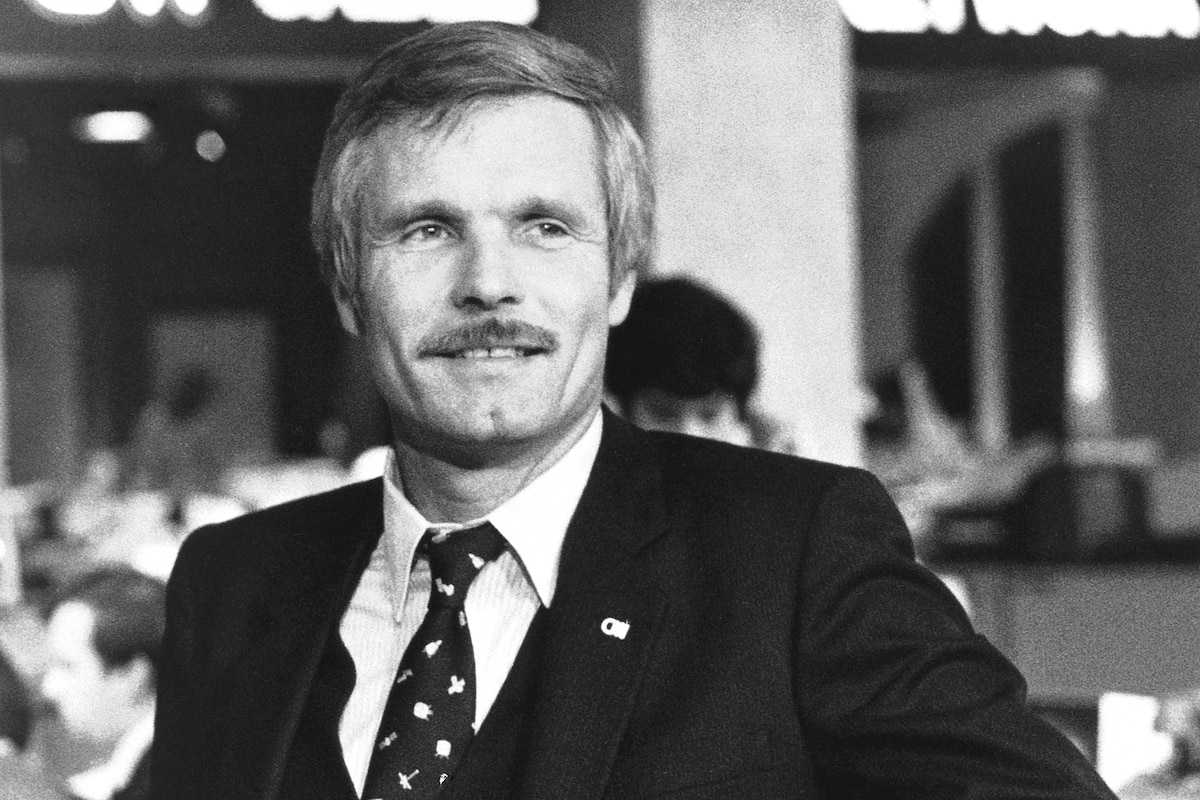
He tried to jump in front of the spotlight around Ted Turner's death.

Media mogul Ted Turner died today at age 87. Turner was the founder of several early cable networks, most notably CNN and TBS. He was a connoisseur of movie history, first leading the charge to colorize black and white movies, and then—as an act of contrition to the film purists he'd outraged—creating the cable channel TCM, known for its ad-free presentation of culturally and historically significant movies. His success as a cable pioneer and as a businessman in general made him a billionaire, and he adopted a flamboyant lifestyle to match. He bought two sports teams to provide fodder for his growing cable empire: the Atlanta Hawks and the Atlanta Braves. He even appointed himself manager of the Braves for one game in 1977 (a loss to the Pittsburgh Pirates), a stunt that played to his flair for the dramatic but which is remembered surprisingly fondly by baseball's old guard.

TCM Remembers: Ted Turner 

Turner and Trump, who turns 80 next month, were superficially similar in many ways. Both were married three times and had five children, although Turner had a much warmer relationship with his wives and children. Both have courted controversy with crass remarks: Turner for making hoary jokes about Polish people, and Trump for saying that Americans who don't support him are traitors and that entire races of people are vermin with subhuman intelligence. Both owned sports teams: Turner with the occasionally good Hawks and the dynastic Braves, and Trump with the New Jersey Generals of the short-lived USFL. Trump and Turner were both billionaires, with Turner's fortune coming from a local billboard business he started and parlayed into a multimedia empire, and Trump's coming from $400 million in tax-evaded inheritance that he used to repeatedly bankrupt businesses until he began to successfully monetize the presidency during his second term through crypto scams and pay-for-access bribes

That may be why Trump took the unusual step of remembering Turner fondly today in a post to his boutique social media website. Normally, Trump uses the occasion of a person's death to insult them and avenge whatever grudges he may have had against them, a tactic he's deployed against everyone from celebrity filmmakers to icons of the civil rights movement to American troops killed in combat. But he called Turner "one of the Greats of Broadcast History" and claimed that he was "a friend of mine," adding, "Whenever I needed him, he was there, always willing to fight for a good cause!"

That makes it sound like Turner liked Trump or his politics. In reality, Turner explicitly endorsed Hillary Clinton in 2016, and addressed that endorsement to Trump in the first line: "From one billionaire to another, Donald, I prefer Hillary." 

On almost every political issue imaginable, Turner opposed Trump. He was an avid environmentalist and conservationist who railed against environmentally devastating coal mines, while Trump believes conspiracy theories about wind turbines causing cancer. Turner was staunchly in favor of women's rights to abortion, while Trump—at least since he started trying to get elected—has engineered the destruction of that right. 

Turner also prided himself on his philanthropy, establishing the Turner Foundation, which has given more than $400 million in grants for environmental protection projects. Trump's charity was dissolved after a trial found it to be fraudulent, used by Trump to make illegal political contributions and pay for personal expenses like oil paintings of himself and sports memorabilia

Why does this matter?

  • Jumping in front of the spotlight when someone famous and well-liked dies is narcissistic and needy even by Trump standards. 
  • If Ted Turner had liked and supported Donald Trump, Donald Trump wouldn't be the only person saying he did.

Thursday, October 23, 2025

What did Donald Trump do today?

He pardoned a money launderer for Hamas whose crypto firm has made him billions of dollars.

Today, Trump pardoned Changpeng Zhao, the founder of the cryptocurrency exchange Binance. Zhao pleaded guilty in 2023 to using his position at Binance to launder money on behalf of Hamas, among other criminal or terrorist organizations. The company itself pleaded guilty to a wide range of crimes including money laundering and helping criminal clients evade international sanctions. 

Binance is currently being sued by the victims of the Oct. 7th, 2023 attack by Hamas on Israel. The suit charges that Binance enabled the attack by providing Hamas with secure and secret funding channels it used to acquire weapons. 

But Binance also has made Trump's ventures into the scam-ridden crypto industry enormously profitable. It agreed to accept $2 billion in financing from an investment fund for the United Arab Emirates, but in crypto "stablecoins" controlled by a Trump family business rather than actual money. The result is that Trump personally made millions of dollars in transaction fees. 

In other words, Binance sold part of itself at below market value in order to indirectly funnel money into Trump's pockets while it was actively lobbying for a pardon for Zhao. 

Zhao had been forbidden as part of his sentence from working in finance. This is a common punishment in white collar fraud cases, to prevent criminals with expert knowledge of the financial system from simply learning how to avoid getting caught the next time. Trump's pardon also undoes that protection, and similar restrictions on Binance itself. 

Trump administration officials today blamed the Biden administration for overprosecuting Binance and Zhao—again, for knowing enabling Hamas to evade sanctions and fund the attack that started the ongoing war in Gaza. Asked about it by CNN's Kaitlyn Collins, Trump became angry and insisted that "what he did is not even a crime, wasn’t even a crime."

Why does this matter?

  • It is wrong to sell pardons.  

Sunday, September 28, 2025

What did Donald Trump do today?

He took down an obvious scam AI post he'd made to his social media account—or, at least, someone did.

Last night, Trump posted this video, in which an obviously AI-manipulated image of him promises to bring "medbed" technology to all American citizens.

Deep in the weirdest parts of online right-wing culture, "medbed" is the term for a science-fiction device that will supposedly cure diseases, leach "toxins" out of the body, and otherwise restore a patient to perfect health better than any human doctor. Sadly, they don't exist—but even more sadly, the belief that they do is very real. The mythology generally involves Trump's fight against a grand, shadowy conspiracy to keep these miracle devices out of reach for everyday Americans. Scammers have capitalized on this, selling desperate patients useless "treatments" in mockups of the beds for tens of thousands of dollars

It's not clear where Trump found the video, or whether someone in particular convinced him it was real or a good idea to post it, but it appears to have originated last week on an Instagram account connected to crypto scams. It's not impossible that Trump would have understood that it was fake but decided it was worth throwing some red meat to the cult-like conspiracy theorists who are an important part of his political base of support. 

But within hours, the general consensus was that Trump had just completely and uncritically accepted the video as real, and—as he had already done once that day—"announced" his new "policy" without checking with anybody actually running his government. 

Other scammers were quick to seize on the opportunity Trump created for them. Almost immediately, a website appeared at "medbedcard.com" selling early access to the "terahertz technology" of the fictional medbed for $447.


This morning, before Trump began his usual morning posting binge, the video was quietly deleted. The White House has not offered any explanation, but a number of Trump staffers (and the occasional hacker who guesses his passwords) have access to his social media accounts.

In short: the 79-year-old Trump appears to have fallen for an obvious AI scam, based on a QAnon conspiracy theory, featuring fake video that he believed were things he'd actually said. He then posted it to social media as though it were true, and created an opportunity for other scammers to fleece his supporters for hundreds of dollars before someone in his administration was finally able to take it down.

The web address where Trump's original post sat now returns the Orwellian error message "This Truth no longer exists."


Why does this matter?

  • Usually, when someone's 79-year-old grandpa falls for a scam like this, the family takes away his credit cards and starts looking for a memory care unit to place him in.

Tuesday, July 29, 2025

What did Donald Trump do today?

He promoted one of his golf courses on the taxpayer dime.

Trump golfs almost every weekend, and taxpayers pick up the tab to the tune of at least $4 million for each trip—a figure that doesn't include the cost to local law enforcement, unreimbursed disruption to businesses, and other expenses. And Trump, who stays exclusively at his own properties and forces government employees, including his Secret Service detail, do the same, makes money on each trip.

Trump's golfing this week has been taking place in Scotland, home to two golf courses he owns—and, as of a ribbon-cutting today, a third. The cost to American taxpayers for Trump to promote his new course is estimated to be at least $10 million.

Trump's personal wealth comes from a variety of sources: a nearly half-billion dollar inheritance carefully and illegally hidden from the IRS (including a suspicious last-minute attempt change to his dementia-suffering father's will to benefit himself), tax write-offs from investment "losses" in the casinos he bankrupted that actually came out of the pockets of other investors, and any number of penny-ante product hustles, ranging from a to cheap Trump-branded collectible sneakers. Lately, on paper at least, much of his money comes from cryptocurrency "tokens" that can be used as ways to untraceably put money in Trump's pocket in exchange for whatever goodwill that might get the buyer—like, for example, Trump ordering the SEC to drop civil fraud charges against his biggest buyer.

But the durable value of Trump's real estate holdings are still important to Trump, if only because they represent the business he's found it hardest to lose money in. Property tends to hold its value over the long term no matter who owns it, and for people—or countries—looking to buy Trump's attention without buying fake digital coins, real estate "investments" or simply overpriced club memberships are a straightforward way of doing it.

Officially, the purpose of the trip was to sign a trade agreement with the European Union—even though the golf course opening has been planned for years, and Trump's global trade war has only been going on since he returned to office. But even that excuse doesn't appear to be holding water: the deal Trump announced, and the one the EU says was actually negotiated, are two totally different things

This is not the first time that's happened in recent weeks with Trump's hastily announced "deals."

Why does this matter?

  • Anyone who needs to be president to make money in business is terrible at both jobs. 

Thursday, July 24, 2025

What did Donald Trump do today?

He tried and apparently failed to bully Jay Powell.

Trump took a tour of the Federal Reserve Building today, where he lied about the cost of its renovation to harangue Fed Chair Jay Powell about dramatically lowering interest rates. Presented by Trump with false numbers about the cost of the building project, Powell immediately pushed back, pointing out that Trump was counting in "cost overruns" a building that had been finished and paid for five years ago.

Powell's staff also pointed out that the ongoing renovations are suddenly much more expensive because of Trump's tariffs, particularly on steel—as are all building projects in the United States at the moment. That kind of inflationary economic drag is precisely why the Fed has resisted lowering rates, which would make tariff-fueled inflation even worse.

Trump approved the renovations during his first term, as well as expensive changes to the original plan that went beyond what the Fed wanted. He also appointed Powell, who he's called a "numbskull" for not pushing the Federal Reserve to precipitously drop rates.

Trump wants lower rates for two reasons. The first is personal: in spite of massively ballooning paper wealth thanks to his crypto schemes, Trump is still heavily in debt on his properties, owing more than $600 million on them. Refinancing at dramatically lower interest rates would save him hundreds of millions of dollars going forward. It would also likely help Trump's businesses, which were struggling before his re-election, in other ways. Unlike most Americans, paper billionaires like Trump can only borrow money that their income or collateral would let them pay back, so unlike Trump, they can't use near-zero rates to make speculative investments.

The second reason is political: for all his talk of shrinking government, his recently-passed budget bill balloons the amount of money the Treasury will need to borrow to completely unprecedented levels. If U.S. debt can be sold at lower rates—and there's no guarantee that yields on Treasury bonds will follow the Fed funds rate down—then it would take a little bit of the sting out of the massive hit to the national debt.

Interest rates are relatively high at the moment, and the expectation is that the Fed will drop them incrementally once or twice this year. But doing so because Trump or any president demanded it would almost certainly cause investors to lose faith in the Fed's independence—and that would make American debt much more expensive to pay off, and American businesses much less attractive to invest in.

Why does this matter?

  • The health of the American economy is much, much more important than Donald Trump getting a cheaper mortgage.  

Saturday, January 18, 2025

What did Donald Trump do today?

He made a few paper billions on a cryptocurrency that even crypto diehards are calling a scam.

Trump, at 78, is famously unconcerned with the details of modern computing. Although he has the social media appetite of someone a quarter his age, he tends to envision computers the way they appeared in 1980s movies like War Games. For example, his answer to beefing up cybersecurity during his first term was to suggest that businesses send sensitive information via bike messenger.

Since allying himself with tech billionaires, though, Trump has learned to love at least one newfangled computer concept: cryptocurrency. Last night, he began selling a "token" with no intrinsic value, and not even the scarcity value of proof-of-work-based cryptocurrencies like Bitcoin. Instead, "$TRUMP" is a tradable digital certificate that confers nothing more than bragging rights. 

Today, Trump's net worth had—at least in theory—increased by billions of dollars as a result of the market price of the tokens, most of which he still owns.

There are two reasons, other than fandom, that people might buy these tokens. One, which drives many such fad currencies, is what is known as the greater fool theory. Something that is intrinsically worthless can still yield profit for an investor as long as there is a "greater fool" to resell it to. Ultimately, of course, the last investor is stuck having paid top dollar for a worthless and unsellable investment, at which point the bubble collapses.

Collapsing price bubbles tend to damage economies even when most people are not buying into the bubble. A bursting bubble in Florida land prices was a major cause of the Great Depression, for example. In modern regulated financial markets, the pump-and-dump mechanisms that enable those who want to stalk the "greater fool" are illegal. 

But crypto is still, for the most part, a sort of Wild West—something Trump used to understand.


This time around, though, Trump made keeping cryptocurrencies unregulated and forcing the government to spend actual dollars to buy them a central part of his campaign platform.

The other reason that investors might want to pump up the value of Trump's "tokens" is as a form of indirect bribery. Buyers are only as secret as they want to be, and Trump—who has made no secret of the fact that his access and goodwill can be bought—would be in a position to know who to reward or punish based on their token purchases without money directly changing hands in a way that would be visible to law enforcement. 

Crypto industry diehards have said that the unusual structure of Trump's "coin" offering gives buyers terrible terms, with Trump in a position to flood the market or cash out without any of the usual restrictions. Anthony Scaramucci, a crypto booster who was briefly Trump's press secretary during his first term, called it "Idi Amin-level corruption."

Why does this matter?

  • The security and economic stability of the United States is more important than Donald Trump getting a few more billion dollars.

  • Elected officials who aren't looking to sell their influence don't do everything possible to make sure people can buy it.

  • It's probably a bad sign if people who were in a president's inner circle are comparing him to one of the most corrupt dictators of modern history.