Thursday, July 30, 2026

What did Donald Trump do today?

He pretended he didn't care that Senate Republicans are resisting installing his criminal fixer as attorney general.

Trump floated the idea of pulling his nomination of Todd Blanche to serve as attorney general on social media today, gloating over the role he played in ending the Senate careers of two Republicans, Thom Tillis (R-NC) and John Cornyn (R-TX), who oppose Blanche. The specific issue that Cornyn and Tillis cited for withholding their support was that as acting attorney general, Blanche—apparently on orders from Trump—is refusing to put in writing the promise he's made not to create a slush fund for "victims" of prosecution for political violence, including the Jan. 6th insurrection. The two senators also oppose Blanche's plan to grant Trump and his family permanent immunity from any prosecution for tax crimes.

Prior to the resignation of Trump's previous attorney general, Pam Bondi—who was also a former private Trump defense attorney—Blanche was best known for his "interview" as a deputy attorney general with convicted child sex trafficker Ghislaine Maxwell. In that meeting, Blanche gave Maxwell criminal immunity in exchange for her answers to a series of carefully worded questions, some of which were obviously designed to provide an alibi for Trump himself. Maxwell obliged by saying that she had never directly, personally witnessed Trump behaving inappropriately with children. She was then immediately, and in violation of Bureau of Prison rules, transferred to a "resort-style" minimum security prison where her privileges—unusual even for this prison—include custom meals and interaction with therapy puppies.

(Relatedly, the Senate voted unanimously yesterday in favor of a nonbinding resolution demanding that Trump not pardon Maxwell or commute her sentence. Under normal circumstances, Senate Republicans would have killed the resolution without a vote as a political stunt—but there is genuine bipartisan anxiety that Trump will actually cut a deal with Maxwell in exchange for her silence about what he knew of Epstein's child sex trafficking ring.)

The reality is that simply by refusing to nominate anyone else, Trump can keep Blanche in charge of the Department of Justice indefinitely. Blanche's authority in the acting role is not meaningfully different than it would be if it were confirmed. But the fact that it's two lame duck Republican senators with nothing left to lose politically who are standing up to Trump suggests a dangerous weakness in Trump's position. Without the full support and political cover of the Republican Party, Trump is in grave danger of losing what control he has left over his presidency and, ultimately, his ability to stay a free man if he voluntarily departs office. Gambling on the support of two new Republican senators who will be politically beholden to him may be the best option in terms of maintaining his authority with a Republican Party that is increasingly angry with how he is dragging them down in the polls.

But that only works if Tillis and Cornyn are replaced by other Republicans, and that is very doubtful. Roy Cooper, the Democratic candidate in North Carolina, is posting nearly 10-point leads over his Republican opponent. In Texas, normally a solidly red state, Democratic state senator James Talarico has a 5-point lead in the latest poll over Ken Paxton, a staunch Trump ally with a criminal record, an impeachment by the Republican-led Texas legislature, and credible allegations that he has been voting in a precinct where he doesn't live.

In a response today, Cornyn responded that he and Tillis are not the only Republicans who have said they won't vote for Blanche.

Why does this matter?

  • The only reason to refuse to promise to create a slush fund to reward people who commit political violence on your behalf is that you intend to create a slush fund to reward people who commit political violence on your behalf. 
  • The Attorney General of the United States is supposed to represent the people and government, not protect Donald Trump from them, no matter what Trump or Todd Blanche may think.  
  • Senators don't block a nominee from their own party, whom they'd voted for in a similar capacity less than two years ago, without an obvious reason.

Wednesday, July 29, 2026

What did Donald Trump do today?

He was "surprised" by the news that China and Russia were selling arms to Iran and have been for decades.

Asked today about the latest reports that China is planning another arms shipment to Iran, Trump said that he would find it "surprising" if that were true, and that he'd be "disappointed."

China is planning another arms shipment to Iran

In fact, China has supplied arms to Iran for decades, although for diplomatic purposes it has usually publicly denied it. China is also a major consumer of Iranian oil (which has been under international sanctions for many years) and is Iran's largest overall trading partner.

The two countries are not close military allies, and there are no strong cultural or geopolitical ties between them, other than that neither are aligned with the United States. China, like Russia, has a vested interest in the degrading effect that Trump's war has on American military readiness and its status as a world leader. 

Trump's argument against the latest arms deal, which is sourced to US intelligence agencies, is that China's president Xi Jinping "told [him] very strongly" that no such deal would be made. He added in a social media post that "in his opinion" neither China nor Russia were selling arms to Iran.

Russia is also selling arms to Iran.
 

Why does this matter?

  • Countries always act in their own best interests, not what is best for Donald Trump.
  • There is gullible, and then there is taking the word of the dictators of hostile nations over the evidence supplied by your own intelligence agencies. 
  • Donald Trump's "disappointment" is not a threat to Xi Jinping.

Tuesday, July 28, 2026

What did Donald Trump do today?

He filed the latest in an endless series of appeals to avoid paying a woman he raped and defamed what a jury said he owed.

In 2023, a New York jury found that Trump had raped E. Jean Carroll in the mid-1990s, and that his public statements accusing her of lying about it for money and attention were defamatory. As a result of those defamatory statements, Carroll, 82, endured public humiliation and death threats. The result of the trial was that Trump was ordered to pay her $5.6 million in damages.

Carroll is one of about thirty women who, at various different times dating back to his first marriage, have accused Trump of sexual assault, sexual harassment, or lewd conduct towards minors. (That list does not include conduct Trump may have participated in or known about related to his friendship with Jeffrey Epstein.)

While the trial continued in the penalty phase (but after the jury's verdict) Trump repeated his defamatory comments. That resulted in a separate judgment, this time for $83.3 million. The higher damages were intended to deter Trump from continually reoffending. (They've worked: Trump no longer repeats the defamatory claims.)

Trump subsequently lost every single appeal, including one at the Supreme Court—and even an extra bite at the apple he gave himself by demanding that the Court reconsider its judgment. The original $5.6 million verdict, plus interest, was ordered paid to Carroll earlier this month. (Trump is challenging even that routine order, claiming that Carroll should not be able to invest the money in the stock market, where it might lose value, because he may someday, somehow be able to get a verdict affirmed by the highest court in the land overturned.)

Today, Trump filed an appeal of the second, $83.3 million verdict to the Supreme Court, even though it springs from identical conduct and was issued as a continuation of the same trial. 

Trump's actual argument in this appeal is that he should be immune from civil liability for defamatory statements he made while he was in office. In this case, that means that Trump is arguing that he should be allowed to call Carroll a publicity-seeking liar for saying he raped her—which a jury established as fact—because he was President at the time. This is the same argument that the Supreme Court rejected earlier, leaving a lower court's ruling intact.

He also argued, unsuccessfully, that the United States government should be allowed to replace him as the defendant, which would allow him to use taxpayer money to satisfy the verdict rather than his own.

The Department of Justice had historically declined to prosecute sitting presidents for criminal acts while they are in office, although until Trump that meant that presidents who broke the law in office could still be prosecuted after the fact. This was a custom, rather than established law, until Trump's own appointees on the court provided the majority in Trump v. United States (2024). That ruling carefully granted criminal immunity to presidents exercising unspecified "core powers" and, at least temporarily, got then-candidate Trump free from federal indictments relating to his attempts to overthrow the results of the 2020 election and stay in power illegally. (Trump could still be prosecuted for the underlying crimes under a new indictment, assuming he survives his current term and leaves office voluntarily.)

In the current case, Trump is arguing that calling his own rape victim a liar is a "core power" of the presidency.

Notably, while Trump relies on his control of the DOJ to avoid prosecution, he's succeeded in getting a criminal investigation launched against Carroll, on the theory that she committed perjury. That appears to have been a more or less empty threat: the investigation does not appear to have really commenced and even Trump diehards, like his former defense lawyer and current acting Attorney General, Todd Blanche, have distanced themselves from it.

Trump has spent much of this year trying to pay himself and supporters who committed crimes on his behalf billions of taxpayer dollars for the supposed "weaponization" of government against them.

Why does this matter? 

  • This is pretty much what you'd expect an unrepentant sexual abuser to do with the powers of the presidency.   
  • The American people are not Donald Trump's piggy bank and the Department of Justice is not his personal goon squad.  
  • Flaunting your ability to get away with horrific acts against your political enemies is what tinpot dictators do.

Monday, July 27, 2026

What did Donald Trump do today?

He said the deaths of four Americans in Iran "wasn't very impactful."

Trump had this exchange with reporters aboard Air Force One today:


Q: President Zelenskyy says Russia is giving Iran satellite imagery of US bases in the Gulf to help them target. What can you do about that?

TRUMP: Well, we'll find out if that's true. I'll ask Putin. We'll find out.

[crosstalk]

TRUMP: It hasn't had much impact, because we've knocked the hell out of them. …They may be giving, but—uh, if they are, it hasn't worked out, because they have no army, they have no air force, they have no navy, they have no nothing. So it hasn't worked out—I don't think, I don't think they've been doing it, certainly not at a high level. And if they have, it hasn't been very impactful.


The strikes over the past two weeks that Trump called "not very impactful" by the supposedly nonexistent Iranian military killed four American soldiers and injured dozens more.

Zelenskyy has offered proof, although there's very little doubt about the truth of the allegations. Russia is a geopolitical ally of Iran and has a particular interest in extending Trump's war on Iran as long as possible. Unlike the United States, Russia's desperately degraded economy really does rely on oil sales to stay afloat, and the higher prices caused by Iran's blockade of the Persian Gulf have helped the Putin regime enormously. 


Bogging the United States down also helps Russia in its war against Ukraine. With the United States' own supply of critical munitions getting dangerously low, there are fewer available for Ukraine. The Defense Department has already said it won't be able to supply Ukraine with weapons Congress has already authorized until a date in 2029 that, coincidentally or not, is after Trump's second term will end.

Trump is personally, financially, and politically beholden to Vladimir Putin, and is in effect on the opposite side of the Russia-Ukraine conflict from the rest of the United States. He didn't say when he'd "ask" Putin if Russia helped kill American troops, but it wouldn't be the first time Trump has excused attempts by the Putin regime to do just that. In 2020, he blew off credible intelligence reports that Russia was paying bounties on the murder of American troops in Afghanistan, and then pretended nobody had told him about them.

Why does this matter?

  • Nobody who thinks the deaths of American servicemembers isn't "impactful" is fit to command them. 
  • A president who can't stand up to a hostile power helping to kill Americans isn't fit for office.

Sunday, July 26, 2026

What did Donald Trump do today?

He gushed over his name being put on a road by a government that was clearly trying to manipulate him. 

Trump has long been obsessed with his personal brand. His fame as a real estate investor came more from his penchant for putting his name on buildings, than from any success he had as a businessman. (Even after inheriting a billion-dollar portfolio of prime New York City real estate at the beginning of a decades-long housing boom, Trump still managed to underperform the stock market for his entire "career" in real estate, and that's ignoring the businesses he ran into the ground.)

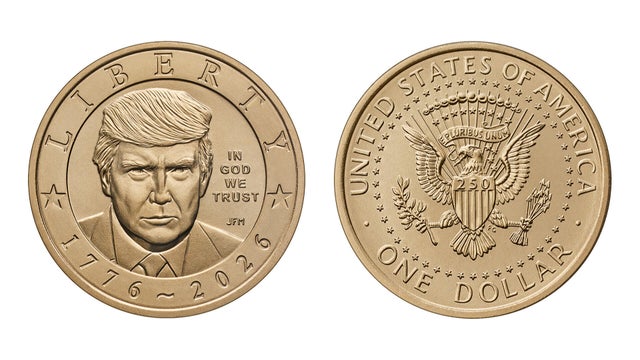
Since returning to office, one of his highest priorities has been to put his name or face on everything he possibly can, from passports to US currency (both bills and coins) to buildings to a new form of child savings account that's just a little worse than existing options in every way. He got the Florida resort town where he now lives to rename its airport after him—and made sure he got a cut of the profits in the bargain—and is trying to get Washington's Dulles Airport named for him too, as well as NYC's Penn Station.

(That is, to put it mildly, only a partial list.)

A number of countries have courted and received Trump's favor by proposing new local "Trump Towers," which doubled not only as a form of influence-buying but also money laundering. But Morocco's government hit on a simpler and much cheaper way of buying Trump's goodwill: it is naming a highway after him

Trump was delighted by the news, and announced it himself on social media. But there's an obvious catch: the road runs through the disputed territory of Western Sahara, which is under Moroccan occupation. Trump, unlike every other US president for the past 50 years, has been open to recognizing Morocco's claim, which is heavily disputed by residents and a number of African countries supporting independence.

In other words, this successful appeal to Trump's ego also binds the United States to a policy that favors the occupying Moroccan government.

Trump gushed that he was looking forward to traveling the entire 655-mile length. That can safely be chalked up to diplomacy: it connects small, isolated desert cities in the kind of place Trump likes to refer to as a "shithole country." Also, it's extremely unlikely that he'd be physically able to sit in a car for that long.

Satellite view of the highway Morocco's government says it is naming after Trump

Why does this matter?

  • It shouldn't be this easy for a foreign government to emotionally manipulate the President of the United States. 
  • A desperate need to force others to recognize the supernatural greatness you think you possess is called megalomania, and it's not a sign of good mental health.

Saturday, July 25, 2026

What did Donald Trump do today?

He talked tough about Iran while simultaneously backing down to conserve dwindling resources.

In an interview with a French journalist today, Trump said that he would order a full-scale ground invasion of Iran "if we don't get 100% of what we want" out of the peace negotiations both countries have presently abandoned. 

But what he's actually done this weekend is the opposite. Rather than escalating attacks, he called a halt to them on Friday. The most likely reason is that the United States is now running critically low on the missile interceptor used—without perfect success—to defend American bases and ships from Iranian counterattacks. 

Lockheed Martin announces cheaper Patriot interceptor missile
A Patriot missile, one of several kinds of interceptors the United States military is running short of


In other words, not only has Trump's war against Iran not achieved any of its stated purposes, and not only has it cost hundreds of billions of dollars and at least 18 American lives, but it's also single-handedly drained American arsenals of their main defensive weapons. Those interceptors can't be replaced instantaneously, and they're expensive—much more expensive than the cheap and effective medium-range missiles Iran has been using.

The problem for Trump now is that Iran clearly understands he's run out of credible military threats. A ground assault on Iran, a country the size and population of the entire eastern seaboard of the United States, is almost unthinkable. Continued bombing of legitimate military targets in Iran yields very little for the United States: the Iranian military is now more like a guerrilla force with an unlimited supply of long-range missiles and drones. And while Trump has enthusiastically promised to commit atrocities against civilians, that still wouldn't make this a winnable war for him.

Meanwhile, the rate at which Trump has burned through money and ordinance is putting a very real limit on how long the United States can keep up a belligerent posture in the region. The shortage is so acute that American military commanders are now letting some Iranian drones and missiles through in an attempt to ration the remaining interceptors for more serious threats. 

Why does this matter?

  • It's almost impossible to describe how badly Trump has bungled every aspect of this war. 
  • The problem with being both incompetent and a blowhard is that your adversaries very quickly learn they don't have to take any of your threats seriously.

Friday, July 24, 2026

What did Donald Trump do today?

He admitted screwing over scientists from blue states out of revenge but said that wasn't "political."

Among the casualties of Trump's assault on federal science programs last year were 624 grants from the Department of Energy that were marked for cancellation. 284 of them were, in fact, canceled. Of those, 283 of them were from states that "had a recipient location and/or at least one place of performance in a state that awarded its electoral votes to Kamala Harris in the 2024 election and has two Democratic-caucusing Senators.” That language comes from Jeff Novak, a DoE lawyer, in a recent court filing.

In other words, the Trump administration has admitted in open court that it deliberately canceled grants on research into improved energy technologies based on whether or not the recipients were in a blue state.  

But in a comment today, Trump's Department of Energy insisted that refusing all grants from states that didn't give Trump their electoral votes somehow wasn't a political decision: "None of the termination decisions were based on political considerations."

This is just the latest in a string of episodes where Trump has openly punished the states that voted for his opponents—which, collectively, represent more than half of the nation's population and tens of millions of his own supporters. He's all but stopped signing disaster declarations in blue states, and he's trying to shut off Medicaid funding to two blue states whose governors he particularly hates. 

It's not new behavior: at the height of the COVID outbreak in 2020, he threatened to hold off on supplying urgently needed medical equipment unless blue-state governors like "the woman in Michigan" (Gov. Gretchen Whitmer) until they were appropriately "appreciative" of him in public. 

The Trump administration is currently finalizing an administrative rule that would purport to give him the power to cancel any grant that didn't "demonstrably advance the president’s policy priorities"—essentially giving Trump a personal veto over any scientific or academic research that he didn't like, regardless of what Americans' representatives in Congress had specified in appropriations bills for that funding.

Why does this matter?

  • Punishing the citizens you think of as your enemies is what dictators do.   
  • Americans deserve a president who isn't constantly looking to screw over the places where more than half of them live.

Thursday, July 23, 2026

What did Donald Trump do today?

He lied about how many American servicemembers he's gotten killed.

A day after putting words of support for the war against Iran in the mouths of fallen American soldiers, Trump is pivoting to a new PR tactic: undercounting the number of dead servicemembers. The Pentagon, which is legally required to promptly and accurately report servicemembers killed in conflict, maintains a website listing the casualties sustained in the Iran campaign. Yesterday, it showed 18 deaths, including the four soldiers lost in Iraq and Jordan over the weekend.  

The latest US troops killed in Trump's Iran war are remembered for lives of  service | US-Israel war on Iran | The Guardian
Clockwise from upper left: Sgt. Angel Rampersad, Sgt. Michael Emmanuel Swinton, Lt. Tyler James Feehan, and Pvt. Isabella Gonzales.


Today, that website showed only 14
, with the four most recent deaths erased from the "Army" column and the total.


The justification given internally was that because Trump had declared a "ceasefire" back in April, these latest troops killed by Iranian drone and missile fire somehow didn't count. 

There are at least three ways that doesn't add up. First of all, the "ceasefire" never actually resulted in either side ceasing its attacks. Second, Trump unilaterally declared the "ceasefire" over before those four most recent servicemembers were killed. And most obviously of all, troops killed in action by enemy attacks are still casualties, regardless of whether the Trump considered the undeclared war they were fighting in to be paused or not.

It's not just troop deaths that Trump has been caught underselling. In a revival of Vietnam-era disinformation tactics, the Department of Defense kept injuries to dozens of servicemembers sustained in last week's attacks hidden as well. And Trump personally has been a geyser of fake news on the economic impacts of the war, falsely claiming that it doesn't matter if it spurs inflation (it does) or that gas prices have stayed low (they haven't). 
 

Why does this matter?

  • A president who hadn't completely botched a war he never should have started wouldn't need to lie about how badly it was going. 
  • 18 American servicemembers have lost their lives for this fiasco whether Trump is willing to admit it or not.

Wednesday, July 22, 2026

What did Donald Trump do today?

He put words in the mouths of American soldiers he got killed.

Today, the Defense Department announced the names of another killed in the ongoing war in Iran. The body of Sgt. Angel Rampersad of Queens, New York, was brought back to American soil at Dover AFB, along with the remains of two other soldiers killed in an Iranian attack on an Army post in Jordan.

A woman in an Army uniform stares into the camera with an American flag in the background. 


Asked about the deaths today en route to the transfer ceremony, Trump put words in the mouths of the dead soldiers, claiming that "they said, and—all of them said, very strongly, 'we can't let—cannot let Iran have a nuclear weapon.'"

Trump, of course, never spoke to any of them while they were alive, and if he'd spoken with their families—a responsibility he's tried to avoid in the past—the White House hasn't mentioned it. He himself didn't settle on the nuclear justification for quite some time after the war began. Instead, Trump seems to have been pressured or manipulated by the Israeli Prime Minister, Benjamin Netanyahu, who wanted open war with Iran for his own domestic political reasons. 

Trump has outright lied about what dead servicemembers and their families have said in the past. He's also publicly picked fights with grieving family members who don't let him control the narrative. In 2017, after he'd ordered an ill-advised raid in Niger that saw four American soldiers killed, he lectured a widow on how her husband would have felt about his sacrifice, and then attacked her in the press when she told reporters what he'd said.

Trump, who dodged the draft in Vietnam by getting a tenant of his father's to write him a fake medical excuse, has often expressed contempt for people who died in military service. He once asked his former chief of staff, retired Gen. John Kelly, "What was in it for them?" and referred dead servicemembers as "suckers" and "losers." (Kelly's own son was killed in Afghanistan.) At an earlier transfer ceremony, he took the opportunity to wear a campaign baseball cap, which he did not take off in the presence of the bodies.

The American death toll in the war now stands at 18.

Why does this matter?

  • Even by Trump's standards, this is a disgusting kind of lie to tell.

Tuesday, July 21, 2026

What did Donald Trump do today?

He used illegal Medicaid cuts to punish his political opponents in two blue states.

The Trump administration announced today that it was "pausing" Medicaid disbursements to Minnesota and California, over supposed fraud. The governors of each of those states are both political rivals to Trump: Gavin Newsom of California is a likely Democratic presidential candidate in 2028, and Minnesota's Tim Walz was the Democratic vice-presidential nominee in 2024.

Trump has made this threat before: in February, he said he'd withhold $259 million from Minnesota. He never carried it out, though. Courts have stopped Trump from politically motivated interference with healthcare programs before. In spite of the attention that Trump's HHS officials—former lawyer Robert F. Kennedy Jr. and daytime talk show host Mehmet Oz—tried to bring to the move today, it's not clear that any money has been withheld yet.

There is Medicare fraud in Minnesota and California—and in every other state, and probably almost every individual county. Committing fraud against the government for these kinds of programs is easy, but getting away with it is more difficult—as Trump, whose business was convicted of defrauding the State of New York, is well aware. (That is not to be confused with Trump's criminal conviction on 34 felony charges, which dealt with different matters.) Even if he didn't have personal experience with it, Trump has pardoned many wealthy and politically connected Medicare and Medicaid fraudsters, who collectively stole billions of dollars.

Regardless, Trump has no authority to withhold Medicaid funding for any state, or impose conditions on its release outside of what the law permits. Doing so violates Congress's constitutionally granted control over appropriation, as well as the 1974 Impoundment Control Act.

Trump has made little secret of his intention to punish states that don't support him politically at the federal level—even though, to use California as an example, that means punishing millions of people who voted for him. He's also effectively stopped approving disaster relief for blue states in his second term.

 Presidential approval rates for disaster requests from Democratic-led states and Republican-led states

Why does this matter?

  • Cutting off basic government services to punish areas the leader thinks aren't sufficiently loyal to him is what dictators do. 
  • It's beyond evil to punish poor children by withholding medical care to score political points against Americans who politically oppose you. 
  • Presidents who care about fraud generally commit less of it.

Monday, July 20, 2026

What did Donald Trump do today?

He threatened war crimes for the umpteenth time.

The Trump administration has been caught covering up huge numbers of injuries to American forces in recent weeks. Reports of wounded servicemembers clash with Trump's perpetual declarations that Iran's military capabilities have been utterly destroyed. Trump's war has also claimed the lives of at least two soldiers in the past week: Pvt. Isabella Gonzales, 19, and Lt. James Tyler Feehan, 25. 

This undated image provided by the U.S. Army shows Pvt. Isabella Gonzales, 19, of Carrollton, Texas. (U.S. Army via AP)
 

Trump's characteristically flippant reaction to their deaths—he used the words "very sad" before quickly adding "but"—hasn't gone over well. That may be why he tried to change his tone today on the subject of Americans dying in his war against Iran, blustering in a social media post that "Every time Iran kills an American Soldier they will pay for that killing many times over!"

The laws of armed conflict, which the United States military still acknowledges whether Trump wants it to or not, make disproportional retribution a war crime. In other words, no law or treaty has ever accepted revenge as a satisfactory justification for using more force than is necessary to achieve a military objective. That's especially true where civilian casualties are concerned

At a minimum, 1,701 Iranian civilians, including 254 children, have been killed since February 28. Trump has explicitly threatened to destroy civilian infrastructure that will lead to more deaths, which is also a war crime, even as he demands that those same civilians rise up against their government.

Why does this matter?

  • A president who hadn't dodged the Vietnam draft might understand why committing atrocities and lying about how badly the war is going isn't a winning strategy. 
  • A president who'd waged war competently wouldn't be in a position where he had to make these kinds of desperate threats.

Sunday, July 19, 2026

What did Donald Trump do today?

He got in the way of sports, again.

Trump attended the World Cup final at the Meadowlands in New Jersey today. As is usually the case when Trump goes to a sporting event, his visit resulted in three things happening:

  1. Loud, sustained boos. Trump is deeply unpopular with both American and international audiences, and fans at sporting events always let him know it. (That's why he's tried to promote the annual Army-Navy football game—cadets under military orders can't boo him.)

    Today was no exception: when he took to the field to take part in the trophy ceremony, he was loudly booed.

  2. Disruption and delays. As usual, Trump's security requirements forced long waits for fans who paid for tickets—up to three hours in the hot sun, just to get through security. Fans were told to arrive four hours early for this game, although there were no waits at all for other capacity crowds at the Meadowlands during the tournament.

    Journalists in particular reported being turned away in spite of having valid credentials.

  3. Making himself the center of attention. In spite of the loud boos that greeted his appearance, Trump seemed to consider himself part of the celebration for the victorious Spanish team, and had to be cajoled off the stage by FIFA president Gianni Infantino.


    It was an eerie repeat of Trump's bizarre performance at the 2025 FIFA Club World Cup, a warm-up event for this year's tournament. Then, Trump refused to yield the stage to the tournament's winners, instead standing center stage with the trophy while boos rained down on him. A tournament official had to physically take hold of the trophy and guide Trump to the waiting Senegalese team, and he still stood in front of them as they celebrated. 


Why does this matter?

  • Past a certain point, the need to be the center of attention becomes pathological. 

Saturday, July 18, 2026

What did Donald Trump do today?

He took time away from the golf course to say that it was "very sad" he'd gotten two more American servicemembers killed.

Trump spent the 142nd day of his second term at a golf resort today, and had no work on his schedule other than "executive time," his staff's euphemism for naps, TV time, and social media binges.

But he was forced by the death of at least two American servicemembers from an Iranian missile attack to cut short his leisure time and briefly address the issue. He told a NewsNation reporter, "It’s a very sad thing. We hate to see it happen," but added that the deaths were in service to keeping Iran from obtaining a nuclear weapon.

Iran has built up a huge stockpile of highly enriched uranium since Trump pulled the United States out of an Obama-era agreement with Iran and other world powers that allowed for unlimited inspections and verification that Iran was keeping to its no-nukes pledge. Trump's war hasn't changed the material reality: Iran still has that weapons fuel in secure bunkers and, in all likelihood, could finish production of working weapons within months.


What Trump's war has changed, however, is the risk-reward calculation for the military regime that governs the country. A nuclear Iran would probably be a pariah state—but, like North Korea, it would have an enormously potent deterrent to further attacks like the one Trump attempted with the current war.

The fallen servicemembers aren't likely to get much more in the way of sympathy than Trump calling their deaths "very sad." He opened the war with an address in which he actually smirked as he shrugged about the prospect of American casualties, and then attended the homecoming of remains of early casualties wearing a campaign baseball hat.

Trump also insisted today that he "couldn't care less" that Iran has pulled out of the memorandum of understanding that he'd hoped would lead to a peace arrangement. Given the abjectly humiliating terms he was willing to agree to in order to get the memorandum signed in the first place, that's unlikely to be true.
 
The US death toll is now 16, with an additional servicemember still missing after yesterday's attack. Trump has repeatedly insisted, against all evidence, that Iran has no military capabilities left.

Why does this matter?

  • This war would have been disastrous without any American casualties, much less 16 and counting.

Friday, July 17, 2026

What did Donald Trump do today?

He made a new kind of empty tariff threat against the United States' largest trading partner.

Wildfires in Canada are causing smoke and other forms of particulate air pollution to drift into the United States. This is a serious health issue for anyone, Canadian or American, in the path of the smoke. Fire season is getting longer and more intense across North America due to the rapidly changing climate, and Canadian and American firefighting organizations have been working together to coordinate their efforts to control the most dangerous fires across borders.

Canadian 'Super Scooper' plane grounded after hitting civilian drone over Los  Angeles wildfires | CNN
A Canadian CL-415 "Super Scooper" firefighting plane prepares to drop water on last year's Los Angeles wildfires

Trump responded to the news by calling the smoke an "invasion" and threatening to increase taxes on Americans who buy Canadian goods or raw materials.

Trump, who calls climate change a "hoax," has made a long habit of using natural disasters, and in particular forest fires, to play political games. He famously insisted that the Prime Minister of Finland—a country with a cool, wet climate and thin alpine forests—had told him they no forest fires because they "raked" the forest floor

Trump has also shown genuine confusion that water from northern California can't flow "down" onto the tops of mountains in the Los Angeles area, apparently in the childish belief that north always means "up." That's not just an embarrassing misunderstanding of how maps work: he dug in and wasted billions of gallons of water emptying California reservoirs during an active drought and fire emergency.

Trump's tariff threat to Canada is empty, or at least it's empty where Canada is concerned, which is rapidly reorienting its trade networks in favor of other countries. American consumers and manufacturers can still be hurt by higher prices or the loss of more Canadian business. 

But at home, Trump is openly playing favorites with which Americans he's willing to allow to benefit from government help in disasters. He's approved 89% of requests for disaster declarations from states governed by Republicans, and only 23% from states governed by Democrats. 

Presidential approval rates for disaster requests from Democratic-led states and Republican-led states 

Why does this matter?

  • Rewarding "loyal" subjects with good government while punishing the opposition with ineffective government is what dictators do. 
  • A president who can't understand third-grade geography or middle-school meteorology isn't competent to do the basics of his job. 
  • Making American houses more expensive because there was a tax increase on the Canadian gypsum in the drywall won't put out any fires.

Thursday, July 16, 2026

What did Donald Trump do today?

He announced he'd start charging for premium-tier access to information about what he does as president.

Trump's media company, which runs his boutique microblogging website Truth Social, announced today that it would begin charging for “licensed, real-time access” to Trump's posts. 

Truth Social is already the de facto communication platform for the White House. Trump uses it to announce trade wars, actual wars, and any number of other matters of public interest. He also uses it to manipulate the price of securities he owns or controls: he's hyped dozens companies he'd secretly bought stock in, and he's used it for pump-and-dump schemes on his own cryptocurrency.

In other words, Trump is proposing to create a premium-access tier for news about what he does in his role as a public officeholder.

Truth Social is a money-loser for its parent company, Trump Media & Technology Group, of which Trump is the majority owner, with total 2025 revenues coming in at less than a million dollars before expenses. The company itself is even worse from an investment standpoint: financial experts consider it a meme stock, and as with Trump's crypto scheme, most people who have bought into it since it went public have lost money.


The most obvious customers for premium-tier access to Trump's government work would be speculators—people trying to get in front of the waves Trump causes in stock markets, or more likely prediction markets. Trump's son, Donald Jr., is an "advisor" to both major prediction market firms, and Trump Sr. has fought states who are regulating them as gambling. 

Coincidentally, a White House staffer with access to Trump's speeches was accused today of winning more than $100,000 by placing bets about their content—in effect, making the kind of quick buck off of access to Trump that Trump now proposes to sell.

Why does this matter?

  • The President of the United States doesn't get to put what he's doing behind a paywall.

Wednesday, July 15, 2026

What did Donald Trump do today?

He declared imminent victory in Iran… again.

Today, Trump said that "Iran will be defeated very soon." 

He said the exact same thing on March 9, just over a week into the war, which has now lasted four and a half months. 

Since the start of the war, Trump has:

Why does this matter?

  • One way to avoid having to surrender to a vastly weaker military opponent is to not launch an unwinnable war strategy in the first place.

Tuesday, July 14, 2026

What did Donald Trump do today?

He folded on his protection racket idea in less than a day.

On Sunday, Trump falsely declared the Strait of Hormuz open. It is not: virtually no ships are passing through, because Iran's threats to attack them are credible.

On Monday, Trump repeated that lie, and then insisted (apparently without telling anyone else) that he would somehow be imposing a 20% surtax on cargo shipped through the Persian Gulf to cover "all costs necessary to do the job of providing safety and security." He didn't say when or how he intended to start providing safety and security, but any plan that would affect Iran's ability to launch drones or missiles at ships would involve physically occupying Iran, a country of 92 million people.

Today, less than a day after announcing the protection racket idea, he backed down, citing "deals" he'd supposedly made for foreign investment. No Gulf nation has confirmed having spoken with Trump.

Trump often announces vague and unenforceable "deals" he's made with other countries for investment in the United States. Over and over and over and over and over and over and over again, Trump has bragged about collecting IOUs in exchange for policy or trade concessions of real value, but it's hard to point to a single dollar of foreign investment that resulted that wouldn't have happened because of normal market opportunities.

Why does this matter?

  • It's a problem for the United States that nobody believes anything its president says. 
  • A competent dealmaker wouldn't get taken in by people offering meaningless promises so often.

Monday, July 13, 2026

What did Donald Trump do today?

He threatened to turn the Strait of Hormuz into a protection racket.

Yesterday, Trump said the Strait of Hormuz was open to commercial shipping. This is a lie, and an obvious one: ships are abandoning all plans to transit the strait because Iran has been attacking ships that do. Cargo ships and especially oil and gas tankers are vulnerable to cheap, low-tech attacks that can be launched from within Iranian territory.


Today, Trump doubled down, saying that not only is the strait open, but that he would somehow charge a 20% surtax on the value of cargo shipped through it. This, presumably, would be in exchange for military protection of the kind he has repeatedly promised throughout the war, but never actually delivered. (There is no practical way for a navy of any size to constantly escort ships through the Persian Gulf.)

The Hormuz Strait is OPEN, and will remain OPEN, with or without Iran. We are reinstating the THE IRANIAN BLOCKADE, so named because it is only stopping Iran's ships or customers from entering or leaving. All other countries will have fair and open use of the Strait. The U.S.A. will be, from this point forward, known as "THE GUARDIAN OF THE HORMUZ STRAIT," but as such, and as a matter of FAIRNESS, will be reimbursed, at the rate of 20% on all cargo shipped, for any and all costs necessary to do the job of providing safety and security to this very volatile section of the World. The process and formation will begin immediately. Thank you for your attention to this matter! President DONALD J. TRUMP

Iran's government responded with mocking agreement, saying that Trump "is absolutely right. Whoever provides secure and safe passage of commercial vessels through the Strait of Hormuz should be compensated for this service."

Of course, this parallels Iran's own plans to charge "fees" on ships, which is a blatant violation of international law—and one they had no ability to make before Trump gave them an opportunity to prove that they actually could make good on their threats. But there are two important differences. First, Iran's threat is effective because is willing to attack or seize ships of American allies—and the vast majority of traffic that goes through the Gulf is flagged to US-friendly nations. 

Second, the fees Iran has said it will impose as part of any peace deal are much lower, about 1-3% of the cargo value. In the extremely unlikely event that Trump were able to collect a 20% tax, it would immediately cause a spike in prices, which would directly harm the American economy.

Oil prices spiked anyway today, not because Trump's threat is being taken seriously, but because of the effect of the closure Trump insists isn't happening.

It is possible that Trump is serious about reinstating the naval blockade against Iran, which is something he can actually do. If so, it would mean that Iran has had more than a month of unobstructed sales of oil at very high market prices, with Trump's permission. This has likely yielded billions of dollars in revenue for the regime.

Why does this matter?

  • Making empty threats that no one believes just calls attention to your weakness. 
  • The United States military isn't there to run mafia-style protection rackets. 
  • There is supposed to be some difference between your side and the enemy side in a war.

Sunday, July 12, 2026

What did Donald Trump do today?

He lied about the Strait of Hormuz being open.

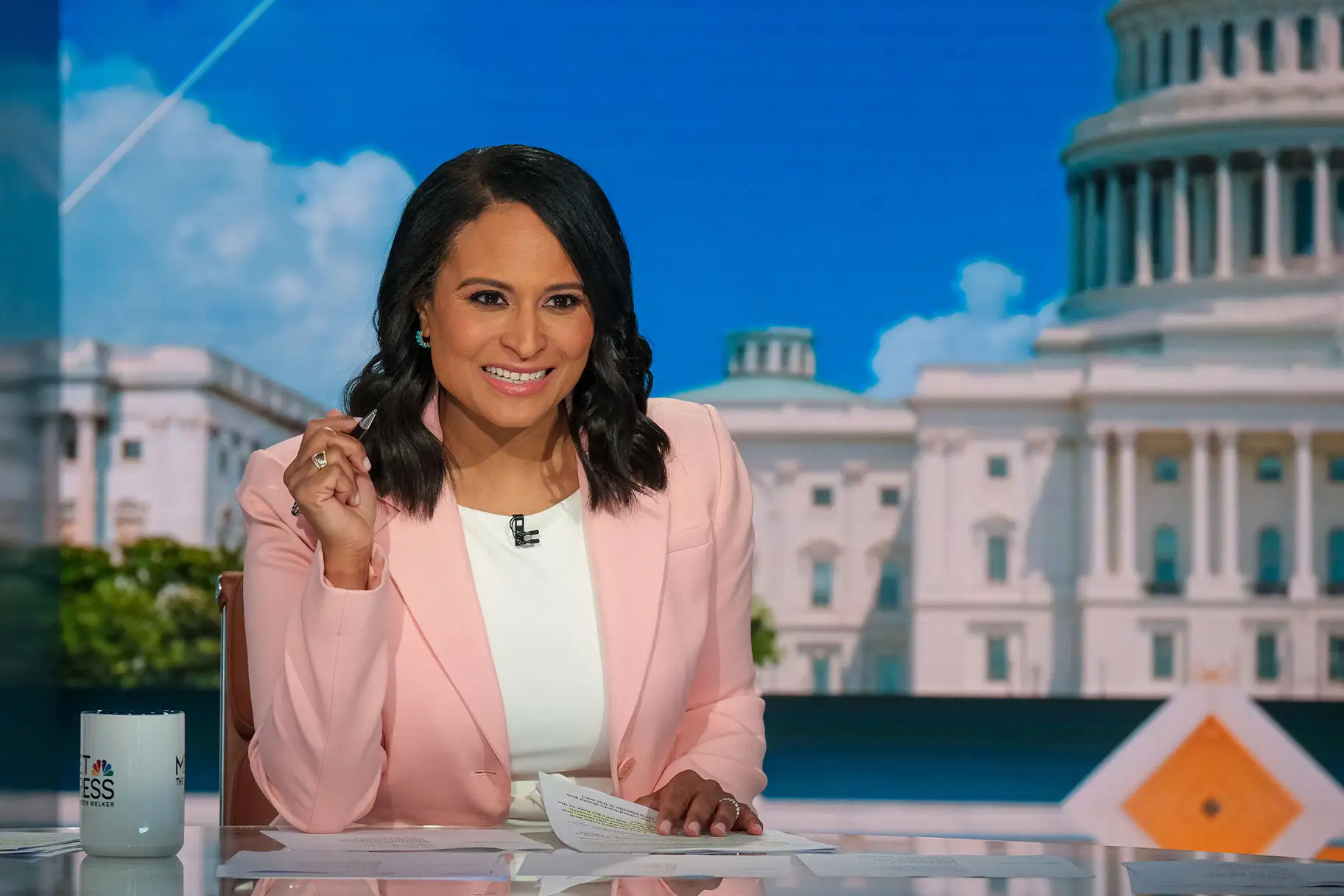
Today, Trump told Kristen Welker on NBC's Meet the Press that the Strait of Hormuz is open to commercial traffic.

It is not.

Even at the high-water mark of Trump's "peace" process, traffic never got back to more than 20% of prewar levels. Now, virtually no commercial vessels are attempting to transit the strait in defiance of Iran's latest warnings. It is trivially easy for Iran to damage or destroy civilian vessels that do, making the attempt both unsafe and uneconomical. Iran has struck at least three ships in the last few days.

Trump also claimed that Iran had "agreed to… a perfect deal" yesterday, only to break it. This is apparently either a lie or a hallucination on Trump's part: nobody on either side mentioned any such "deal" being struck yesterday. But even if Trump really believed that such a thing had happened, what he's describing is a situation in which Iran doesn't feel obliged to take him or the "peace deal" he needs to extricate himself from the war seriously.

It’s open. We bombed the hell out of them last night. They are very, very evil and sick people.

We had meetings with them… they agreed to a deal yesterday, a perfect deal for us. No nuclear, no this, no that, no nothing.

They gave up everything and then after that they left the room and then within an hour they launched a drone at a ship.

I said you people are sick, you are sick people. And so it is one of those things. I don’t want to talk about it.

Why does this matter?

  • Reality doesn't change just because Donald Trump decrees it. 
  • Thinking that you can change reality by decree is why Donald Trump lost this war in such a humiliating fashion.

Saturday, July 11, 2026

What did Donald Trump do today?

He bragged about a "deal" but forgot to mention the other side of it.

undefined 
 
For the past four months, a brand-new bridge linking the city of Detroit with its Canadian counterpart of Windsor, Ontario has sat unused. Trump closed the American side of the Gordie Howe Bridge in February, weeks before it was due to open, after the owner of a competing bridge, a major Trump donor, asked him to intervene.
 
That competing bridge, the Ambassador Bridge, charges higher tolls than the new bridge and is in such poor repair that it can't be used by heavy trucks. It also spills directly onto surface streets on the Canadian side. This has meant that, in spite of Detroit/Windsor being a major trading hub, a lot of commerce avoids the region entirely. This is the problem that the new bridge was meant to solve.
 
Today, Trump announced on his private microblogging site that he had negotiated a "MUCH BETTER DEAL" that would allow the bridge to finally open later this month, touting that the United States will now get a cut of the tolls on a bridge that Canada paid to build.
 
What he didn't mention was what he gave up—a commitment to share the maintenance costs as well, for at least the next fifteen years. Under the previous arrangement, Canada would have paid for those too. Maintenance costs for bridges of this type are very high, and quickly approach construction costs during the lifespan of a bridge.
 
In other words, what Trump accomplished in his "MUCH BETTER DEAL" was to shuffle some money around while keeping a new bridge sitting useless for four months, to the benefit of his private political patron.
 

Why does this matter?

  • The economic value of four months of improved trade with the United States' largest trading partner is more important than servicing a Trump donor's demands.  
  • A president who actually understood the "Art of the Deal" would know about opportunity costs.
  • Not letting Americans use a free bridge that's already been built made Trump look stupid, not tough.