What did Donald Trump do today?
He tried to create a slush fund to pay tax dollars to insurrectionists who tried to help him cling to power after 2020.
The Department of Justice, which is led by Trump's personal defense lawyer Todd Blanche, announced today that it was creating a $1,776,000,000 fund to make payments to for "victims" of the Biden Administration's "weaponization" of government. This is apparently part of a settlement of Trump's $10 billion lawsuit against the IRS for "negligence" against him personally while he himself was in charge of it.
In practice, the creation of an almost $2 billion slush fund would mean that Trump could make payments at his sole discretion to anyone who had been prosecuted for committing crimes on Trump's behalf, whether by rioting at the Capitol to disrupt the certification of President Biden's election on January 6, 2021, or trying to cast fake electoral votes, or any of the other criminal acts that Trump and his supporters committed for his benefit.
Divided up equally among the roughly 1,500 January 6 criminal defendants, that would mean that they would be paid nearly $1.2 million dollars each by taxpayers of the country whose elections they were trying to invalidate. That would include Jake Lang, who was thrown out of Washington Nationals game yesterday for unveiling a white supremacist banner. It would also put that same million-dollar payout in the hands of at least 78 people who have been convicted of other crimes since 2021. That includes people convicted of two murders, three rapes, and nine cases of child sexual abuse.
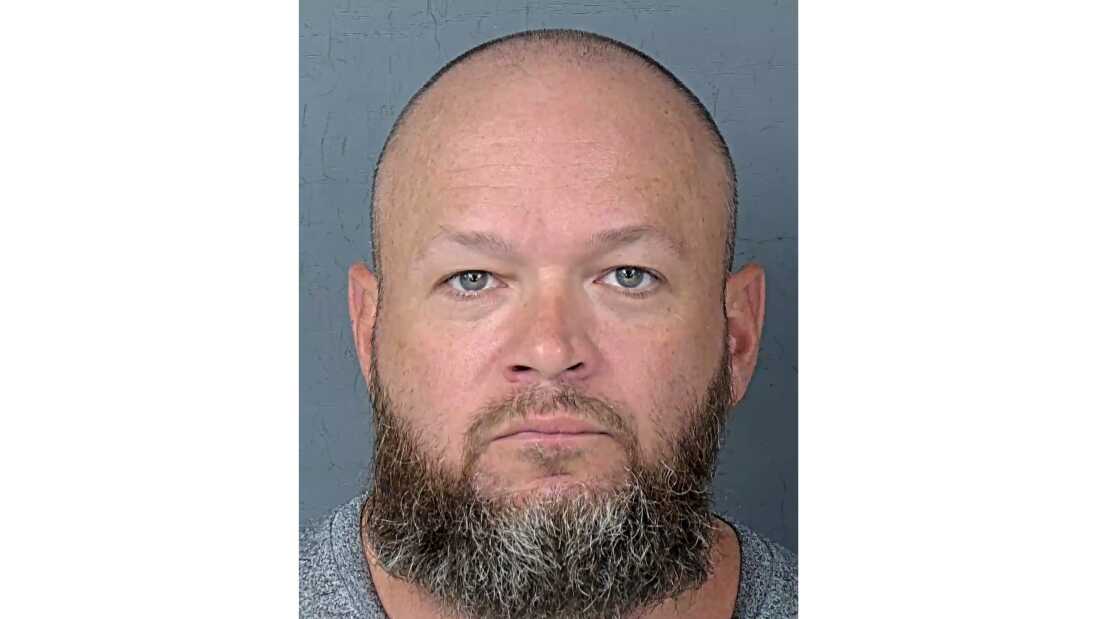
One of those convicted sexual abusers, Andrew Paul Johnson, tried to keep his middle school-age victims quiet by promising to share the money he said Trump would be paying convicted January 6th criminals—which is, of course, exactly what Trump is now proposing to do.
Trump has already pardoned most of his criminal co-conspirators, and has dabbled in settlements that pipe money to them. Trump's DOJ, which has refused to prosecute federal agents who killed protestors, turned against the police who shot a January 6th rioter who was about to breach the lines of police defending retreating members of Congress and paid out $5 million to the survivors.
Congressional Democrats immediately vowed to block the fund in the courts. The most obvious objection is that Trump has no legal authority to pay billions of taxpayer dollars to a private militia. Congress would have to authorize that like any other spending, and given how politically toxic Trump's desperate attempts to stay in power are, that would never happen.
By Trump's logic, he could spend any amount of money on anything he wanted by calling it a "settlement" for some other imagined government wrongdoing. That violates the Constitution, which gives Congress the sole power to appropriate money through legislation. But Trump's attempt to shovel taxpayer money with no oversight to people who committed actual crimes on his orders is so far out of the realm of the law that it's almost certainly unconstitutional on entirely different grounds. The Fourteenth Amendment, ratified after the Civil War, has a clause that dictates that
neither the United States nor any State shall assume or pay any debt or obligation incurred in aid of insurrection or rebellion against the United States.
In practice, this was meant to ensure that the United States government would not be obliged to pay debts incurred by the Confederacy. It has sat dormant ever since, but Trump's attempt to prevent the duly elected President Biden from taking office (conduct for which he was impeached and indicted, and is still liable for prosecution if and when he leaves office) would likely count as an insurrection for these purposes, meaning no "debt" owed to the people who participated in it would be valid.
Incredibly, Trump claimed today that he didn't know about the fund and "wasn't involved" in it, despite it being linked to his $10 billion lawsuit.
Why does this matter?
- Glorifying and rewarding people who use violence to keep the leader in power is what dictators do.
- Neither Trump nor people who attacked police, ransacked the Capitol, threatened Congress, falsified evidence, or committed any other crime on his behalf are victims.
- The money in the Treasury, which comes from Americans who actually pay their taxes, is not Donald Trump's personal piggy bank.