What did Donald Trump do today?
He self-soothed with some polling data that absolutely does not mean what he thinks it means.
Neither the public nor the White House press corps has seen Trump in the flesh since Wednesday night, leading to some now-routine gallows humor online about his failing health. There were rumors he'd been secretly whisked off to Walter Reed National Military Medical Center, something that has happened at least three times in the past. Enough people were prematurely celebrating his demise that the White House was forced to put out a statement insisting that Trump was alive and well (although, as of the end of the day on Saturday, still unseen).
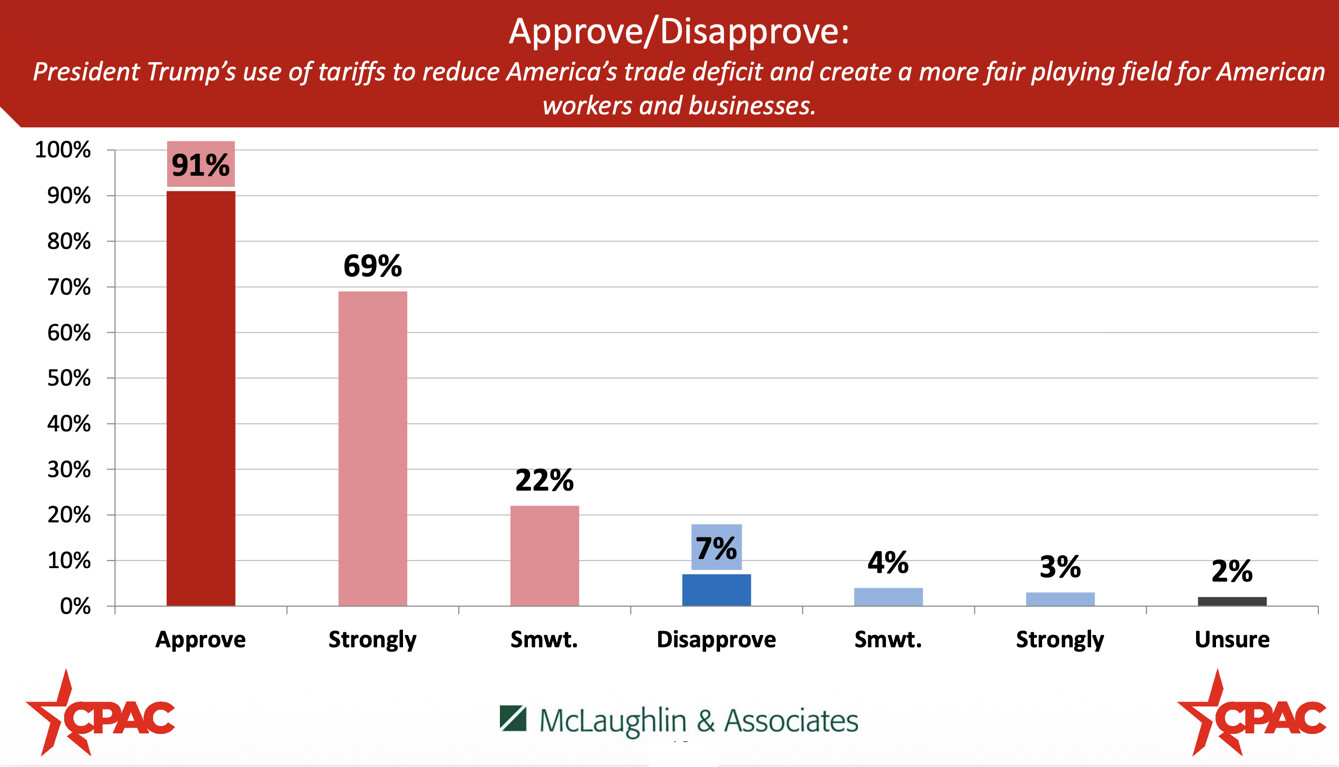
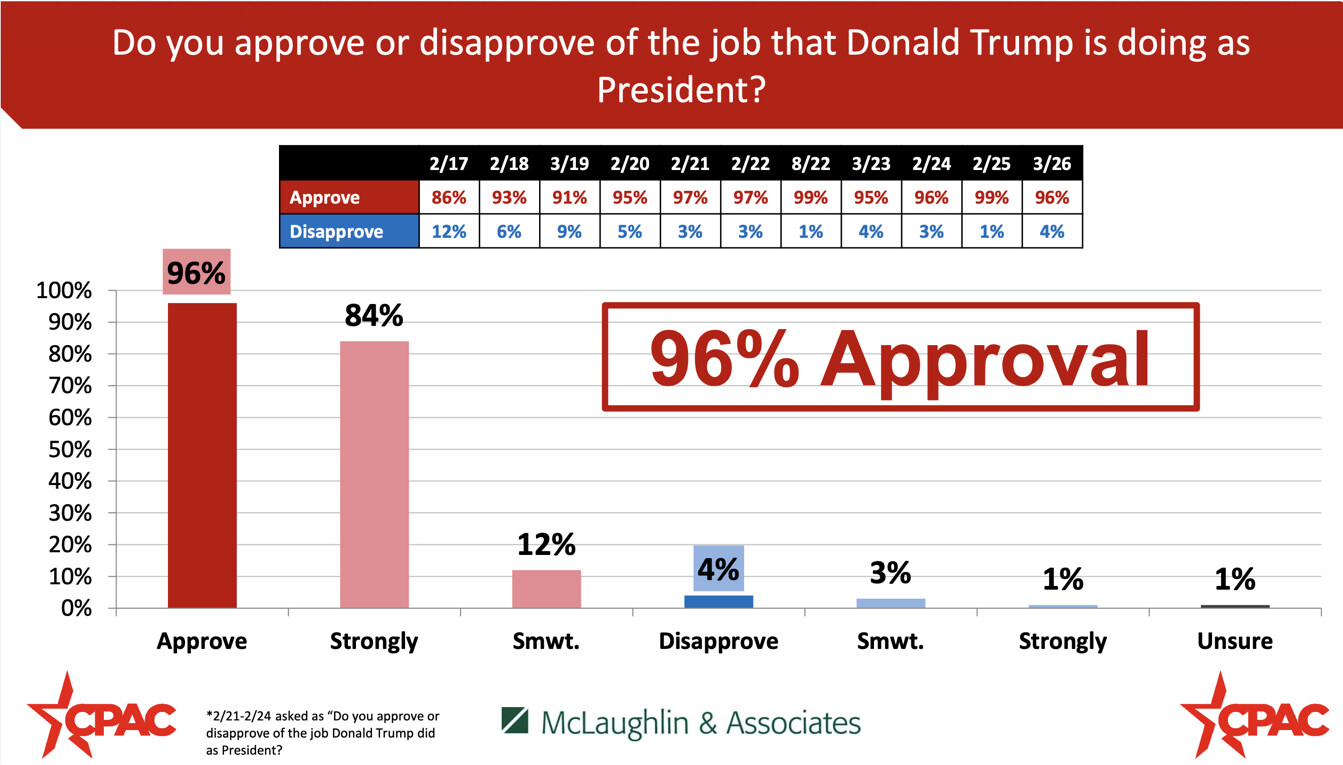
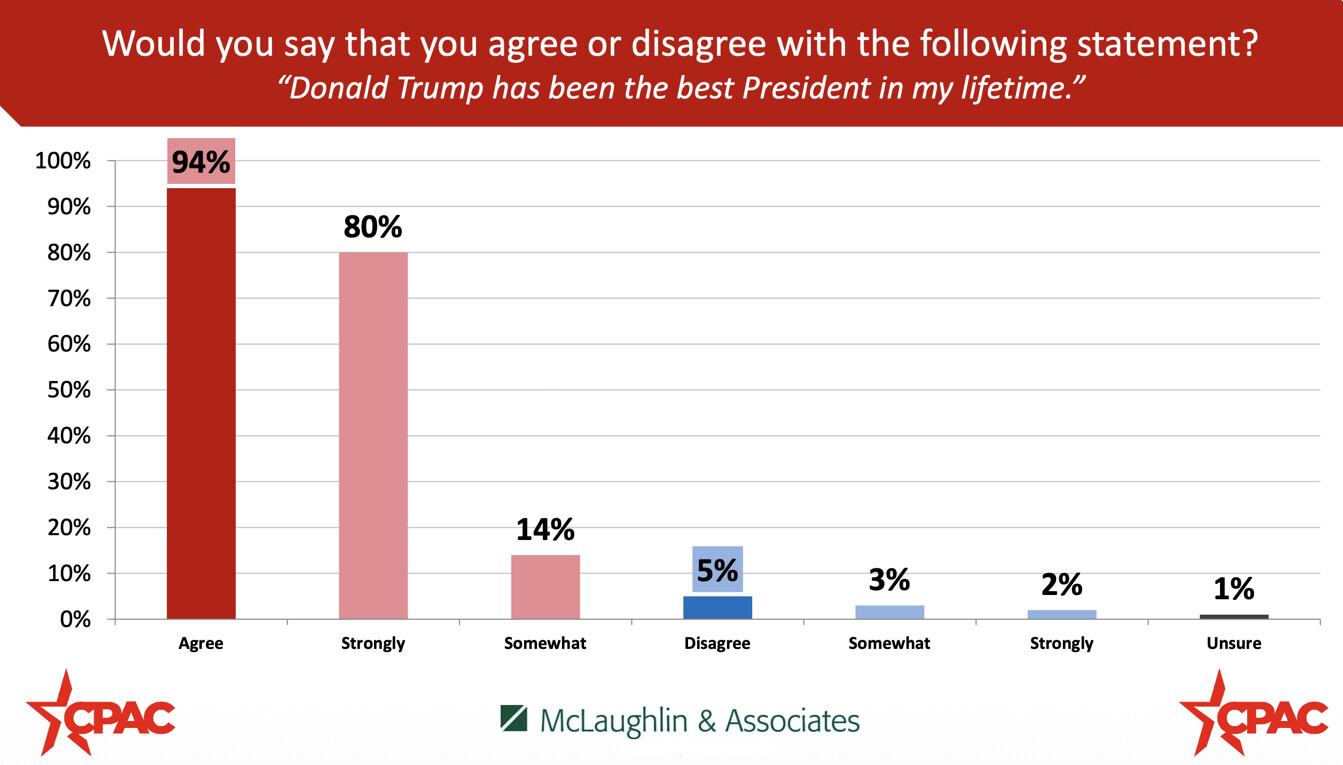
It's hard to say what Trump knows about the widespread cultural phenomenon of Americans joking about what they'll do when "It Happens." He's famously kept in a bubble by his own staff to help manage his moods, and fed a diet of "uplifting" stories about his popularity. But even if Trump doesn't know about Americans actively rooting for his demise by preparing celebratory playlists on Spotify, he knows enough about his plummeting popularity to complain bitterly about polls showing it.That may be why he—or, if he was indisposed, someone with access to his social media accounts—posted graphs showing that he is far and away the most beloved figure in the history of American politics. 96% of those polled approved of his performance in office. 94% agreed with the statement "Donald Trump has been the best President in my lifetime." And 91% approved of his trade war against the rest of the world, or as the poll put it, his "use of tariffs to reduce America's trade deficit and create a level playing field for American workers and businesses."
Of course, what Trump doesn't seem to have realized is that the graphs also show who responded to the poll: not Americans overall, who now give him approval ratings in the low 30s and who
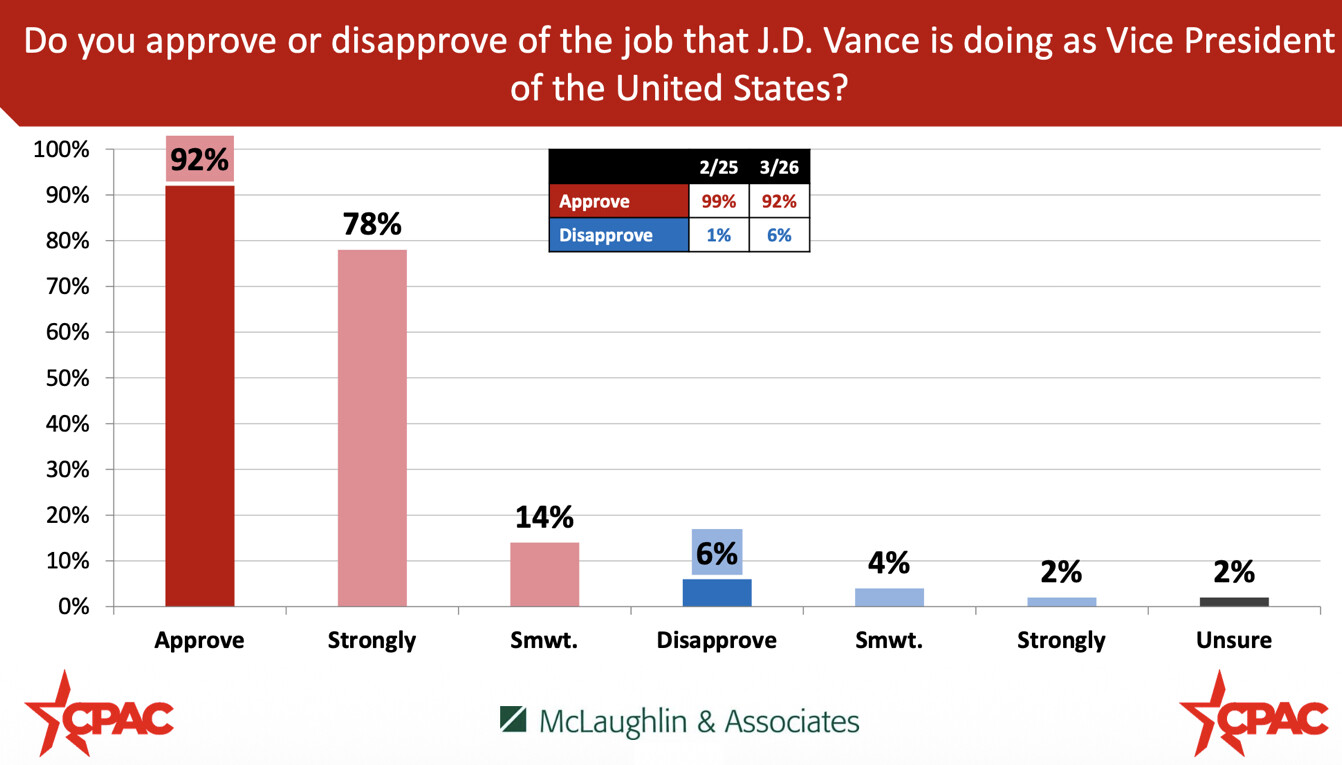
overwhelmingly say his trade war has hurt the American economy. Instead, it was a poll of people attending CPAC—a political conference attended only by Trump's strongest supporters.
In other words, Trump supporters working in politics support Trump.
This isn't that hard to understand, but this isn't the only time Trump has gotten confused about that recently. When CNN's poll analyst Harry Enten put up a graphic last month showing 100% support for Trump among "MAGA voters"—in other words, people who self-identified as supporting Trump in the same poll where they were asked about their support—he couldn't stop bragging about it. Enten said this week that a more accurate way of depicting Trump's popularity was "a steady fall into the abyss" that was still happening.
Trump used "emotional support polls" in his first term, too, claiming that his approval rating with Republicans was sky-high: over the course of that term, he reported numbers ranging from 93-96%. But in those cases, he wasn't confused over what polls meant—he was just making the numbers up.
Why does this matter?
- Saying people like you doesn't make it true, which most people figure out by the time they reach elementary school.
- It's bad if a president isn't even pretending to care about Americans who don't support him politically, especially when that's about two-thirds of all Americans.
- If Trump wasn't profoundly confused about what he was posting, then the only other explanation is that he thinks people who read his social media posts are incredibly stupid.